EN
EN  PT_BR
PT_BR 
The Gross Value of Agricultural Production (VBP) in Acre is expected to end 2025 with significant growth. According to data released by the Ministry of Agriculture and Livestock (Mapa) on November 21st, the state reached R$ 3,945.64 million, representing a nominal increase of 17.25% compared to the R$ 3,365 million recorded in 2024. This performance reflects a structural recovery that places the revenue of Acre's agricultural sector at its highest level since 2018.
Despite double-digit growth in the state, Acre's reality compared to Brazil reveals a stark disparity. While the national VBP (Value of Agricultural Production) reached a historic mark of R$ (R$ 1.412 trillion) in 2025, Acre's share remains stagnant at only 0.28% of the country's total.

Photo: Jonas Oliveira/SEAB
Although the state is at the base of the production pyramid, Acre does not have the lowest Gross Production Value (VBP) in Brazil. That position belongs to Amapá (R$ 235.7 million), followed by the Federal District and Roraima. Acre occupies the 22nd position in the national ranking, surpassing five other federative units. However, the distance to the leaders is large; Mato Grosso, first in the ranking, alone earns R$ 220.4 billion, a value 55 times greater than that of Acre.
The productive structure of Acre is highly concentrated. Livestock farming accounts for 72% of the total value generated (R$ 2,842 million), while crops contribute 28% (R$ 1,104 million).
Ranking of Activities in 2025
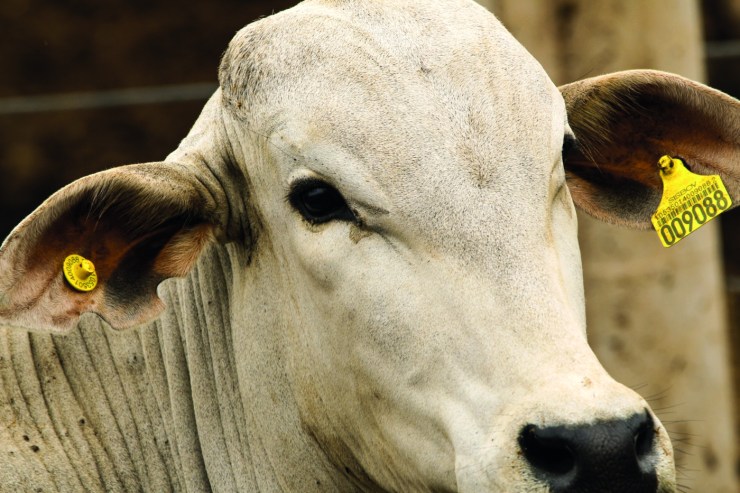
Cattle: Absolute leadership with R$ 2,755.9 million, being the central pillar of the state's rural economy.
Cassava: Main agricultural crop, with R$ 444.5 million.
Corn: Third strongest commodity, registering R$ of 187.0 million.
Banana: Stable in fourth position with R$ of 169.8 million.
Coffee: Closes out the "Top 5" with R$ 158.4 million.
A comparison of the data reveals distinct behaviors in the grain and animal protein sectors. Within the protein and derivatives sector, in addition to beef, Eggs (R$ 55.0 million) and Milk (R$ 31.0 million) stand out, maintaining local relevance, although with little scale for interstate export. Activities such as chicken and pork do not appear among the state's main financial highlights in this survey.
In the agricultural sector, soybeans, which are gaining ground in the northern agricultural frontier, registered R$ 108.5 million. Other subsistence and domestic market crops show more modest values: beans (R$ 16.0 million), rice (R$ 9.1 million), and oranges (R$ 8.7 million). Sugarcane (R$ 1.7 million) and peanuts (R$ 0.1 million) occupy marginal positions in the revenue composition.
Historical Perspective (2018–2025)
The historical graph reveals that the current growth is not merely cyclical, but the culmination of a recovery. After a period of stagnation between 2019 and 2022 (where the value fluctuated around R$ 2.7 billion), the sector embarked on a three-year sequence of growth. The jump from R$ 3.02 billion in 2023 to the current R$ 3.94 billion indicates a real increase in productivity or in the appreciation of local commodities, especially beef.
The data indicates that Acre's agribusiness faces a challenge of diversification and vertical integration. The dependence of 72% on a single sector (cattle farming) makes the state's economy vulnerable to fluctuations in international meat prices and sanitary barriers.
Furthermore, the low share of the national VBP (0.28%) shows that the growth, although robust in internal percentages (17.25%), is still nominally low to change the state's status in national logistics. The advance of soybeans and corn suggests a transition to crop-livestock integration systems, but the predominance of cassava and bananas as the main crops reinforces a production profile that is still very much focused on regional consumption and low in industrial added value.