EN
EN  PT_BR
PT_BR 
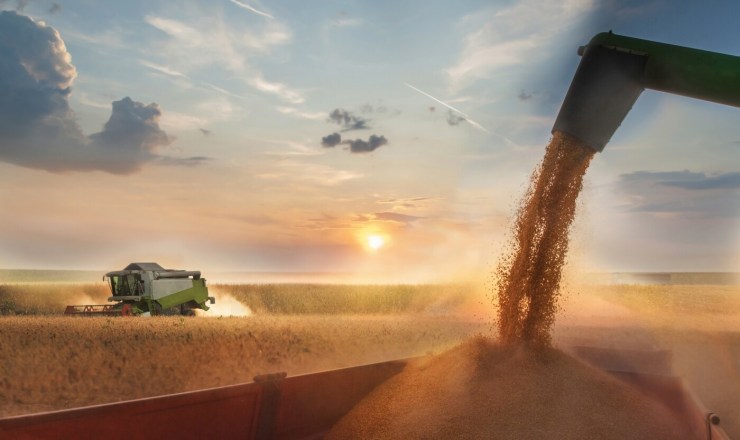
The Brazilian harvest of grains, cereals, and legumes is expected to total 332.7 million tons in 2026. This result represents a decrease of 3.71% compared to this year, which marks a record. 

The estimates were released this Thursday (13) by the Brazilian Institute of Geography and Statistics (IBGE), which presents the Systematic Survey of Agricultural Production every month. This is the first edition to bring data for 2026. For this year, IBGE estimates a harvest of 345.6 million tons, the largest ever observed in the country, being 18.1% more voluminous than that of 2024.
 Commenting on the transition from a year with a record harvest to another with a decline in the crop, the IBGE's Agriculture Manager, Carlos Alfredo Guedes, points to the influence of climatic factors. "In 2025, we had a climate that greatly favored the development of crops; we have record production for several crops, such as soybeans, corn, sorghum [cereal], and cotton," he said. "For 2026, we are still at the beginning of the harvest season, so we often work with average yields from previous years, which also explains this slight drop in production, and the climate will probably not be as favorable," he added.
Guedes describes 2026 as a year influenced by the La Niña phenomenon, with abnormal cooling of the surface waters of the equatorial Pacific Ocean, bringing more intense rainfall to the Central-West Region and little rain to the South, which could affect crops.
Despite a smaller production volume, IBGE indicates that the area to be harvested should be larger in 2026. An estimated 81.5 million hectares are expected, almost the size of Mato Grosso, representing an expansion of 1.11 TP4T compared to 2025.
Agricultural crops
 The IBGE survey investigates 16 products: cotton (cottonseed), peanuts, rice, oats, rye, barley, beans, sunflower, castor beans, corn, soybeans, sorghum, wheat, triticale (originating from the crossbreeding of wheat and rye), canola, and sesame. The last two appear in the survey for the first time.
Comparing the forecasts for 2025 and 2026, Brazilian agriculture is expected to see a decline primarily in the following crops:
- corn (-9.3% or -13.2 million tons)
- sorghum (-11.6% or -604.4 thousand tons)
- rice (-6.5% or -815.0 thousand tons)
- cotton (-4.8% or -466.9 thousand tons)
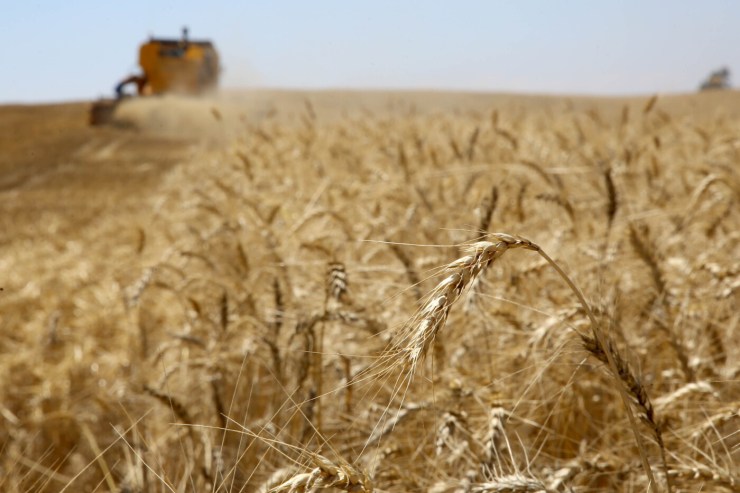
- wheat (-3.7% or -294.8 thousand tons),
- beans (-1.3% or -38.6 thousand tons)
- Peanuts in shell (-2.1% or -25.5 thousand tons)
Commenting on the drop in corn production, the IBGE researcher assesses that the weather is not expected to be as favorable in 2026. "Furthermore, many doubts remain regarding the planting window for the cereal, since the summer crop is still developing in the field," explains Guedes.
Soy
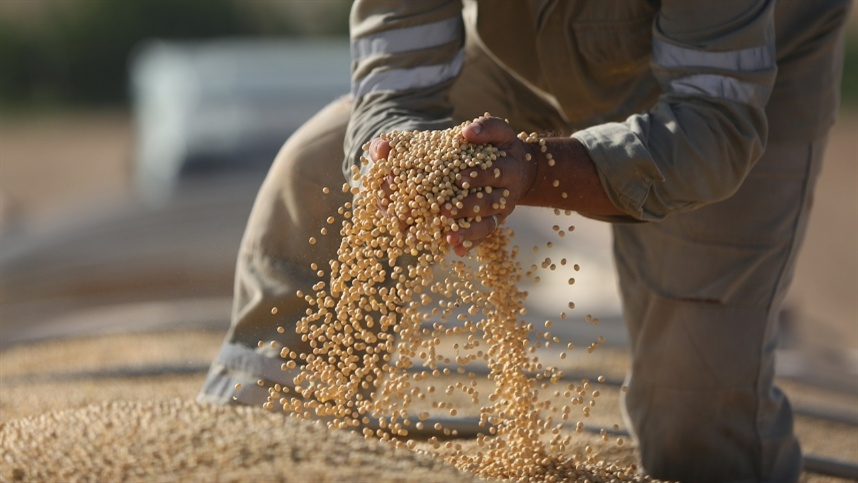
 Conversely, IBGE estimates growth in the soybean harvest, which should expand by 1.1% and reach 167.7 million tons. The country is the largest producer and largest exporter of the oilseed globally. "The planted area should grow by 0.3%; and productivity by 0.8%, largely due to the possible recovery of the Rio Grande do Sul harvest, which was severely hampered in 2025. Scarce and irregular rainfall has been a concern for producers in the Central-West region," explains IBGE.
IBGE also reported that the country's agricultural storage capacity grew by 1.81 Tbp in the first half of this year compared to the second half of 2024, reaching 231.1 million tons.
Storage method capabilities:
- Silos: 123.2 million tons (53.3% of the country's total usable capacity);
- bulk and bulk storage warehouses: 84.2 million tons (36.4%);
- Conventional, structural and inflatable warehouses: 23.8 million tons (10.3%).
As of June 30th of this year, Brazil had a total stock of 79.4 million tons. More than half was soy (48.8 million tons), followed by corn (18.1 million), rice (6.1 million), wheat (2.4 million) and coffee (600,000).
Storage capacity and inventory management are used in agriculture as a way to seek greater profitability for the farmer, allowing them to choose the best time to sell their produce on the market.
Conab
Also on Thursday, the National Supply Company (Conab), a public company linked to the Ministry of Agrarian Development and Family Agriculture, announced that the 2025/2026 harvest should reach 354.8 million tons of grains.