EN
EN  PT_BR
PT_BR 
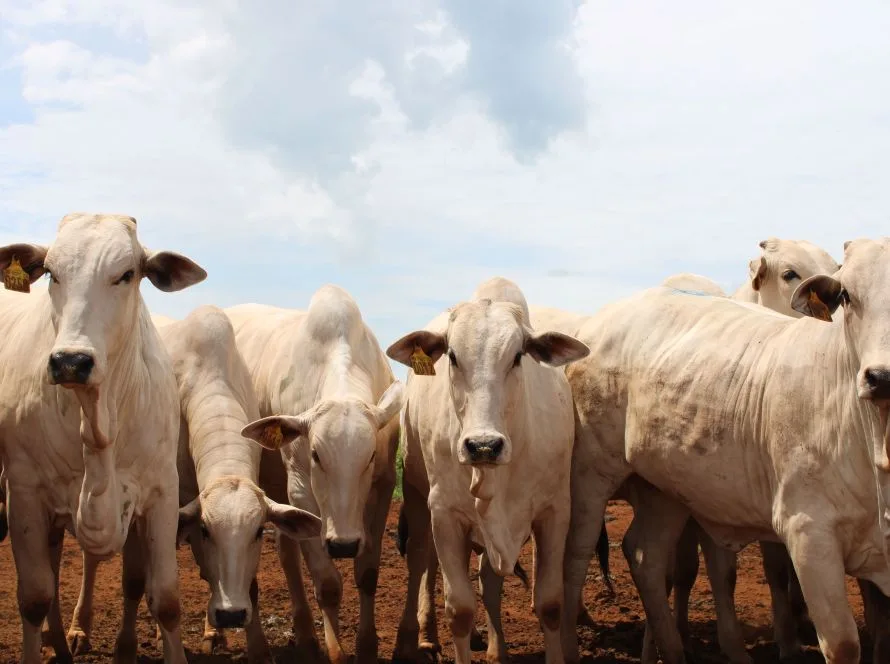
Mato Grosso reaffirmed its position as the country's largest livestock powerhouse in 2025, accounting for 18.5% of the total Gross Production Value (VBP) of cattle in Brazil. According to partial data from the national VBP panel, released on November 21 by the Ministry of Agriculture and Livestock (Mapa), the state generated R$ 37.96 billion with the cattle chain, remaining the most relevant individual producer among all federative units.
Nationally, the Gross Production Value (VBP) of cattle totaled R$205.38 billion, consolidating the activity as one of the most robust in Brazilian agriculture. The ranking of the four main producers also includes São Paulo (R$24.82 billion), Mato Grosso do Sul (R$20.49 billion), and Goiás (R$20.44 billion). In turn, the total VBP of the state reaches R$220.43 billion, and cattle farming represents 15.61% of that, comprising a significant portion of local agricultural production, alongside crops such as soybeans and corn, which lead the state ranking.

President of the Mato Grosso Breeders Association (Acrimat), Oswaldo Pereira Ribeiro Jr.: “The biggest risk we have been facing in recent years is the environmental pressure from other countries. They need our product, but they want to negotiate at a cheaper price, putting up environmental barriers that they don't create, but they demand from us.”
In an exclusive interview with the newspaper O Presente Rural, the president of the Mato Grosso Cattle Breeders Association (Acrimat), Oswaldo Pereira Ribeiro Jr., detailed the advances, challenges, and strategic vision of the sector for 2026. "The year 2025 was marked by record production, slaughter, and exports, strengthening Mato Grosso's position as the main supplier of beef in Brazil to the domestic market and to more than 80 nations," he emphasizes.
The state ended 2025 with approximately 7.2 million animals slaughtered, a number never before recorded. Ribeiro Jr. explains that the result was driven both by the good performance of pasture-based systems and by the intensification of finishing models. "We increased the feedlot area by about 4%," he stated.
He points out that the movement coincided with a period of strong international demand. “Exports continued to rise, with the opening of new markets. Southeast Asia became an impressively expanding destination. In addition, we had the recovery of the North American market and significant growth in purchases from Mexico,” he emphasizes.
Production standardization
The expansion of feedlots reinforces the search for greater efficiency and predictability in the production chain. For Ribeiro Jr., the gains are significant, but the process is still far from completely replacing pasture-based livestock farming. “Slaughterhouses serve diverse markets and consequently diverse types of demands. Some want lean meat, others want boneless meat, creating difficulties in slaughtering,” he explains.
According to him, this scenario demands regularity and predictability. “Slaughterhouses need to standardize carcass yield, precocity, volume, and frequency, and feedlots seek to meet this need. However, demand is high, and feedlots are a good solution for standardization, but they are not yet definitive. The slaughterhouse still depends on pasture-raised cattle,” he points out.
Expanding international markets
 The president of Acrimat also projects a favorable environment for exports next year. Meat from Mato Grosso should continue to occupy space in high-consumption markets and in nations that have been increasing their purchases in recent months. "I believe that the American market will still be a market that will demand a lot of our meat, due to their historical need for our products," he assesses.
He highlights that positive surprises came from markets that were not among the state's main destinations. "The good surprise is how Mexico and Russia have been buying a lot of our meat, in addition to Southeast Asia – Indonesia, the Philippines, Singapore and Vietnam – which are showing strong growth and should continue in this way in 2026," he says.
Market fluctuations
According to the leader, the biggest challenge for producers in 2025 and also in 2026 is ensuring adequate remuneration. "The biggest challenge today is to be better compensated for what we produce. We are very vulnerable to market fluctuations, wars, and governments, which are always experiencing setbacks in these prices," he mentions.
Ribeiro Jr. recalls that, in the past, market volatility was compensated for during certain periods, but this dynamic has changed. “A few years ago, ranchers had the recovery of these prices. Today, this positive fluctuation is increasingly scarce, taking many people out of the game. Today there is no longer room for amateurs, especially in finishing,” he warns, recommending that producers do their calculations carefully to remain in the sector.
Adaptation process
With global pressure for sustainability and traceability, livestock farming in Mato Grosso is undergoing a process of adaptation. Ribeiro Jr. acknowledges that the sector faces an inevitable path. “We are fully aware that traceability is an irreversible path. But we would prefer it to be gradual and not mandatory,” he argues.
The biggest concern falls on small and medium-sized producers. "If this requirement is mandatory, it should at least be accessible to those who cannot afford to invest in sustainability and traceability, since these processes increase production costs and prices will not be compatible with the new costs," he emphasizes, stating that Acrimat is closely monitoring the discussions: "We are working with the Sectoral Chamber and the Ministry of Agriculture on this traceability project, and we believe it should be optional."
Bottlenecks persist.
 Despite the progress, the state faces structural obstacles that limit its potential. The president of Acrimat highlights logistics in particular. “We still have several bottlenecks, especially in Mato Grosso, which has a continental extension. The biggest difficulty comes from logistics, where large producing regions still do not have meat processing plants,” he points out.
The consequence falls directly on the producer's pocket. "The animals need to travel 400 to 500 kilometers to reach the nearest slaughterhouse, losing weight and generating losses," he reports.
Furthermore, the distance from export ports increases freight costs. Ribeiro Jr. also points to environmental and land tenure obstacles. “We need more agility in environmental permitting processes, such as the CAR (Rural Environmental Registry). We cannot work with this legal uncertainty, worried about land invasions, expropriations, and fires that, most of the time, turn the producer into a victim, but even so, it is he who bears the burden,” he states.
Dependence on the domestic market
Even with the weight of exports, domestic consumption remains the main destination for production. "The domestic market accounts for 70% of production," highlights Ribeiro Jr.
However, strengthening this market is a challenge that is directly linked to the performance of the national economy. “How can we improve the domestic market without improving the economic conditions of the population? It’s practically impossible,” he emphasizes, adding: “We live in a country with a lot of distribution of social benefits and aid, which hinders economic growth, not generating new economic activity or the movement of money. We need growing industries, commerce, agriculture, and livestock, but we have stagnant markets,” he laments.
Pillars of livestock farming
Acrimat closely monitors technological advancements in the field, and Ribeiro Jr. believes that Mato Grosso producers are already operating at a high level of professionalism. "We already make good use of livestock farming tools such as genetics, nutrition, health, and management, and these are well-executed from the farm gate inwards," he states.
He points to three essential pillars for the future: supply and demand, technology, and traceability. “We are already discussing this last pillar. We have a program from the Ministry of Agriculture, developed together with producers, which will be active in eight years, and this is what will give us the confidence that the livestock farming of the future will be superior to the current one,” he projects.
Risks for 2026

Although health and environmental risks are inherent to the activity, Ribeiro Jr. points to another type of threat as the most worrying. “The biggest risk we have been facing in recent years is the environmental pressure from other countries. They need our product, but they want to negotiate at a cheaper price, putting up environmental barriers that they don't create, but demand from us,” he criticizes.
He emphasizes that Brazil already has one of the strictest environmental codes in the world. "We already have a very restrictive yet comprehensive environmental code, which we follow rigorously. There's no reason to address demands that exceed our environmental code without government support," he points out.
According to him, even during COP 30, the country was unable to fully showcase its progress. "We had the opportunity to show what we do well, but we were stuck on these environmental issues," he laments.
Vision for the future
Despite the challenges, Ribeiro Jr. remains optimistic about the future of livestock farming in Mato Grosso. "We are certain of the future success of livestock farming because we know our sector and our producers inside and out, and we know that what we do regarding environmental preservation is extremely rigorous," he says.
He highlights productive efficiency as one of Brazil's great advantages. “No one produces so cheaply and in such large quantities as Brazil. Producers have learned to produce more in the same space, preserving more green areas, with sustainability. Export data shows that we are growing and should continue like this for many years. We have volume, quality, and animal health,” he exclaims, emphasizing: “Livestock farming in Mato Grosso and throughout the country is only going to grow, and we will continue feeding the world for many, many years.”
THE Agribusiness Yearbook This document not only portrays the largest Gross Value of Production (GVP) in history, but also serves as an essential guide to understanding the paths and challenges facing Brazilian agribusiness in the short and medium term. Check out the digital version by clicking [here]. here.