EN
EN  PT_BR
PT_BR 
Brazilian exports reached a historic record in 2025, even under an adverse international scenario. Data released on Tuesday (06) by the Foreign Trade Secretariat of the Ministry of Development, Industry, Trade and Services (Secex/MDIC) shows that Brazil's exports last year totaled US$ 348.7 billion, exceeding the previous record, which was from 2023, by US$ 9 billion. The last three years have shown the best historical results for the trade balance.
Compared to 2024, the increase in exports last year, in value terms, was 3.5%. In volume terms, the growth was even greater: 5.7%. This latter percentage is more than double the 2.4% projected by the World Trade Organization (WTO) for global growth in 2025.
Furthermore, more than 40 markets recorded record purchases of Brazilian products in 2025, notably Canada, India, Turkey, Paraguay, Uruguay, Switzerland, Pakistan, and Norway. “Amidst geopolitical difficulties, we managed to conquer new markets and expand those we already had,” states Vice-President and Minister Geraldo Alckmin. “The result also reflects the set of programs and actions of President Lula's government to increase the productivity and competitiveness of our companies abroad, especially with the New Industry Brazil (NIB) and the Sovereign Brazil Plan.”
Imports, current account and surplus
Imports also hit a record in 2025, reaching US$280.4 billion, a value 6.71 billion higher than in 2024 and almost US$8 billion above the previous record, from 2022.
As a result, the trade flow totaled US$629.1 billion, reaching the highest level ever recorded – an increase of 4.91 billion compared to last year. The surplus reached US$68.3 billion, the third highest in the historical series, behind only 2023 and 2024.
December 2025
Data relating only to December 2025 reveals record exports of US$31 billion (+24.71% of the previous year) for the month; imports of US$21.4 billion (+5.71% of the previous year); and a trade balance of US$9.6 billion (+107.81% of the previous year), a record for the month of December. The trade flow reached US$52.4 billion (+16.21% of the previous year), also a record for the month.
Exports by sector, product and country.

Photos: Shutterstock
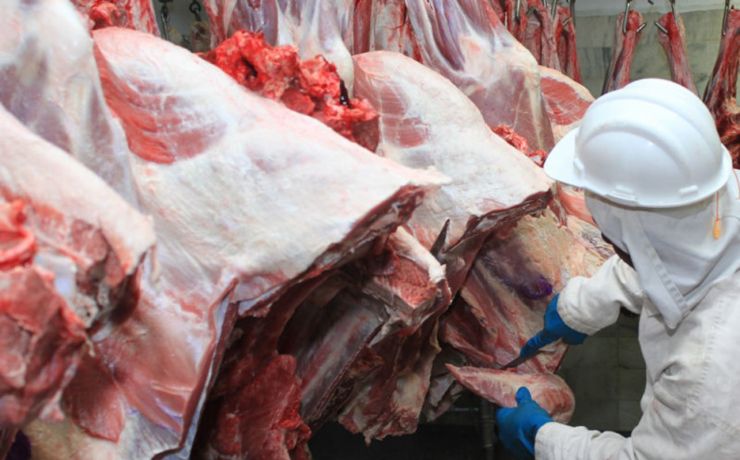
During the year, exports from the manufacturing industry grew by 3.81% in value, influenced by a 6% increase in volume, reaching a record amount of US$189 billion. Of particular note in this sector are the record exports of... beef (US$ 16.6 billion) pork (US$ 3.4 billion), alumina (US$ 3.4 billion), motor vehicles for the transport of goods (US$ 3.1 billion), trucks (US$ 1.8 billion), roasted coffee (US$ 1.2 billion), electrical machinery and apparatus (US$ 1.0 billion), mechanical machinery and tools (US$ 729 million), perfumery products (US$ 721 million), cocoa powder (US$ 598 million), measuring instruments and apparatus (US$ 593 million) and agricultural pesticides (US$ 495 mi).
The extractive industry, meanwhile, recorded an increase of 81% in export volume. Iron ore (416 million tons) and oil (98 million tons) broke shipping records. agricultural goods They grew 3.41 TP4T in volume and 7.11 TP4T in value. Green coffee reached a record value (US$14.9 billion), while soybeans registered a record volume (108 million tons), as did raw cotton (3 million tons).
 Regarding destinations, exports to China grew by 61% in the 4th quarter and reached US$100 billion, driven by... soy, beefsugar, cellulose and pig iron. For the European Union, growth was 3.21% Tbp, with coffee standing out. beef, copper ore, corn and aircraft. For Argentina, exports grew 31.41%, driven by the automotive sector.
For the United States, there was a drop of 6.6% for the year, concentrated between August and December, as a result of the tariffs imposed by the US government on some Brazilian products. The largest reduction occurred in October (-35.4%). In December, however, there was an improvement, with a drop of only 7.2% and shipments above US$3 billion (US$3.4 billion).
Imports by sector, product, and country.
In terms of imports, capital goods saw the largest increase (+23.7%), followed by intermediate goods (+5.9%) and consumer goods (+5.7%). Fuel imports decreased by 8.6%.
Imports from China (11.5%), the United States (11.3%), and the European Union (6.4%) increased. Imports of Argentine products decreased by 4.7%.