EN
EN  PT_BR
PT_BR 
The possibility of the United States adopting a 25% tariff on Brazilian products has raised concerns among exporters and investors linked to agribusiness. Although the impacts depend on the scope of the measure, sectoral exceptions, and negotiations between governments, experts believe that the effect could go beyond foreign trade and affect investments, exchange rates, and financial costs in Brazil.

Economist with a PhD in Finance, Roberto Simioni: “The intensity of the impacts will depend on the scope of the tariff, the exceptions granted, and the possibility of political negotiation” – Photo: Personal archive
According to economist Roberto Simioni, who holds a PhD in Finance, the measure should be analyzed not only as a trade barrier, but also as a factor that increases economic uncertainty.
According to him, the market tends to react initially to the prospect of reduced margins and export volumes by sectors more dependent on the American market. "The intensity of the impacts will depend on the scope of the tariff, the exceptions granted, and the possibility of political negotiation," he assesses.
Competitiveness at risk
The first expected effect is on the competitiveness of Brazilian products in the United States. In segments where buyers have alternative suppliers and are more price-sensitive, part of the tariff cost tends to be absorbed by the Brazilian exporter, reducing profit margins and, in some cases, causing a loss of market share.
In agribusiness supply chains, the impact can vary depending on the product. Goods with less capacity for redirection to other markets tend to suffer more. Globally traded commodities, on the other hand, can find alternative destinations, although they face short-term pressures on prices and profitability.

Photo: Disclosure
Simioni notes that when there is difficulty in passing on increased costs to the American buyer, the adjustment occurs through price discounts, reduced margins, or loss of competitiveness against international competitors.
Reflections on exchange rates and investments
In addition to the direct effects on exports, the measure may influence macroeconomic variables important to agribusiness. The expectation of lower dollar inflows into the country and the increased perception of risk tend to put pressure on the exchange rate and increase the volatility of financial markets.
According to the economist, a potential devaluation of the real could fuel inflationary pressures and lead the market to revise projections for monetary policy, influencing credit and financing costs.
The impact can also affect investment decisions. In scenarios of greater uncertainty, companies often...

Photo: Shutterstock
Postponing expansion projects, reviewing capital investments, and expanding financial protection strategies. "The main risk is not only the direct loss of exports, but the possibility of a confidence shock that reduces private investment and causes a repricing of country risk," Simioni points out.
The effect can extend throughout the entire chain.
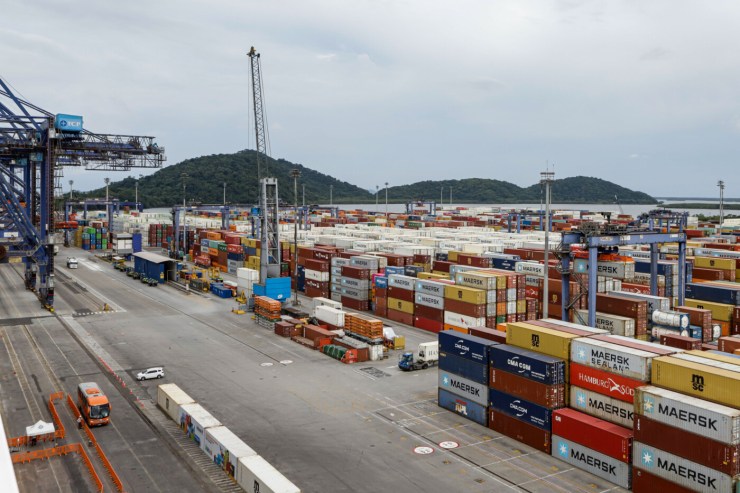
According to the analysis, the repercussions would not be limited to exporting companies. If the tariff affects intermediate products or specific segments of the agribusiness sector, the impacts could spread throughout the entire production chain, affecting input suppliers, logistics operators, transport companies, insurance companies, and financial institutions linked to the sector.

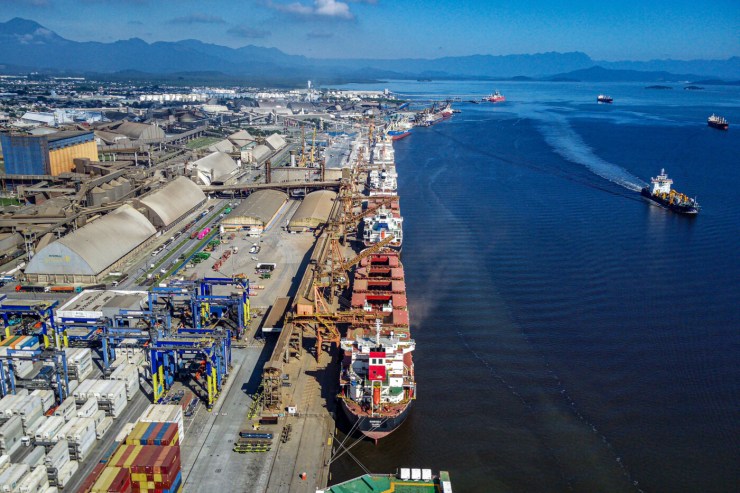
Photo: Courtesy of the Port of Santos
Even companies without direct operations in the foreign market can feel the effects through reduced economic activity, lower demand for services, and revised growth expectations.
The market is monitoring the negotiations.
Despite the concerns, Simioni emphasizes that the market reaction is still one of caution, not panic. The pricing observed so far includes the devaluation of the real, a drop in the shares of companies more exposed to foreign trade, and an increase in the premiums demanded on long-term bonds.
According to the economist, investors are continuing to monitor the next stages of trade discussions in the United States and the possibility of exceptions for certain sectors. The final impact on Brazilian agribusiness will depend on the scope of the measure and the ability to negotiate to avoid broad tariffs on national products.