EN
EN  PT_BR
PT_BR 
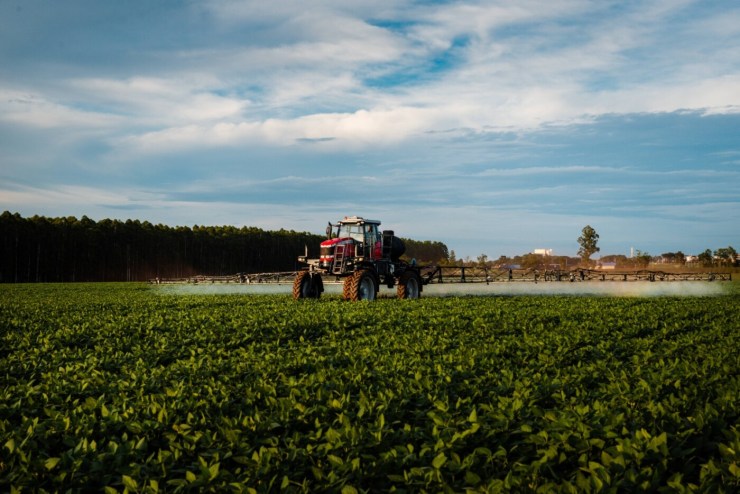
At least 116,000 rural producers stopped participating in the Agricultural Activity Guarantee Program (Proagro) in the 2024/2025 harvest. This data comes from a study by FGV Agro and points to a side effect of the changes implemented in the program between 2023 and 2025: the simultaneous exclusion of producers from both the guarantee policy and access to rural credit.

Photo: Gilson Abreu
Proagro functions as an instrument for settling production cost debts in case of crop losses, primarily aimed at family farmers and small and medium-sized producers. In 2023, the program paid out R$10.5 billion in indemnities, an amount exceeding the nearly R$3 billion disbursed in claims by the Rural Insurance Premium Subsidy Program (PSR) during the same period. Based on this scenario, the government implemented regulatory changes with the goal of containing expenses.
According to the research, these changes resulted in producers leaving Proagro without a corresponding migration to subsidized private rural insurance.
Of the 116,000 who were left out of the program in the last harvest, approximately 111,100 did not contract any type of coverage, neither through Proagro nor PSR.

Photo: Disclosure/OPR Archive
According to researchers, the regulatory change may have created a 'dead weight' of Proagro beneficiaries who were left without risk management tools and also excluded from rural credit policy. The study also warns of the increased systemic risk due to the lack of a clear entry point into the insurance market.
Congresswoman Daniela Reinehr (PL-SC) criticized the practical effects of the changes.

Congresswoman Daniela Reinehr (PL-SC): “The changes to Proagro were presented with the aim of combating fraud and organizing the system, but the effect that reached the end user was completely different” – Photo: Press Release/FPA
Today, the reality is that thousands of producers have lost access to credit and crop protection. "You can't fix one problem by creating an even bigger one," he stated.
Beneficiary profile
The survey analyzed the period from July 2019 to June 2025 and identified 530,100 beneficiaries of Proagro, divided into three groups: 218,000 sporadic beneficiaries (up to two contracts), 261,000 recurring beneficiaries (three to nine contracts), and 51,000 multi-contractor beneficiaries (ten or more contracts).
Based on the new regulations, which consider, among other criteria, the limit of up to six loss reports per individual taxpayer identification number (CPF) and per Rural Environmental Registry (CAR), the researchers identified those who no longer qualified for the program.

Coordinator of the Infrastructure and Logistics Committee of the Parliamentary Agricultural Front, Deputy Tião Medeiros (PP-PR): “The government has failed to protect many small and medium-sized producers” – Photo: Press Release/FPA
Soybean, corn, and wheat producers with financing contracts between R$ 100,000 and R$ 300,000 were also analyzed to estimate the potential for migration to the PSR. In this segment, 210,600 producers were found: 521 sporadic TP4T producers, 451 recurring TP4T producers, and 31 multi-contractor TP4T producers.
Considering only recurring and multi-contractors, approximately 69,000 were excluded from Proagro in the 2024/2025 harvest. Of these, only 9,000 failed to meet the new criteria. The other 60,000 opted for neither Proagro nor rural insurance.
For the researchers, the data reinforces the understanding that there is a gap between public policy and the market's absorption capacity. "Reflecting on how to channel efforts to increase the demand for risk management instruments for these beneficiaries is fundamental. Expanding the distribution network and expert pool, offering insurance products tailored to each producer's risk context, stimulating the creation of state and municipal subsidy programs, as well as an effort to educate people about risk management are essential actions," they noted.
Criticisms of the rural insurance budget
The coordinator of the Infrastructure and Logistics Commission of the Parliamentary Agricultural Front (FPA), Deputy Tião Medeiros (PP-PR), attributes part of the problem to the cost of insurance on the market and the government's budget management. "With the changes and the high cost of insurance on the market, the option was not to provide any coverage. The government failed to protect many small and medium-sized producers," he emphasized.
Along the same lines, the coordinator of the FPA's Environment Committee, Deputy Rafael Pezenti (MDB-SC), cited the

Coordinator of the FPA's Environment Committee, Deputy Rafael Pezenti (MDB-SC): "By removing these producers from Proagro, the government did not create any new lines of credit, nor did it absorb these producers into the PSR" – Photo: Press Release/FPA
"These farmers, at the end of the harvest, even with adverse weather conditions, always had the guarantee from Proagro that they would at least be able to pay the bank. By removing these producers from Proagro, the government did not create any new lines of credit, nor did it absorb these producers into the PSR," he stated.
Parliamentarians recall that, at the end of last year, producers received bills for the subsidized portion of the insurance after a budget freeze on the PSR (Rural Insurance Program). In 2025, of the R$1.06 billion allocated to the program, approximately R$565.3 million was disbursed.
The FPA attempted to include a mechanism in the 2026 Budget Guidelines Law to prevent the freezing of these funds, but the provision was removed among the presidential vetoes.