EN
EN  PT_BR
PT_BR 
Around 500 representatives from the soybean production chain participated, on Wednesday (10), in the opening of the 40th Soybean Research Meeting (RPS), held in Londrina (PR). The meeting brings together researchers, consultants, companies and leaders from the sector to discuss topics ranging from the impacts of climate change to market challenges and prospects for Brazilian soybean farming.
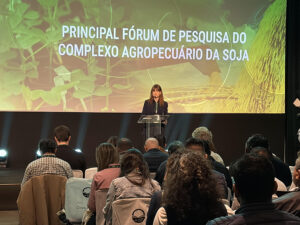
RPS President Liliane Henning: “Faced with a dynamic scenario, we need to answer which disruptive innovations will impact the day-to-day operations of agriculture and how we can accelerate the transfer of technology to the field” – Photo: Lebna Landgraf
The ceremony was attended by the head of Research at Embrapa Soja, Roberta Carnevalli, representing the head of the unit, Alexandre Nepomuceno, and the president of RPS, Liliane Henning.
In opening the event, Liliane highlighted the need to accelerate the generation and transfer of knowledge in light of the transformations occurring in the sector. "Faced with a dynamic scenario, we need to answer which disruptive innovations will impact the day-to-day operations of agriculture and how we can accelerate the transfer of technology to the field," she emphasized.
According to her, the search for solutions to the challenges of the production chain remains one of the forum's main objectives. "Finding answers to the challenges of this production chain is what the leaders participating in this forum aim for. Together, we want to build an agenda for sustainability and productivity, ensuring greater security to overcome the adversities of the soybean complex," she added.
Climate change
One of the highlights of the opening was the launch of the publication "Agronomic Topics on Coping with Drought in..."
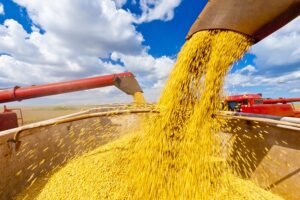
Photo: RRRufino/Embrapa Soja
Soybeans (Document Series 486), prepared by researchers José Salvador Foloni, Liliane Henning, José Renato Farias and Luis Crusiol.
The material brings together technical information and recommendations aimed at increasing the resilience of the crop in the face of the growing climate variability observed in different producing regions of the country.
According to José Renato Farias, the effects of adverse weather conditions are already demanding faster responses from research and the productive sector. “Adverse weather conditions are impacting Brazilian agriculture and require immediate action to increase the sector's resilience. Even traditionally stable areas are beginning to suffer the effects of climate variability,” he noted.
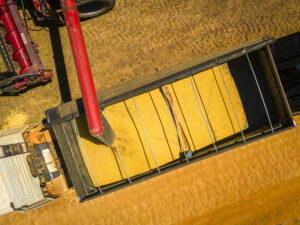
Photo: Disclosure
According to the researcher, the publication was built upon contributions from various experts and aims to support producers in adopting practices better suited to the new climate scenario. "To address this scenario, the publication brings together contributions from various researchers and seeks to guide producers in adopting practices more adapted to the new climatic conditions," he emphasized.
Price pressures demand more risk management.
The program also provided an opportunity for discussions about the market. The lecture "Market Risks and Opportunities," given by consultant Ismael Menezes of MD Commodities, addressed the impacts of the current international situation on the profitability of production.
According to Menezes, the global market is going through a period of increased grain supply without growth.
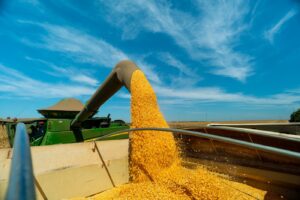
Photo: Disclosure
The proportional increase in consumption has put pressure on prices and reduced producers' margins. "Producers' profit margins have become narrower. Given this context, farmers need to adopt an agile approach to take advantage of opportunities that arise, whether through exchange rate fluctuations, with the rise of the dollar, or rebounds in the Chicago Stock Exchange," he stated.
The consultant also drew attention to the need to improve the marketing of production, an area that, according to him, still represents a challenge for some Brazilian producers.
Although the country is a world leader in productivity and efficiency within the farm gate, Menezes believes that decisions related to grain sales continue to impact the economic results of farms. "Risk management and strategic marketing have ceased to be merely a differentiating factor and have become mandatory factors to guarantee the financial survival of the activity in the current scenario," he warned.

Photo: RRRufino/Embrapa Soja
Research and the productive sector
The 40th Soybean Research Meeting continued with a program that included plenary sessions, 12 thematic panels, and a workshop dedicated to Integrated Pest Management (IPM-Soybean).
The event received 95 technical papers, presented in the form of extended abstracts, which will be published in digital format. In addition to the scientific program, 17 partner companies and institutions participated in the exhibition area, showcasing technologies, services, and solutions focused on the soybean production chain.
For Embrapa Soja, the meeting remains one of the main forums for technical discussion of the crop in the country, bringing together research, the productive sector, and industry around the challenges that influence the productivity and competitiveness of Brazilian soybean farming.