EN
EN  PT_BR
PT_BR 
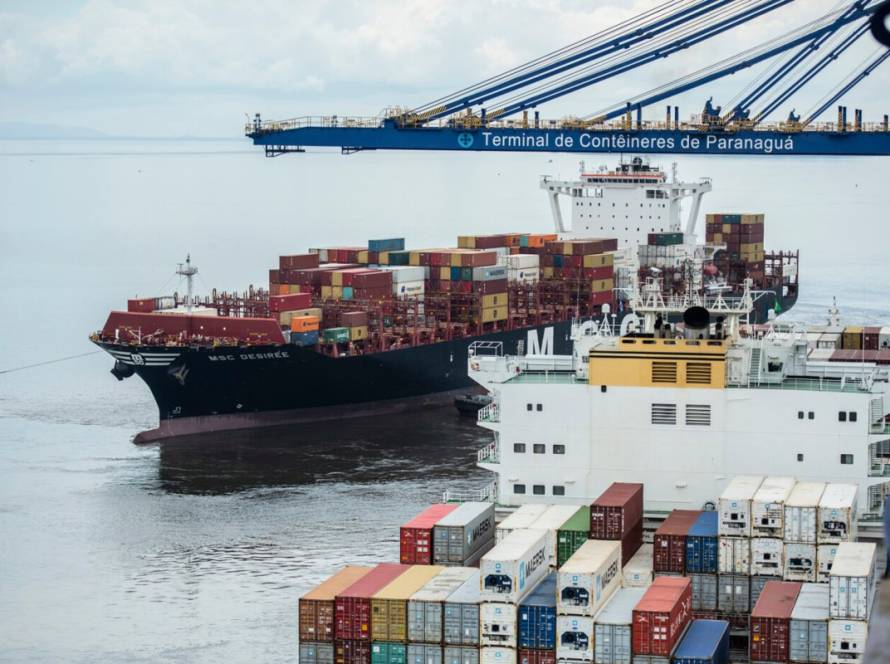
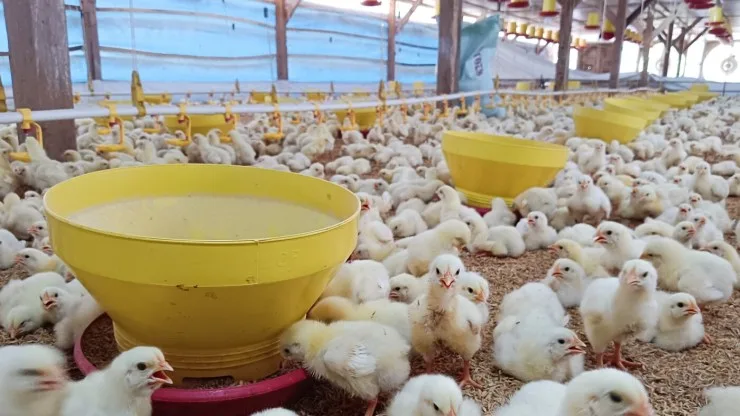
Despite registering an outbreak of avian influenza on a commercial chicken farm earlier this year, Brazil is expected to close 2025 with an increase in poultry meat exports. Among the markets that contributed to this performance is the Arab market, which demonstrated confidence in Brazil during the period of dealing with avian influenza, according to industry leaders, with the United Arab Emirates being the largest buyer of the product from January to October of this year.
The overall export overview was presented to the press this Wednesday (3) by the president of the Brazilian Association of Animal Protein (ABPA), Ricardo Santin, who also gave his view on how the Arab market behaved in relation to the supply from Brazil in this year of avian flu.

President of the Brazilian Association of Animal Protein (ABPA), Ricardo Santin: “Not even in my wildest dreams did I imagine arriving at the press conference and announcing positive data” – Photo: Press Release/Alimenta
“The Emirates was one of the first countries not to close its borders, and Saudi Arabia recognized regionalization very quickly. Although countries closed their borders entirely (to Brazil) and took a long time to reopen – countries of lesser importance in Brazil's import profile – the Middle East as a whole was the one that demonstrated the greatest confidence from the beginning of this action,” said Santin.
When health problems are detected, countries often close their markets to products from the country where the disease has been reported. Regionalization occurs when a country restricts its purchases only to a specific geographic area within the supplier's territory where the disease has been reported, instead of suspending imports from the entire country.
Santin attributes the Arab market's confidence to Brazil's knowledge of halal production and the close relationship these countries have with Brazilian certification bodies in the field. Brazil produces chicken meat according to Islamic religious norms, and certifies it as halal for this reason, making it the world's largest supplier of halal protein. According to Santin, this confidence has allowed the United Arab Emirates to remain Brazil's largest importer of chicken meat for a long time.
From January to October of this year, Brazil exported 4.378 million tons of chicken meat, a decrease of only 0.1% compared to the same period last year. The United Arab Emirates was the largest buyer, with 393,680 tons and an increase of 0.79%. Among the five largest destinations for the product during this period, only another Arab country, Saudi Arabia, also increased its purchases, by 6.93%, to 332,890 tons. The other three major importers, Japan, South Africa, and China, reduced their acquisitions.
Santin expects the partnership with the Arab market to strengthen in 2026. “It’s a partnership that has already been built and has proven to be long-lasting and strong. So we see this continuing into 2026, along with work in the halal markets of Africa,” he states, citing the opening of the Tanzanian market, which has a Muslim population but is not an Arab country. Santin also mentioned a visit to Indonesia and the reopening of the Malaysian market, also non-Arab nations with Islamic populations and halal consumption.
A year of positive data.

For the year, ABPA expects exports to reach up to 5.32 million tons, an increase of up to 0.5% compared to 2024. "Not even in my wildest dreams did I imagine arriving at this press conference and announcing such positive data," said the association's president, referring to the country's handling of avian flu this year. During the influenza period, 122 markets were fully open to Brazilian chicken meat and 28 closed, but many only partially, Santin points out.
After a January-to-October period marked by a very small contraction of only 0.1%, according to ABPA, the expectation is that exports will show a positive increase from January to November of this year, with a rise of 0.1%. "We have to celebrate this recovery," stated Santin. For next year, ABPA projects exports of 5.5 million tons, an increase of more than 3.4%. In the event of avian influenza, the association believes the impact will be less significant due to the work being done by purchasing markets to adopt regionalization.