EN
EN  PT_BR
PT_BR 
The most recent survey by the Mato Grosso Institute of Agricultural Economics (Imea) projects a total cost of R$ 54.39 billion for the cycle, a figure that confirms the harvest as one of the most expensive in the state's recent history. The widespread increase in input costs and the decline of resellers as a source of financing are pushing small, medium, and large producers towards banks and trading companies, which are now responsible for the largest share of rural credit. This new dynamic makes decision-making slower, more bureaucratic, and more expensive, especially for those who have no margin for error.
Agronomist Thiago Grimm, a specialist in agricultural management and technology, sums up the feeling in the field in a few words. According to him, the harvest begins long before planting. “The producer arrives at 2025/26 with a heavier budget and less room to test strategies. Everything needs to be calculated. The margin becomes tighter, and any management error can compromise the profit of the entire harvest,” he explained.
Thiago observes that, although financial pressure is evident, the greatest risk lies in the reaction many producers tend to have during periods of high costs: indiscriminately cutting inputs. “The biggest mistake is reducing phytosanitary protection or economizing on fertilization randomly. This can create a false sense of savings and result in lost productivity. There's no point in spending less if the field yields less. The field is unforgiving of hasty decisions,” he warned.
With rising costs, the agronomist advocates a strategic approach that combines soil analysis, dose revisions, prioritization of inputs with the highest return, and intelligent use of monitoring technologies. He states that the pursuit of efficiency has ceased to be a trend and has become a condition for crop survival. “The producer who uses data-driven management, who understands the real needs of each area and makes decisions based on economic return, has a better chance of getting through this cycle safely. Efficient management isn't just pretty on paper; it's profitable in practice,” he affirms.
Uncertainty regarding credit also weighs on decision-making. With dealerships losing prominence in crop financing and much of that space being occupied by banks and trading companies, producers have begun dealing with institutions that operate with more stringent requirements, guarantees, and deadlines. Romário Alves, CEO of Sonhagro, observes this movement closely and emphasizes that the current scenario demands a more prepared producer. “The quick credit from dealerships has disappeared. Today, those who don't organize their cash flow in advance risk getting stuck at the most sensitive moment of the operation,” he stated.
According to him, many farmers have sought alternative ways to keep their businesses running, such as specific lines of credit from Pronamp and PCA, structured CPR operations, and negotiations that offer conditions tailored to each producer's profile. Romário emphasizes that diversifying credit sources has become part of the strategy. “Producers who only look at one type of financing become vulnerable. Evaluating different financing options, comparing terms and interest rates, and understanding what fits into the plan is as important as choosing the seed variety or the level of fertilization,” he added.
Experts emphasize that, despite the challenging scenario, there is still room for good harvests as long as the strategy is aligned with the technical and economic reality of the property. “This is the year when producers need to look inward at their farms. Understand what works, what wastes money, where improvements can be made. The difference between profit and loss lies in these details. The harvest will require discipline and knowledge, not brute force,” concludes Thiago.
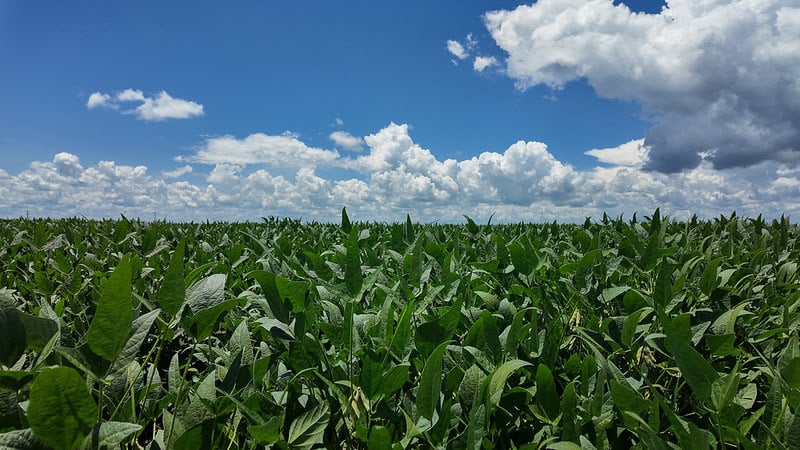
With record costs, tighter credit, and higher risk, the Mato Grosso soybean harvest is shaping up to be a management test. Producers who enter the cycle prepared, with rational management and financial planning, tend to weather the period with greater stability. Those who maintain old and inefficient practices will feel the weight of the new agribusiness landscape. The 2025/26 harvest sends a clear message to producers: efficiency is no longer a differentiator, it's a necessity.