EN
EN  PT_BR
PT_BR 
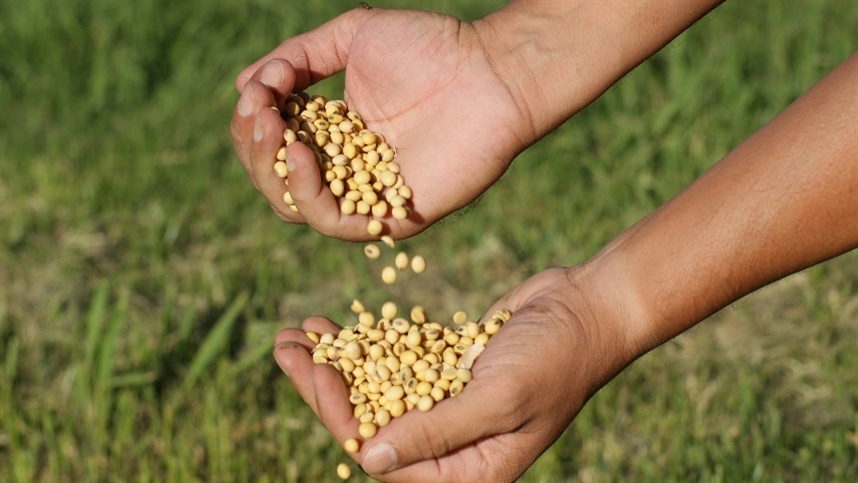
The average productivity of soy Brazilian production is expected to decline in the 2026/2027 harvest, according to data released by the National Supply Company (Conab). The new season begins under climate risk, with a forecast of over 90% probability of a very strong El Niño occurring between September and November.
Conab projects a soybean production of 181.64 million tons in the 2026/27 crop year, cultivated in an area of 49.3 million hectares. Even with the production growth, a slight reduction in average yield is expected compared to the previous cycle.
The climate scenario increases the need to anticipate stress management in crops, according to Reinaldo Bonnecarrere, vice president of Elicit Plant for Brazil and Latin America. He believes that the loss of productive potential can begin before symptoms are visually perceived in the field. "When we see the leaf wilting or changing appearance, it has often already undergone a series of physiological changes," says Bonnecarrere.
According to data released by Conab, the climate will be one of the main variables for the outcome of the new harvest. The most recent bulletin on El Niño, prepared by Inpe, Inmet and other federal agencies, indicates a 100% probability of the phenomenon persisting at least until the beginning of 2027.
For the September-to-November quarter, the trend is for above-average rainfall in areas of the South and below-average rainfall in the central-northern part of the country.
The distribution of rainfall and the stage of soybean development at the time of a potential water shortage can influence the intensity of the impacts, explains Bonnecarrere. “It’s not just about whether or not there is rain. It’s necessary to know how long the period without precipitation lasts and what stage the plant is in at that moment,” he says.
When water availability decreases, the plant alters its functioning to reduce losses. One of the first responses is the closing of the stomata, a mechanism that reduces transpiration but also interferes with gas exchange and photosynthesis.
According to studies by Embrapa Soja cited in the material, water deficit can cause flower drop, pod abortion, and reduced grain weight. The impact tends to be greater during the reproductive period, especially between flowering and grain filling. “The plant doesn't need to be wilted to be under stress. At certain stages, the yield potential may be compromised while visually the crop still appears normal,” explains Bonnecarrere.
Given this scenario, prevention involves various factors, such as genetics, sowing time, soil structure and cover, organic matter, root development, water availability, and climate monitoring.
Elicit Plant also works with the EliTerra® platform, based on plant-derived phytosterols and aimed at the physiological preparation of plants before and during stressful situations. The technology uses the concept of priming, which seeks to stimulate natural response mechanisms before adverse conditions cause more severe damage.
Bonnecarrere emphasizes that the tool plays a complementary role within management. "It doesn't replace genetics, soil, irrigation, or management. It's just another layer within a strategy to reduce production risk," he notes.
The economic impact of climate is also important in systems where soybeans are followed by second-crop corn. A delay caused by weather conditions in the oilseed can shift the harvest and reduce the window available for the cereal.
Corn productivity also depends on the conditions encountered throughout its cycle. Therefore, climate risk assessment needs to consider the possible effects on both crops. "The producer needs to translate this risk into sacks per hectare. How much does it cost to lose three, five, or ten sacks in an area due to a period of stress?" asks Bonnecarrere.
According to him, potential productivity, price, operating costs, and climate exposure need to be considered in this assessment.
In trials published by Elicit Plant, EliZon showed an average increase of 7.5% in soybean productivity, equivalent to approximately 4.6 sacks per hectare.
In corn, evaluations carried out over four growing seasons showed an average increase of 9.41 TP4T, or 10.1 sacks per hectare.
According to data released by Elicit Plant, the results vary depending on the environment, genetics, management, intensity, and timing of the stress. In specific corn fields subjected to multiple adverse conditions, increases of between 15 and 17 sacks per hectare were recorded.
The company treats these numbers as results from trials and not as a uniform expectation for all crops.
According to Bonnecarrere, the goal of proactive management is to preserve a larger portion of the productive potential before the loss becomes irreversible. "Rain after the stress can help the plant recover, but it doesn't necessarily recover the productive potential it lost," he states.