EN
 PT_BR


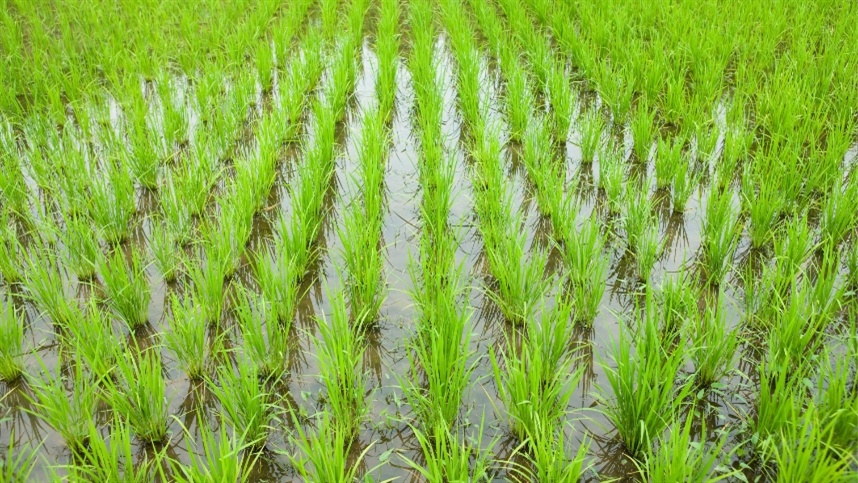
Planting rice Planting is progressing in Rio Grande do Sul, mainly in the western border region, but heavy rains have hampered the pace of operations. According to data released by Emater/RS-Ascar, producers need to remove water from their plots to continue sowing and avoid problems with crop establishment.
The establishment of the 2026/27 crop is still in its initial phase. While planting progresses in the Western Border areas, other producing regions are beginning crop establishment operations.
In areas affected by higher rainfall, drainage became necessary to allow planting to continue. Excess water also requires attention to avoid difficulties in germination and emergence of already sown crops.
Rice farmers have intensified the preparation, systematization, desiccation, and management of areas intended for cultivation. These operations include both pre-germinated seed systems and sowing in dry soil.
In the Southern Region, the water reservoir levels in springs and dams were replenished by the rainfall recorded during August.
According to data released by Emater/RS-Ascar, the area projected by the Rio Grande do Sul Rice Institute (Irga) for the 2026/27 harvest is 861,779 hectares. The initial productivity estimated by Emater/RS-Ascar is 8,741 kg/ha.
In the Emater/RS-Ascar administrative region of Bagé, on the Western Border, planting progressed significantly between September 14 and 18.
In the areas that received the highest rainfall, efforts are focused on removing water from the plots. This measure aims to allow planting to continue and reduce germination and emergence problems.
Desiccant herbicides were also applied to enable no-till planting, in addition to pre-emergent herbicides and desiccants at the needle stage. The goal is to keep the crop free of weeds at the beginning of the cycle.
In Quaraí, the planted area reached 20% of the municipal estimate. In Uruguaiana, planting reached 15%.
In Dom Pedrito, a municipality traditionally responsible for the largest rice-growing area in the Campanha Region, planting began at a slow pace. So far, planting has reached 1% of the 34,000 hectares planned.
In the Pelotas administrative region, planting has also begun. According to data released by Emater/RS-Ascar, the initial estimate for the harvest is 167,818 hectares.
Much of the land has already been prepared and leveled, with planted furrows and desiccated cover crops. Producers are waiting for suitable soil conditions to proceed with sowing.
In the Santa Rosa region, in Santo Antônio das Missões, the expectation is that the cultivated area will remain the same as the previous year, at around 400 hectares.
In Garruchos, on the other hand, the planned area was significantly reduced and is expected to be around 25 hectares, ceasing to represent a crop of municipal significance.
In the Soledade region, work on managing areas designated for pre-germinated rice has been accelerated. In areas intended for sowing in dry soil, desiccation operations have begun.
In addition to the progress of planting, rice prices also showed an upward trend in the state.
According to data released by Emater/RS-Ascar, the average price of a 50-kilogram sack of rice rose 0.81% in the weekly survey, going from R$ 78.76 to R$ 79.40.