EN
EN  PT_BR
PT_BR 

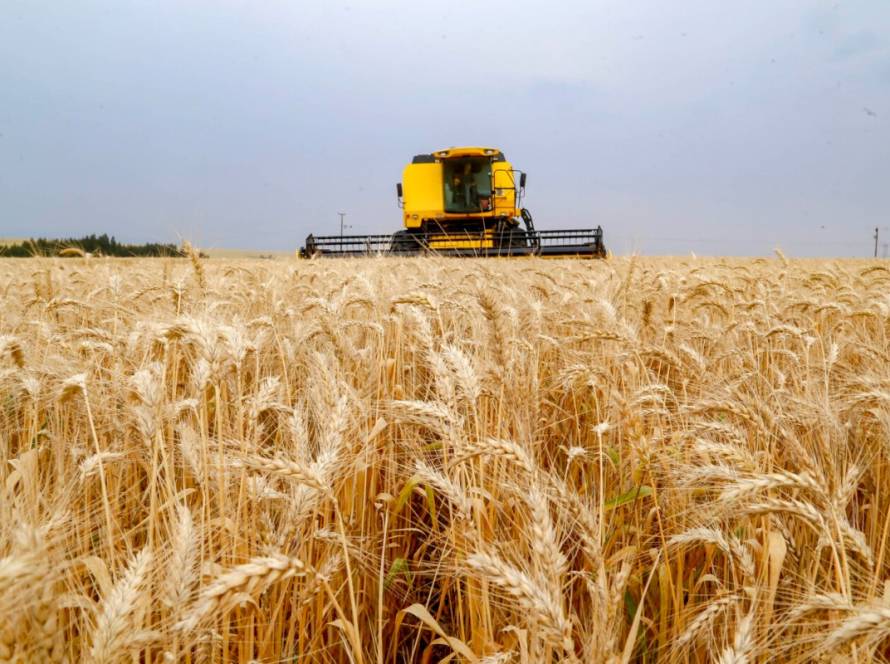
The harvest of wheat In Rio Grande do Sul, it is entering a decisive phase, but is facing the effects of frost, excessive rain and ear diseases. According to data released by Emater/RS-Ascar this Thursday (1st), 57% of the crops are in grain filling, while gibberella gains strength in areas with high humidity.
According to data released by Emater/RS-Ascar, the crops show a heterogeneous phenological distribution, with 19% of the area in flowering and 57% in grain filling. Physiological maturity reaches 21% of the cultivated area, while harvesting was carried out in 1% of the crops.
The alternation between periods of heavy rain, cloudiness, and periods of greater solar radiation has conditioned the development of the plants. In areas during flowering and heading, the maintenance of high humidity favors ear diseases, mainly Fusarium head blight, which has a significant incidence in some of the crops.
Crop performance remains highly variable, influenced by weather conditions and the level of technology employed. According to data released by Emater/RS-Ascar, there are already initial reports of yields below expectations. Frosts in September reduced the productive potential in affected areas, mainly due to interruptions in grain filling and fertilization problems.
Localized damage caused by hail and strong winds was also observed, especially in the Central-West and Northwest regions of the state. The extent of the damage is still being quantified. For the 2026 harvest, the area projected by Emater/RS-Ascar is 814,220 hectares, with an estimated average productivity of 2,701 kg/ha.
In the Bagé administrative region, on the Western Border, crops are showing better conditions after periods of lower rainfall and greater availability of solar radiation. In São Borja, the sanitary conditions are considered satisfactory. In the Campanha region, however, 571 of the 9,600 hectares cultivated are in bloom, a phase with a risk of Fusarium head blight due to episodes of heavy rainfall.
High soil moisture has also limited access for machinery to apply pesticides. In Hulha Negra, approximately 40 hectares were flattened due to strong winds. In the Caxias do Sul region, in the Campos de Cima da Serra, the crops are in the heading stage, a stage of high susceptibility to diseases. The frequency and volume of rainfall make it difficult for machinery to enter the area to apply fungicides.
In the Frederico Westphalen region, 5% of the crops are in vegetative development, 10% in flowering, 60% in grain filling, 23% in maturation, and 2% have already been harvested.
According to data released by Emater/RS-Ascar, the incidence of Fusarium head blight is significant, and fieldwork has focused on fungicide application. In Ijuí, 15% of the crops are in the maturation and early harvest stages. The frosts of September 7th and 8th interrupted grain development and caused fertilization failures in some areas, reducing yield potential.
In the fields that were not affected by frost, the development and number of grains are considered satisfactory. At the same time, the incidence of ear diseases has increased, mainly Fusarium head blight and fusarium head blight. In the Celeiro Region, in Tenente Portela, the first harvested areas showed a yield of 2,280 kg/ha, with a hectoliter weight of 74, below what was initially expected.
In the Passo Fundo region, crops are entirely in the grain-filling stage. Producers are monitoring weather conditions due to their impact on plant health management. In Pelotas, 22% of the area is in vegetative development, 60% in flowering, and 18% in grain filling.
According to data released by Emater/RS-Ascar, the sequence of cloudy days, frequent rains, and low availability of solar radiation since August has delayed plant development. In the Santa Maria region, the intense rains mainly affected crops in the flowering and heading stages. Hail caused severe losses in different municipalities. In Santiago, approximately 200 hectares suffered almost total loss. In São Francisco de Assis, at least 150 hectares were affected. Losses were also recorded in Capão do Cipó, Jari, and Tupanciretã.
In the Santa Rosa region, the phenological distribution is 1% in vegetative development, 7% in flowering, 63% in grain filling, 26% in maturation, and 3% harvested. According to data released by Emater/RS-Ascar, the high humidity recorded in previous periods favored ear diseases. Winds and hail also caused losses in some crops. The extent of the damage is still being assessed. In the Soledade region, the crops are in satisfactory condition despite the intense rains of previous weeks. The alternation between concentrated rainfall and periods of dry weather, including five days of high solar radiation in the last week, favored the crop's development.
Phytosanitary management is concentrated in late-planted areas, where there is an incidence of leaf spots, rust, powdery mildew, and, above all, Fusarium head blight. The phenological distribution is 5% in heading and flowering, 90% in grain filling, and 5% beginning physiological maturity. According to data released by Emater/RS-Ascar, there are crops with high productive potential coexisting with areas of only reasonable technological standards.
The price of wheat also increased in the weekly survey by Emater/RS-Ascar. According to data released by Emater/RS-Ascar, the average price per 60-kilogram sack rose 2.56% in the state, going from R$ 71.94 to R$ 73.78, considering a product with a standard pH of 78. At the Cruz Alta Grain Exchange, available wheat is quoted at R$ 82.00 per sack.