EN
EN  PT_BR
PT_BR 
With the start of the 2025/2026 harvest season, the effects of the new Harvest Plan are already being felt in the fields. Although it was announced as the largest in history, the program has reduced subsidies for rural credit and increased interest rates, making it difficult for producers to access financing under viable conditions.
The current situation is worrying the Mato Grosso Soybean and Corn Producers Association (Aprosoja MT), which has received reports from farmers experiencing difficulties accessing the announced credit lines. According to the association's administrative director, Diego Bertuol, the record volume of resources announced by the Federal Government has not translated into real credit for producers.
“These resources haven’t reached the rural producers. We’re already at the beginning of planting, and many haven’t been able to carry out their banking operations, not even for operating costs. The storage situation is no different. Today, we need lines of credit with interest rates lower than those announced by the federal government, in addition to a grace period so that producers can start paying and make infrastructure investments viable, but this isn’t happening. Therefore, currently, more than 501 tons of our harvest are without adequate storage space,” he stated.
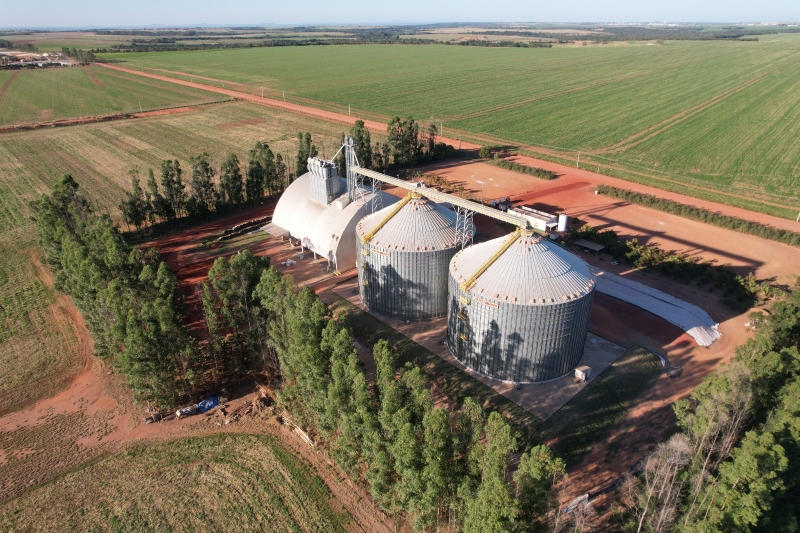
In Mato Grosso, data shows that soybean production is expected to exceed 47 million tons in the 2025/26 harvest, but the state has only 53.4 million tons of static storage capacity, a space that also needs to accommodate corn production, which exceeded 54 million tons in the last harvest. Combined, the two crops show a deficit exceeding 52 million tons, according to a survey by the Mato Grosso Institute of Agricultural Economics (IMEA).
With production on the rise, the lack of accessible credit for the construction and expansion of warehouses exacerbates logistical bottlenecks and reduces the producer's bargaining power. The vice-president of Aprosoja MT, Luiz Pedro Bier, emphasizes that the state is the most impacted by the lack of infrastructure.
“We have less storage capacity than the minimum required, and Mato Grosso is the worst state in terms of infrastructure when we compare production and storage capacity. Construction is expensive, financing is bureaucratic and time-consuming, and at the current interest rates, it's not viable. The smaller the warehouse, the more expensive it is per sack stored. Therefore, small and medium-sized producers are the most impacted,” said the vice-president, highlighting that, faced with a lack of space to store production, many producers resort to improvised solutions, such as the use of silo bags, in addition to facing a shortage of trucks and high transportation costs during the harvest period.
Although the Harvest Plan includes the Program for the Construction and Expansion of Warehouses (PCA), producers claim that the funds have not reached the end user, which hinders the progress of the works and increases the risk of logistical bottlenecks in the next harvest.
“We have to understand that this is not just a problem for rural producers, but a matter of national food security. Any unforeseen event at ports or geopolitical crises could leave Brazil hostage, unable to export its harvest. And if that happens, what will we do with all that grain? Without storage space, we could lose up to half of Mato Grosso's production, a loss in the billions, with direct repercussions for the entire country's economy,” asks Luiz Pedro Bier.
The president of Aprosoja MT, Lucas Costa Beber, points out that the problem is nationwide and is aggravated by high interest rates and reduced resources for investment.
“Brazil produced 350 million tons of grains this year, and at the same time, we have a deficit of more than 120 million tons. What worries us is that every year the percentage of production grows more than the construction of warehouses. And at this moment, with high interest rates and fewer resources available in the Harvest Plan, the scenario becomes even more challenging. The increased cost of equipment and storage structures, coupled with high inflation, has discouraged investment for a large part of the producers,” he states.
He advocates for the creation of public policies that encourage the construction of private warehouses and offer tax benefits to producers. "The government needs to consider policies that incentivize, including through tax incentives, those who own warehouses so that Brazil becomes sovereign in this area, since there is always a risk of market changes, even wars, that can impact us and force us to store goods. And without storage space, we are at the mercy of the weather," he added.
With production volumes expanding, the storage deficit reinforces a warning that has worried the production sector for years. Without sufficient infrastructure, producers lose autonomy, reduce their profit margins, and Brazil compromises part of its competitiveness and food security.
Aprosoja Mato Grosso continues its efforts in defending public policies that ensure more accessible financing lines, with extended terms, less bureaucracy, and interest rates compatible with the reality of the field, so that investments such as storage, considered strategic to guarantee the sustainability of production and the country's food sovereignty, can be unlocked.