EN
EN  PT_BR
PT_BR 
The soybean market is going through a period of global tension and domestic caution. While international demand remains strong, driven by weather concerns in the United States and changes in export tariffs in Argentina, which temporarily removed and then reinstated export taxes, the Brazilian domestic market is suffering from the appreciation of the real and exchange rate volatility, factors that are slowing down the advance marketing of the 2025/26 crop.
According to Itaú BBA's Agro Consulting (October), the scenario combines opportunities and challenges. Planting is progressing earlier than last year, driven by early rains, but grain sales are still below the historical average, reflecting lower prices and high exchange rate risk. By the end of September, approximately 231 TP4T of the crop had been traded, compared to the average of 321 TP4T over the last five years. Considering a potential production of 175 million tons, this represents approximately 40 million tons sold.
 In September, soybeans in Chicago recovered to 1.4%, after two months of devaluation, reaching US$ at 10.19 per bushel. "The movement was driven by the start of the harvest in the United States and concerns about productivity due to a drier-than-expected August and low moisture content in the harvested grains. The international market also reacted to the removal and subsequent reinstatement of Argentine export taxes, impacting the global supply of the commodity," point out analysts at Itaú BBA.
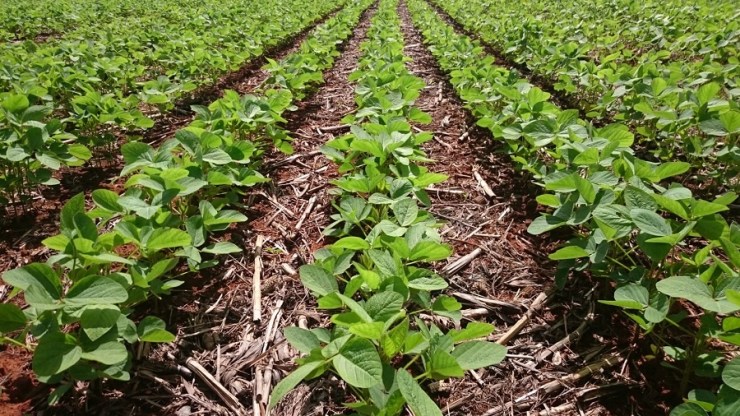
In Brazil, international price increases did not translate into significant gains for producers. Soybean prices in Paranaguá fell by 11% to R$139 per sack, pressured by the appreciation of the real. Despite this, planting progressed ahead of schedule, benefiting from rainfall. "By September, approximately 11% of the projected area had been sown, compared to 9% in the same period last year," the consultancy highlights.
In Mato Grosso, the progress was even greater, with 21% of the area already planted by September 10th, according to the Mato Grosso Institute of Agricultural Economics (Imea). The start of planting in irrigated and rainfed areas consolidated the initial planting, despite the still irregular volumes.
Climate and trade outlook
The outlook for the Brazilian and Argentinian harvests remains favorable. In Brazil, the rains forecast for the coming weeks should favor planting and the initial development of crops, especially in the central region, with particular attention to Rio Grande do Sul. In Argentina, soils well supplied with moisture allow for a promising start, despite localized flooding in some areas.
If harvests are good in both countries, the global market tends to be well supplied, with potentially record supply. Meanwhile, trade tensions between the US and China could increase demand for Brazilian soybeans, influencing export premiums and impacting international prices. “The soybean market remains stable, with positive weather expectations. However, prices in Brazil will still depend on the appreciation or depreciation of the real, which continues to be the main factor in the formation of domestic prices,” assesses Itaú BBA's Agro Consulting.
Soybean meal
Soybean meal fell 1% on the CBOT in September, reaching US$279.8 per ton, pressured by ample global supply and a temporary reduction in Argentine export taxes. Soybean oil also fell for the second consecutive month, 5.2%, to US$50.5 per pound, influenced by lower oil prices and increased Argentine supply.
In the domestic market, soybean meal showed a slight increase, rising 1.5% in Rondonópolis (MT), to R$ 1,503 per ton. Soybean oil rose for the third consecutive month in Mato Grosso, quoted at R$ 6,489 per ton (+4.3%). According to the consultancy, the firm demand from the biodiesel sector, supported by good margins and the mandatory blending of 15% of biodiesel in diesel, continues to support prices, despite the ample supply that makes it difficult to fully absorb the volumes produced.
According to Itaú BBA's Agro Consulting firm, the global market tends to remain balanced, but producers need to monitor exchange rate fluctuations, which could strongly pressure domestic prices if the Brazilian real continues to appreciate.
The digital version is now available on the O Presente Rural website, with free access for full reading, click here. here.