EN
EN  PT_BR
PT_BR 
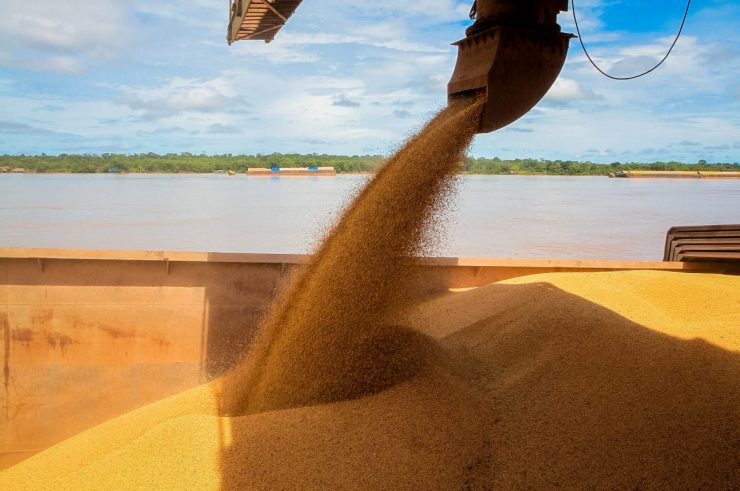
Soybeans were the commodity with the highest volume handled in Paraná ports between January and October of this year, according to the operational report from Portos do Paraná released this Monday (24). In total, 13,015,446 tons were shipped, representing, in FOB value (value of the product at the point of shipment), US$ 5.2 billion. The volume corresponds to 21.2% of all cargo handled in 2025 by Paraná ports (61,213,363 tons).

Photo: Claudio Neves/Ports of Paraná
Brazil is the largest exporter of the product, and Paraná stands out in this movement. In total, 91% of soybeans leaving Paranaguá are destined for the Chinese market. "We are confident that soybean movements will continue to rise in the coming months," said the CEO of Portos do Paraná, Luiz Fernando Garcia.
The month of October showed a growth of 60% in the movement of the commodity compared to the same month of the previous year, going from 508,876 tons in 2024 to 815,327 tons in 2025. Currently, 15 terminals can handle soybeans through the ports of Paraná.
Among the main reasons for the increase in soybean exports are the record production of the Brazilian harvest and the high Chinese demand, which practically stopped importing the product from the United States after the tariff disputes.
soybean complex
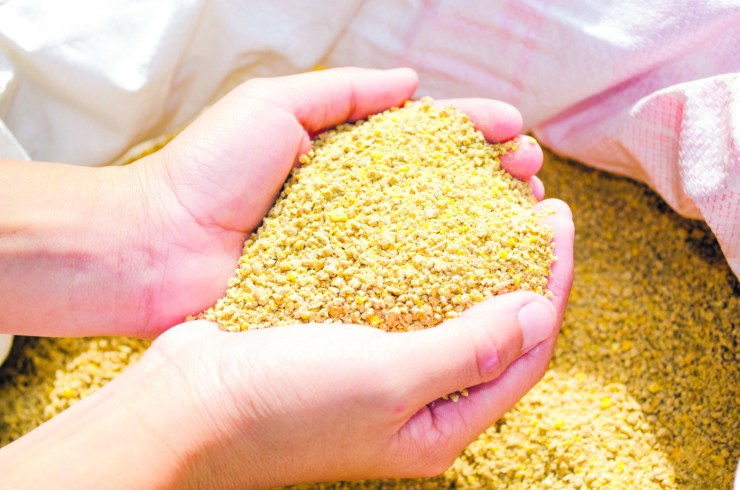
The Port of Paranaguá has the second largest volume of soybean meal handled in Brazil, accounting for 281 TP4T of national exports. From January to October of this year, 5,517,043 tons of soybean meal were handled, representing US$1.8 billion in FOB value. The product, used in animal feed production, saw an increase of 31 TP4T compared to last year (5,333,259 tons). The Netherlands, France, Spain, and South Korea were the main importers.
Paranaguá remains the national leader in soybean oil exports. Up to the end of October, the port was responsible for shipping 631 TP4T of soybean oil.

Photo: Claudio Neves/Ports of Paraná
All national production, destined for countries totaling more than 860,000 tons. The oil can be used in the food, pharmaceutical, chemical, and textile industries, among others.
More power in less time.
The Port of Paranaguá is preparing to further increase its handling capacity within the soybean complex. The construction of Moegão, the largest public port project currently underway in the country, scheduled for January 2026, will enable an increase in the reception of grains and soybean meal in the coming years.
The complex will centralize the rail unloading of solid bulk cargo, connecting 11 terminals via a conveyor belt system. Soybeans will be one of the commodities that will benefit most from this investment.
Currently, around 550 railcars can be unloaded daily at export terminals. With the Moegão dam, this process will be standardized at a single unloading point, increasing to up to 900 railcars per day. “With the project completed, Moegão will be able to receive 24 million tons of grains and bran per year, serving the terminals of the Eastern Export Corridor and increasing productivity, especially in soybean exports,” stated the Director of Port Operations, Gabriel Vieira.

Photo: Claudio Neves/Ports of Paraná
Another project that will begin development is the construction of the 'T' pier, which will feature four new berths and a loading system considered the fastest in the world. The equipment currently in operation can transport three thousand tons of grains and bran to the holds of ships every hour. The new structure will be able to unload up to eight thousand tons per hour into a vessel.
The third factor that will further expand exports is the deepening of the access channel, as it will allow larger ships to dock and have space to carry even more products. This will be possible with the concession of the Access Channel to the Port of Paranaguá, made possible through a public auction on the Brazilian Stock Exchange (B3).
The consortium that won the bid will have to make all the necessary investments within five years of taking over the contract. This includes increasing the draft, which is the deepest point of the ship to the surface of the water, from the current 13.3 meters to 15.5 meters within five years.
The 2.20-meter increase in draft will allow a ship to carry an additional 14,000 tons of solid vegetable bulk cargo without any additional operating cost.
All these changes will considerably increase the competitiveness of the Port of Paranaguá, which is one of the main bulk cargo ports in the world. Another advantageous addition will be the increased safety in ship maneuvers and the shorter operating time, which considerably reduces the cost of transporting cargo leaving Paraná.