EN
EN  PT_BR
PT_BR 
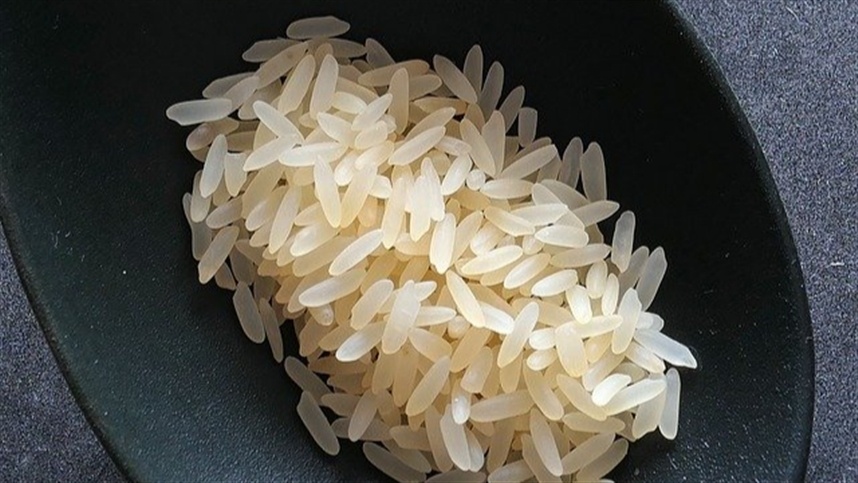
Planting rice Irrigation between September and December requires attention to sowing depth, one of the adjustments that most influences the speed and uniformity of emergence. In lowland areas of southern Brazil, especially in Rio Grande do Sul and Santa Catarina, proper adjustment helps to avoid stand failures, weak plants, and differences in development between plots.
The depth needs to be adjusted according to soil conditions, moisture, tillage system, and seeder characteristics. The goal is to place the seed in a layer with sufficient moisture to germinate, without burying it too deeply.
In irrigated rice, the operation generally takes place in lowland soils with medium to clayey texture and the possibility of rapid variations in moisture. Between September and December, the increase in temperature and photoperiod favors germination and initial development.
At the same time, periods without rain, wind, and intense solar radiation can accelerate the drying of the topsoil layer. Therefore, the depth must balance access to water and the need to maintain adequate oxygenation conditions.
When the seed is planted too deep, the seedling has to travel a greater distance to reach the surface. This process leads to greater consumption of the seed's reserves and increased exposure to conditions that can compromise emergence.
Excess moisture and low oxygen levels can promote rotting. They also increase the likelihood of soil fungal attacks and make it difficult for the seedling to penetrate compacted layers or large clods.
On the other hand, sowing too shallowly also presents risks. The loss of contact between seed and soil can impair water absorption and leave the grain more exposed to surface drying.
The seed also becomes more susceptible to predation by birds and rodents, and to displacement caused by surface runoff after rainfall.
The desired result is a depth that maintains adequate contact between seed and soil and allows access to a stable moisture range. This depth should not be fixed, as it depends on soil texture, tillage system, moisture content, and the type of seeder.
Soil condition is one of the main factors in regulation. In heavier, clayey soils, greater water retention can be accompanied by the formation of surface crusts when drying occurs.
In these areas, planting too shallowly may have difficulty penetrating the crust formed after heavy rains and periods of sunshine. Conversely, planting too deep can lead to the seed being planted in a poorly aerated zone and increase the risk of rotting.
In medium-textured or looser soils, surface moisture tends to be lost more quickly. During dry periods in early spring, it may be necessary to plant the seed a little deeper to reach a layer with available water.
The tillage system also affects the operation. In conventional tillage, the depth distribution can be more uniform when the machine is correctly adjusted, but large clods and poorly incorporated plant debris can cause variations between rows.
In no-till farming systems, the presence of crop residue requires special attention to the cutting discs and pressure springs. If the cutting mechanism is not working properly, some seeds may remain too close to the surface or show significant variations in depth.
Soil moisture should also be considered during the September to December window. Increased temperatures favor germination, but rainfall distribution can be irregular.
In soil that is very dry on the surface, the planting depth should allow the seed to reach a moist layer. Conversely, when the soil is very wet or waterlogged, it is necessary to limit the planting depth to avoid an environment with low oxygen levels.
In practice, adjusting the seeder mainly involves the depth limiting wheels, the pressure springs, and the furrow opening system, which can use discs, tines, or double discs.
Before starting the operation, the producer and the technician must assess the soil type, the presence of compacted layers, the moisture content between 0 and 5 centimeters, the preparation system, and the conditions expected for the following days.
Based on this information, an initial depth range is defined. This parameter needs to be validated in the field, and not simply reproduced based on the seeder manufacturer's instructions.
The limiting wheels determine how far the furrow-opening assembly penetrates the soil. To increase the depth, the wheel must be moved further away from the disc, allowing for greater penetration.
To reduce the depth, the adjustment should bring the wheel closer to the disc and limit how far the assembly enters the ground.
Pressure springs complement the adjustment. In harder soils or with a greater amount of straw, it may be necessary to increase the pressure to ensure that the discs reach the desired depth.
In moist and soft soils, however, high pressure can cause the planting line to penetrate too deeply. In this condition, the spring load should be reduced.
After the initial adjustment, it is ideal to perform a test on a short strip before starting to plant the entire area. One option is to sow between 20 and 30 meters at the expected working speed.
After stopping the machine, some rows should be dug across with a shovel or hoe, taking care not to displace the seeds.
The evaluation should consider the actual depth relative to the surface, the uniformity between rows and between seeds in the same row, and the contact of the grain with the soil.
It is also necessary to check for large gaps or excess straw covering the seeds. If the result is outside the defined range or shows significant irregularity, the wheel and spring adjustments should be redone before a new evaluation.
Operating speed also matters. Even with properly adjusted wheels and springs, too high a speed can cause the seeder to jump or oscillate, altering the depth along the row.
In irrigated rice, especially in soils with irregular microrelief or the presence of clods, the speed must be compatible with the machine's ability to keep the row assembly stable.
Confirmation of the adjustment occurs later, during plant emergence. An adequate depth tends to result in rapid and relatively uniform emergence, with little difference in date between plants in the same row.
The stand should also be close to the desired level, without large gaps within or between the rows. Seedlings with a robust initial stem, without excessive elongation to reach the surface, also indicate that the seed was not planted too deep.
Concentrated failures in entire segments of a line may indicate greater depth in that section, especially in locations where the soil was softer and allowed greater penetration by the machine.
Clods of earth or straw can also prevent the furrow from closing properly and impair contact between the seed and the soil.
Spaced-out failures without a defined pattern may be related to seed distribution or the quality of the material used, such as seeds with low vigor, and not necessarily to depth.
Adjusting the planting depth should be combined with other practices to promote emergence. Using seeds with good physiological quality, vigor, and proven germination helps reduce sensitivity to variations in depth and moisture.
Soil correction and fertilization should also follow recommendations based on analysis, seeking suitable conditions for the initial development of roots.
Preparing the seedbed is another point of attention. Excessively loose soils can undergo depth changes after rainfall, while very compacted surfaces can hinder emergence.
The management of initial irrigation also needs to be careful. Flooding too early, while the seeds are still germinating, can harm emergence, especially in cold soils or soils with low oxygenation.
Therefore, the water level must be managed in a way that does not compromise the initial establishment of the crop.
During planting, adjustments need to be monitored as conditions change within the field. Differences in texture, moisture, straw cover, and compaction can cause the same setting to produce different results in different areas.
Verification in small sections and monitoring of the first plots allows us to identify these differences and correct the operation before the problem spreads to a larger area.
The sowing depth, therefore, should not be treated as a fixed number for the entire crop. The adjustment needs to consider the specific characteristics of the soil and the conditions encountered at the time of the operation.
For irrigated rice producers, the strategy is to aim for a sowing depth that ensures moisture and contact with the soil, but without creating a barrier to emergence.
This balance helps reduce stand failures and differences in early development, factors that can affect tillering, light interception, competition with weeds, and the uniformity of panicle maturation.
Therefore, monitoring the depth from the time the seeder is set until the plants emerge is one of the measures to improve the establishment of irrigated rice.
Each crop has its own specific conditions regarding soil, terrain, moisture, preparation, and machinery. Therefore, the final adjustments must be validated in the field and, whenever possible, supervised by a technician or agricultural engineer.