EN
EN  PT_BR
PT_BR 
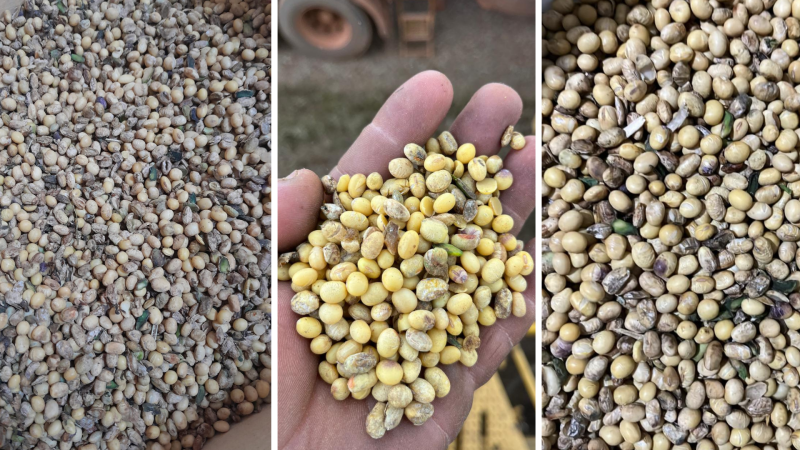

The quality of soybeans being harvested in Mato Grosso, especially in the northern part of the state, is worrying farmers, compromising average productivity and further narrowing their already tight profit margins. Excessive rainfall in the region has been hindering fieldwork for weeks and, in many cases, has even paralyzed harvesting activities. The result is entire lots with a high percentage of damaged or burnt grains, consequently leading to further discounts in the price paid to soybean farmers upon delivery.
Producers Daniel Sperandio Letieri and Daniela Campestrini, from the Matupá region, report that they have already been working with low cash flow due to the prices paid for the oilseed, with costs of approximately 55 sacks per hectare. They explain, “Averaging it out, that would be 70 sacks per hectare today. To make a profit, we deduct the 30% of damaged grain, which is enough for everyone, and that's the average.” “We are operating at a loss of six sacks. For those who pay rent, it's even worse. The rent is close to 10 sacks per hectare on average, so for them it would be 16 sacks in the red.”
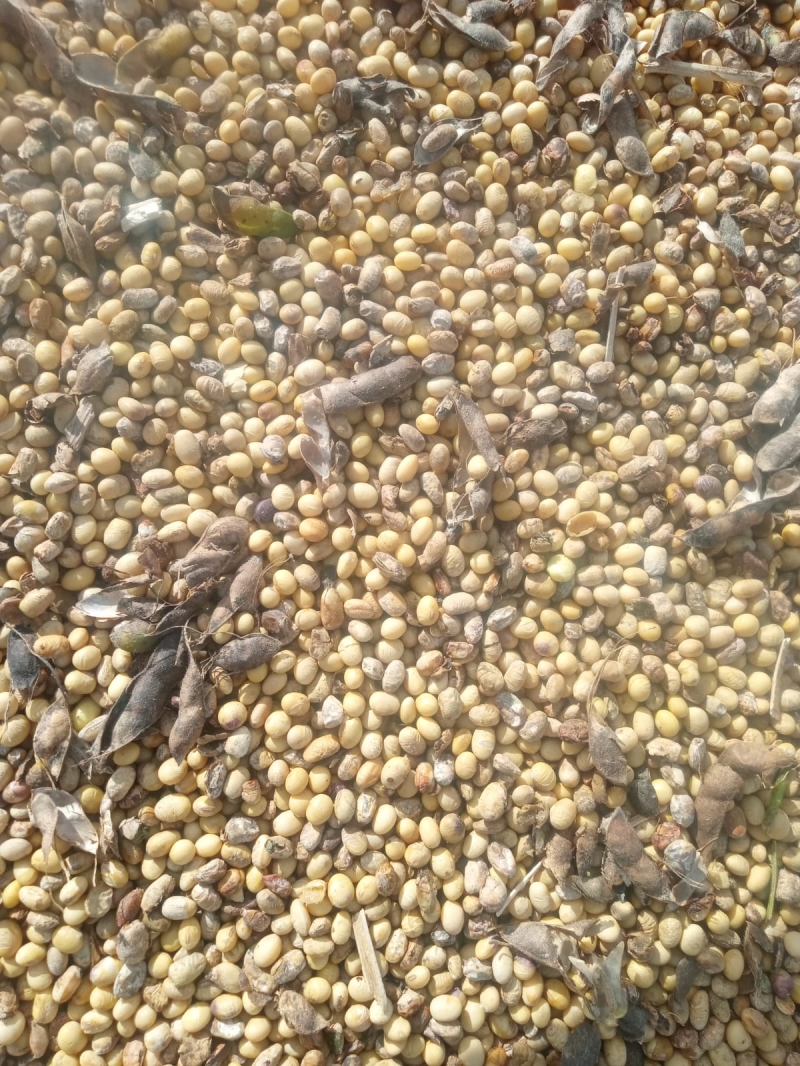
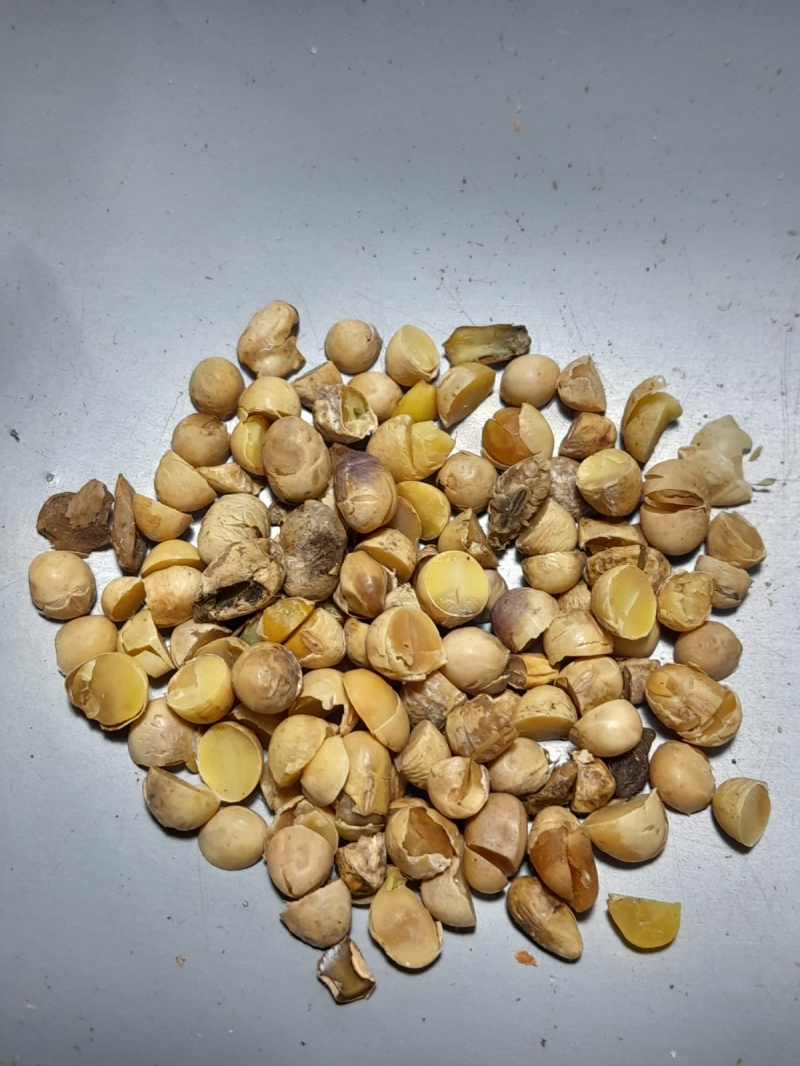
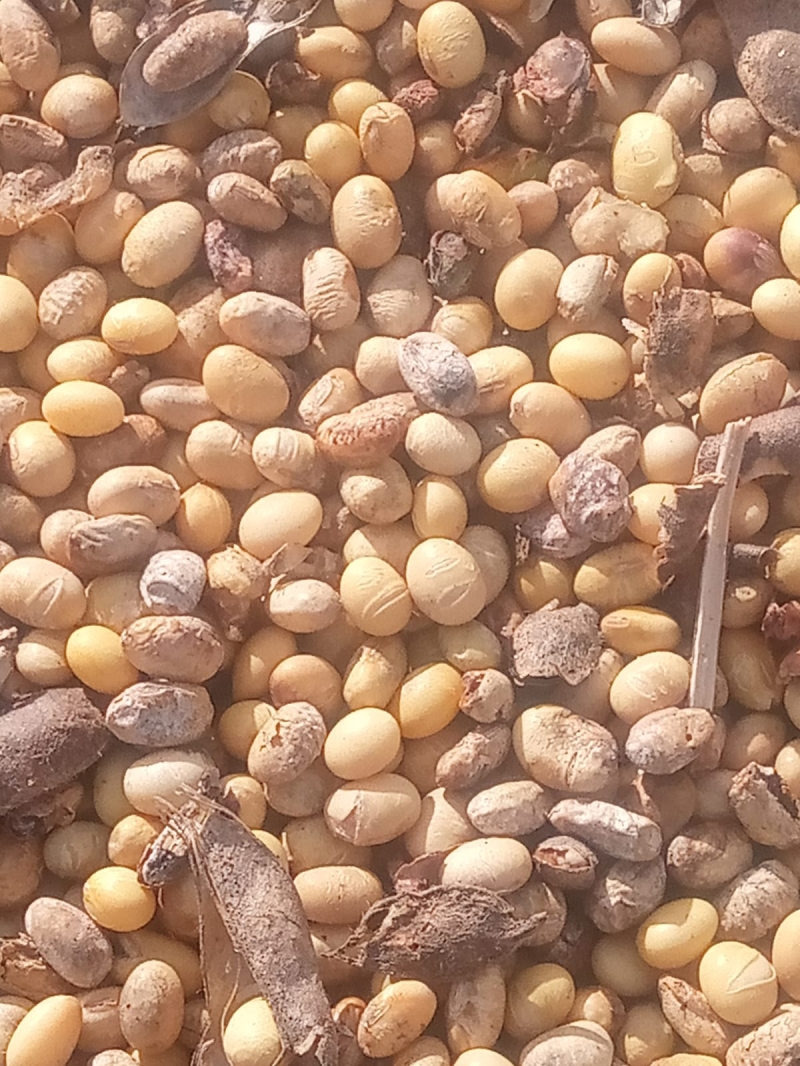
The images below show the oilseed severely deteriorated by excessive moisture, and, as explained not only by the producer but also by market agents, the challenge now will be to find a buyer for this soy and help with cash flow.
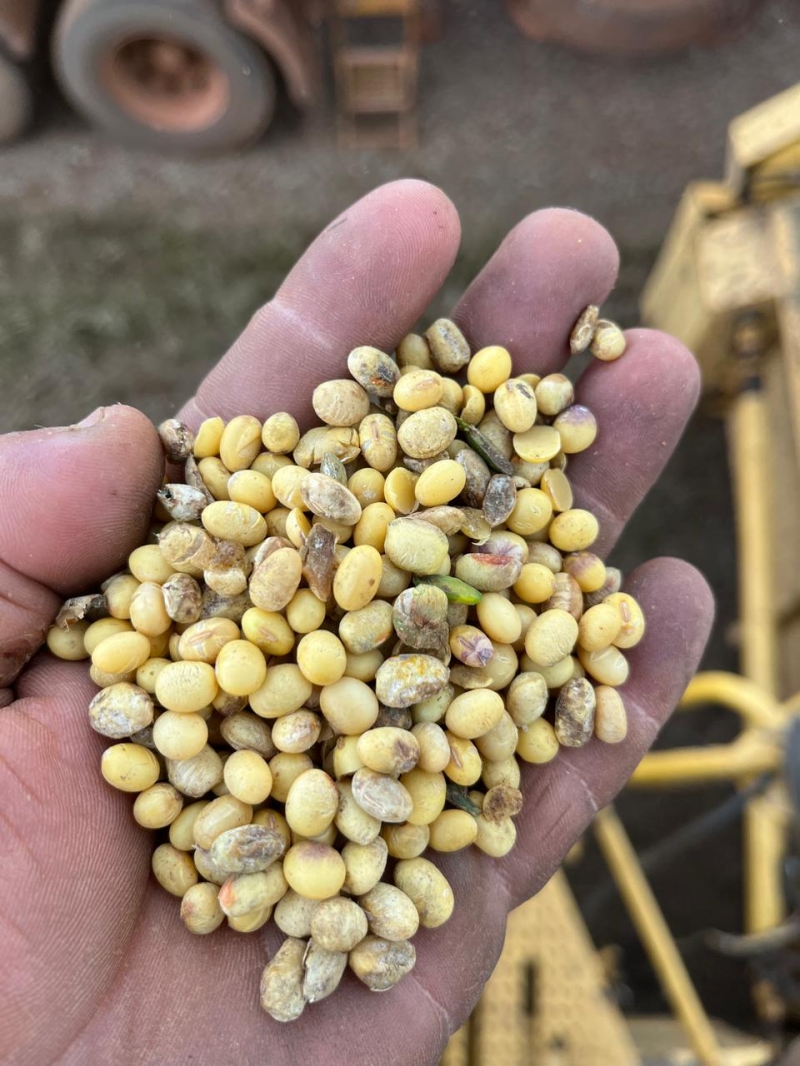
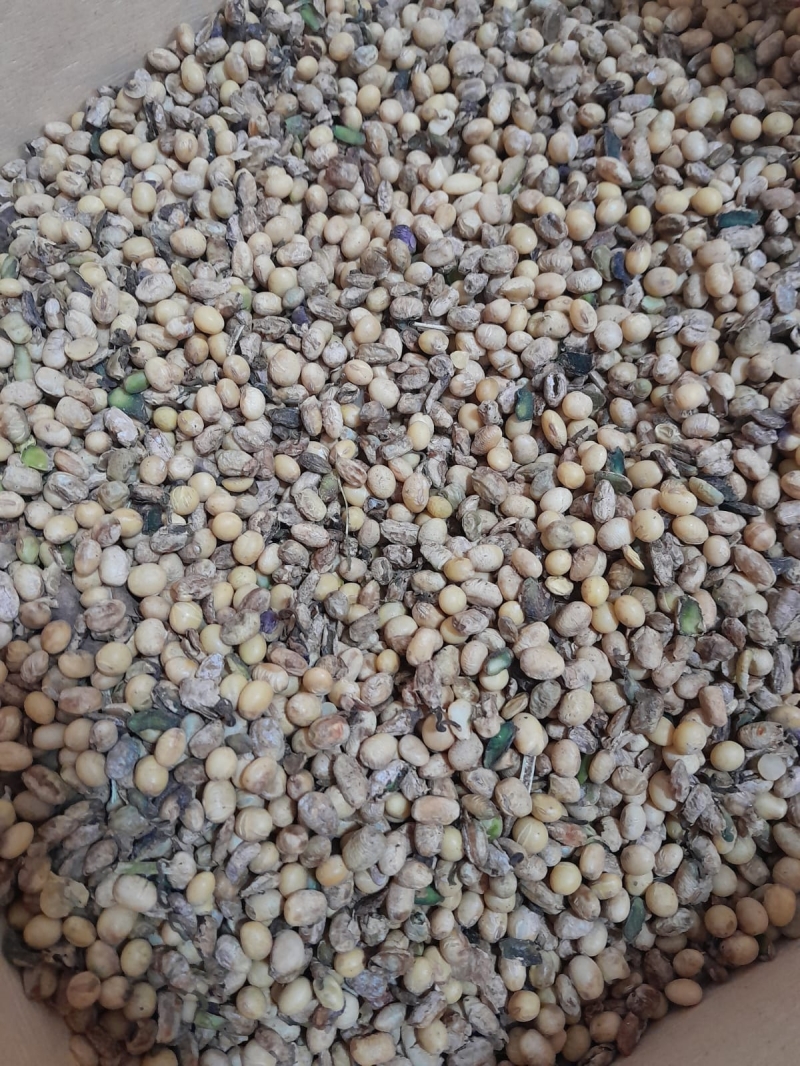
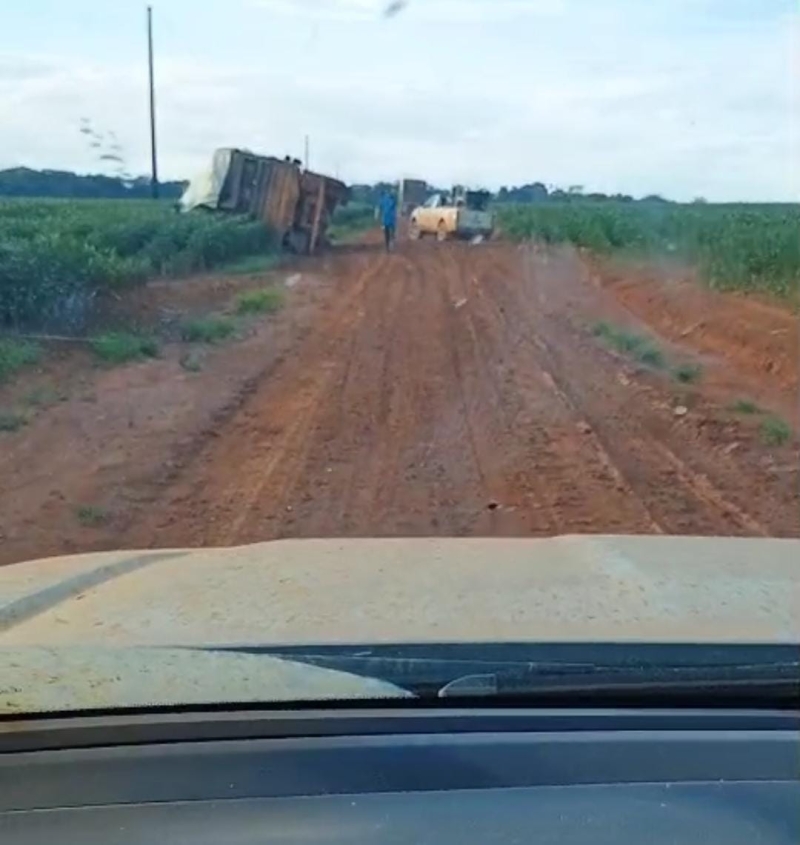
The video below shows a grain silo in the Guarantã do Norte region, which not only recounts the situation but also raises questions about how the market will operate from now on. “We are forced to dump the damaged soybeans in the silo until we find a buyer, because there’s no way we can put soybeans like this in a storage silo, with this quality standard. This soybean is showing 30% of damaged grain; if we send it to general warehouses, there will be a discount of 22%, since 8% is the tolerance,” says Igor Zanon, a producer from the region.
Considering that not only the percentage of damaged soybeans, but also the high levels of moisture and impurities are discounted, what remains for the producer of these lots, in financial terms, is almost nothing. The impact is directly on the margins, therefore, which had been formed – with effort – by the expectation of high average yield, since prices are under considerable pressure. Soybeans with "less than R$ 100.00" are already a more widespread reality throughout the state and increasingly evident for soybean farming in Mato Grosso.
Warehouses are also concerned.
And the concern doesn't stop with the producers. Warehouses are also having to revise their strategies and planning in light of the current situation.
“With this problem of too much rain, too much humidity, too much damage, a lot of productivity is lost. It would really be a bumper crop if we had good weather. For us at the warehouse it's complicated, because when the company wants to ship from here, it will want soybeans with 8 (8% damaged). We hope that the rest of the harvest will bring standard soybeans, so we can help everyone, both the producer – in terms of their average profit – and the warehouse, so we can leave with the soybeans we received during these days,” explains Walter José de Paula, manager of Armazém Espaço Grão.
FROM EXPORT TO CRUSHING
From the warehouse onward, as De Paula detailed, the situation also worsens, since origination becomes compromised and business opportunities are increasingly limited for the producer. “For export, it starts to become unfeasible because there is no quality control, since in the ports of the Northern Arc, for example, it's not possible to segregate the goods; they are very restrictive. The waterway aspect is very restrictive with the permitted damage index. And the discounts vary from trading company to trading company and are progressive, which also ends up making shipment for export unfeasible, impacting, mainly, the producer's margin,” explains Gilberto Leal, head of commodities at Granel Corretora.
The need, for example, to redirect soybeans destined for export to crushing can lead to expensive logistics costs, further burdening all parts of the supply chain, and potentially causing producers to lose export parity levels, which are currently more attractive than domestic demand in some locations. Furthermore, if originators use this product in their crushing operations, they will have to increase their costs to ensure that the final products – meal and oil – also meet market standards, such as correct meal color and oil acidity.
Have prices hit rock bottom?
Once again, a scenario like this causes chain reactions, which is the last thing Brazilian soybean producers need right now, with prices remaining under pressure and no room for recovery. According to market analyst Rafael Silveira of Safras & Mercado, soybean prices have not yet hit rock bottom in the Brazilian market.
“We have a situation with little new soy being marketed, so, whether we like it or not, this soy is starting to hit the market. We have supply, and soy prices are below R$ 100.00 today; this is already a reality in Mato Grosso, and this doesn't bring an interesting margin for the producer, even resulting in negative margins in some cases,” details the specialist in an interview with Notícias Agrícolas. And the next two months will still put pressure on the indicators, reaffirms Silveira. “I don't expect large, significant increases. If we were to look at a scenario, I would say that we haven't yet reached a bottom for soy prices this year, and prices could be a little more negative in the coming months. What will determine this are the flows and the logistics flow as well, which, at the moment, remains quite complicated.”
And although this reality of losses due to the quality and characteristics of the soybeans being harvested severely impacts the soybean farmer's margins, it is not strong enough to change the supply picture, nor the prices.
IMEA INCREASES SOYBEAN PRODUCTION AND PRODUCTIVITY
This week, Imea (Mato Grosso Institute of Agricultural Economics) raised its projection for the state's soybean crop to 50.52 million tons, with an estimated average productivity of 64.73 sacks per hectare, 7.06% higher than the figure presented in December 2025. In its weekly market report, it also pointed out that the 2025/26 soybean harvest has reached 24.97% of the estimated area for the cycle, advancing significantly.
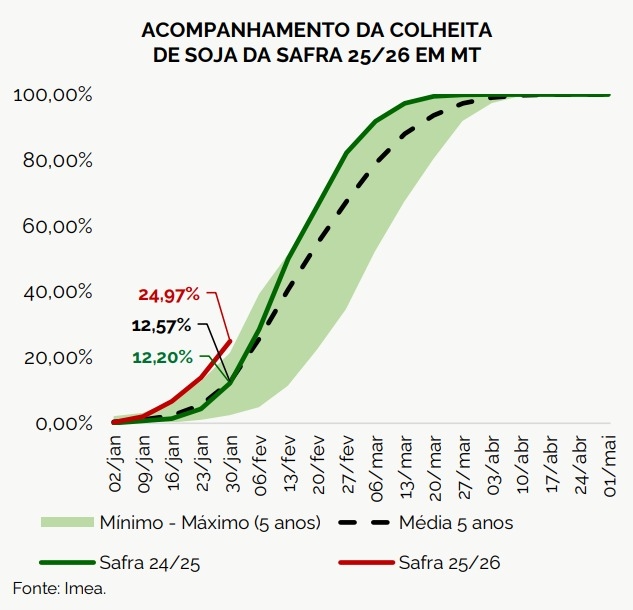
"Despite sporadic rainfall throughout the period, the harvesting of oilseeds in the state continues at an accelerated pace, advancing 12.77 percentage points compared to the 24/25 harvest and 12.40 percentage points above the average of the last five years. This scenario is driven by periods of more stable weather and greater sunshine in some areas of the state, which has allowed machinery to advance in ready-to-harvest areas," report experts from Imea.
More rain for Mato Grosso.
And forecasts do not point to a break in the rains in Central Brazil, especially Mato Grosso and Goiás, in these first 10 days of February, at least. The maps still show intense accumulations, with frequent and consistent rainfall, especially in the northern region of the state. "For next week, NOAA projections indicate accumulations between 65 mm and 75 mm in most of the state, which, if confirmed, could limit the progress of the harvest in some regions," adds Imea.
And the main meteorological institutes here in Brazil have also been highlighting this excess of rain that the state is likely to continue receiving.
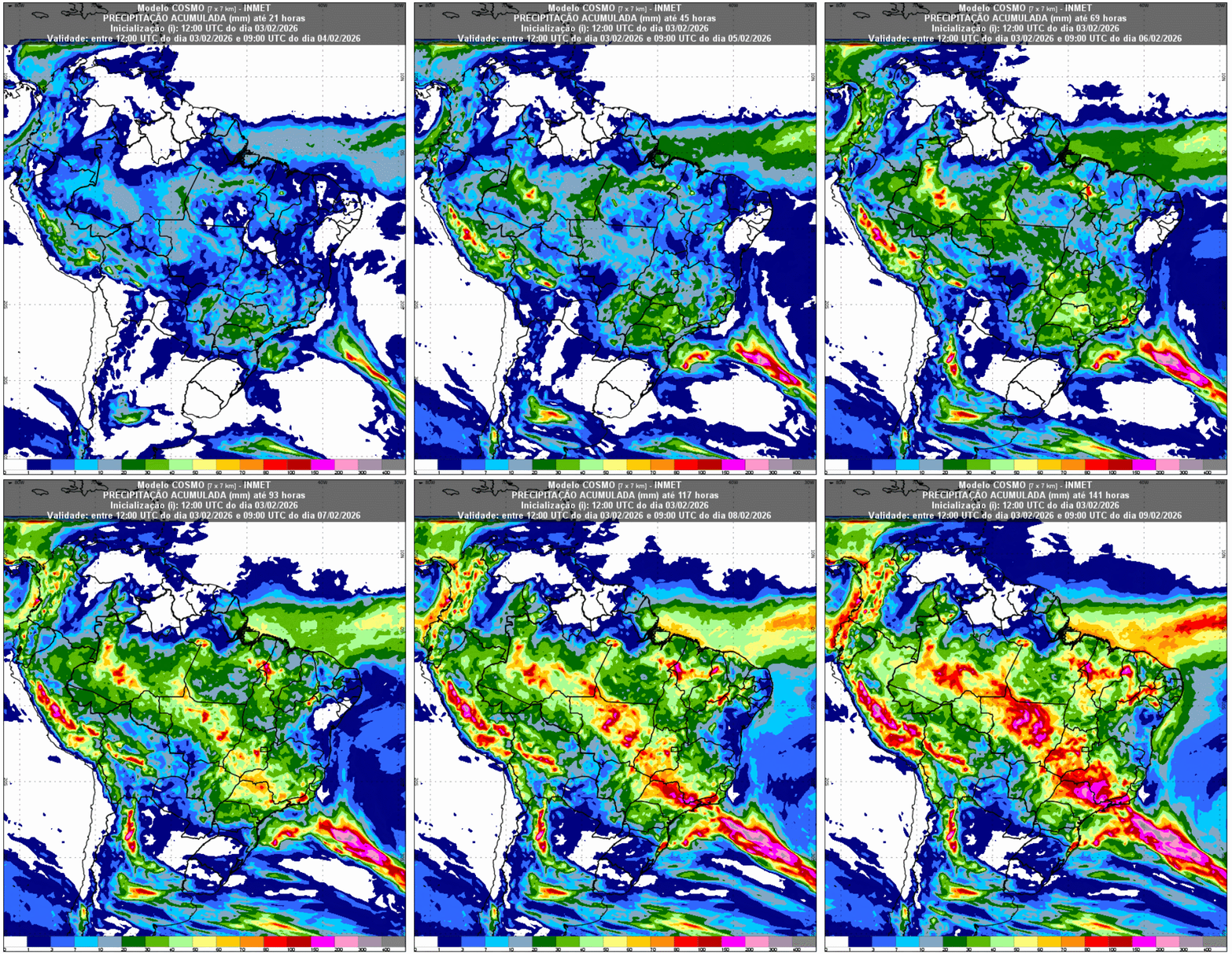
"This week, heavy and prolonged rains expected to hit producing areas in the Southeast and Midwest will halt soybean harvesting activities and may harm the quality of grains in crops in the final stages of development," reported Climatempo. The National Institute of Meteorology (Inmet) also maintains warnings of heavy rains for the state.