EN
EN  PT_BR
PT_BR 
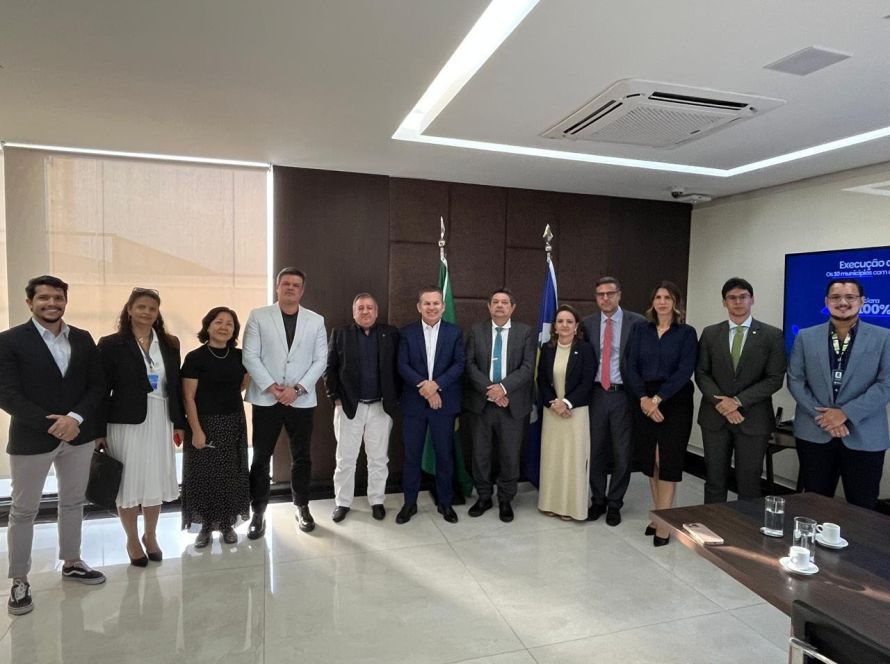
The Federation of Agriculture and Livestock of the State of Mato Grosso (Famato) received, on Tuesday (9), representatives of Fufeng Group Limited, a Chinese company that is a global leader in biofermentation and a reference in the production of inputs for the animal nutrition, food, beverage and pharmaceutical sectors. The visit aimed to learn about the state's productive potential for possible investments aimed at adding value to corn.
In Mato Grosso, the Chinese company is analyzing the possibility of installing an industrial unit for the production of lysine and threonine, amino acids widely used in animal feed. The initial projection foresees a production capacity of 240,000 tons of lysine and 60,000 tons of threonine per year, with an estimated demand of approximately 560,000 tons of corn per year.
During the meeting, the delegation sought information on the availability of raw materials, logistical infrastructure, and state programs to encourage industrialization.
According to Ronaldo Vinha, Director of Institutional Relations at Famato, the visit of representatives from the Fufeng Group demonstrates Mato Grosso's potential to attract industrial ventures linked to agribusiness and increase the added value of local production.
“I am convinced that Mato Grosso needs to advance even further in the vertical integration of production. The state is a powerhouse in grain production and has all the conditions to attract industries that transform this raw material right here. This generates more income, more opportunities, and strengthens our economy. Receiving companies interested in investing in the state is extremely positive and demonstrates confidence in the state's potential,” he stated.
According to Ronaldo, few places in the world offer such favorable conditions for the establishment of industrial ventures linked to agribusiness.
"Mato Grosso has growing production, availability of inputs, and a natural vocation to receive this type of investment. These are characteristics that place the state in a prominent position when it comes to industrial expansion linked to agriculture," he added.
According to Cleiton Gauer, superintendent of the Famato System and the Mato Grosso Institute of Agricultural Economics (Imea), the state's recent experience demonstrates that the arrival of new industries boosts agricultural production and creates a growth cycle for the entire production chain.
“Mato Grosso has shown in recent years that the installation of industries does not reduce the availability of raw materials. On the contrary. Since the arrival of the first corn ethanol plants, we have observed significant growth in state production. Producers responded to market signals, expanding production and increasing the supply of the grain,” he explained.
Cleiton also mentioned at the meeting that the state went from approximately 30 million to more than 55 million tons of corn produced in a short period of time. In his analysis, this is due to a combination of technology, production expansion, and growth in industrial demand.
The meeting was also attended by Leonardo Figueiredo, manager of the attraction department of the Mato Grosso Agency for Investment Promotion and Competitiveness (Invest MT), and Lucas Costa Beber, president of the Mato Grosso State Corn Producers Association (Aprosoja MT).
According to Leonardo Figueiredo, manager of Invest MT, the interest of international companies reinforces the state's competitiveness and directly contributes to job and income generation.
“Our job is to present investors with the competitive advantages that Mato Grosso offers. When a company of this size considers investing in the state, we are talking not only about new businesses, but also about job creation, professional training, regional development, and strengthening the local economy,” he emphasized.