EN
EN  PT_BR
PT_BR 
The outlook for the Brazilian poultry industry indicates increased uncertainty in the coming months, with impacts involving exports, production costs, and price formation in the domestic market.
One of the main points of attention is the Middle East, responsible for approximately 301% of Brazilian chicken meat exports. The geopolitical conflict in the region could directly affect the sector, especially in the event of blockades in the Strait of Hormuz. In this situation, cargo may need to be redirected, which tends to increase logistics costs and delivery times. Alternatives via land routes are also more expensive and complex, potentially limiting the flow of exports to some markets.

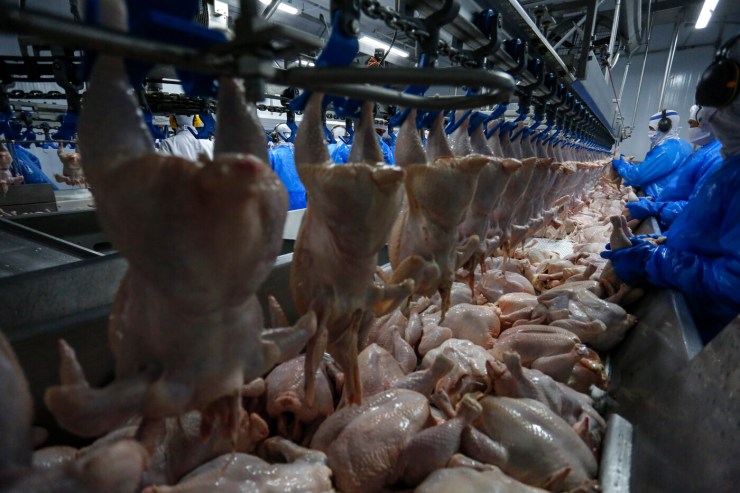
Photo: Jonathan Campos/AEN
In the domestic market, there is theoretical room for chicken meat to appreciate compared to other proteins. However, uncertainty about the pace of exports acts as a brake. If there are difficulties in exports, the increased supply in the domestic market may contain price increases.
Production costs are also on the radar. The escalation of the conflict has put pressure on energy prices, with broader repercussions for the economy. In this context, corn and soybeans are registering price increases, even with relatively stable supply and demand fundamentals, reflecting market expectations more than structural changes.
As a result, the scope for reducing feed costs becomes more limited. Adding to this scenario is the uncertainty surrounding the second crop, which keeps the market on edge in the coming months, despite initial expectations of a good harvest.
According to data from Itaú BBA Agro Consulting, the combination of external uncertainties, cost pressures, and limitations in price adjustments tends to make poultry farming margins more sensitive throughout the year.