EN
EN  PT_BR
PT_BR 
Brazilian exports to the Gulf Cooperation Council (GCC) countries weakened again in April, impacted by tensions in the Middle East and logistical difficulties caused by the closure of the Strait of Hormuz. Revenue from shipments to Saudi Arabia, Bahrain, Qatar, the United Arab Emirates, Kuwait, and Oman totaled US$455.54 million in the month, a decrease of 24.99% compared to the same period last year.

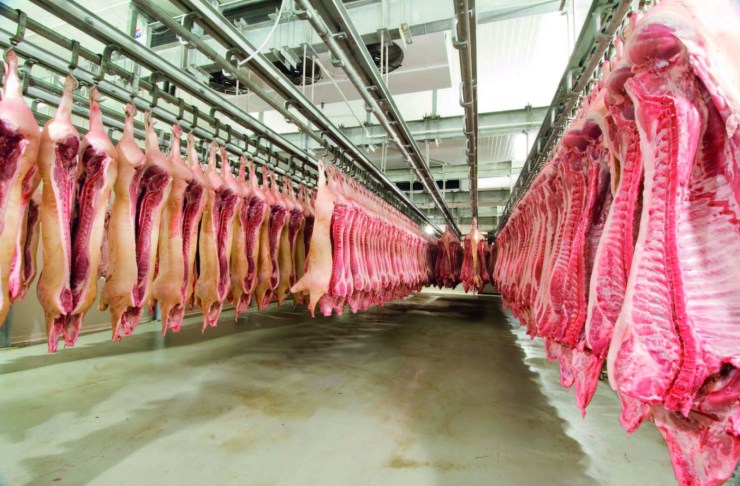
Despite the setback, beef sales increased throughout the Gulf – Photo: Press Release
This was the second monthly decline recorded in 2026. In the first four months of the year, Brazilian exports to the Arab bloc totaled US$2.82 billion, a slight decrease of 0.671%, according to a survey by the Market Intelligence of the Arab-Brazilian Chamber of Commerce based on data from the federal government.
Despite the slowdown, agribusiness continues to support a significant portion of Brazilian revenues in the region. Shipments of agricultural products have accumulated a 1.971% increase this year, reaching US$1.76 billion, driven mainly by sugar, beef, corn, and coffee.
The scenario reflects the efforts of exporters to maintain supply amid rising freight costs, insurance, and alternative logistics operations. With maritime restrictions in the Gulf, companies have resorted to road and air transshipment to ensure products reach their final destinations. “Exporters have found logistical solutions to get their products into the region, albeit at higher costs. And Arab markets, even in this situation, still generate significant revenue, especially in the agribusiness sector, on which the food security of their populations depends,” says the Secretary-General of the Arab Chamber, Mohamad Mourad.
Sugar performance compensates for chicken losses.
Brazilian sugar had one of the strongest performances during the period. Sales to the GCC grew by 28.741 tons per ton (TP4T) between January and April, reaching US$442.59 million. Saudi Arabia increased its purchases by 46.351 tons per ton (TP4T), while Oman registered a jump of 6,332.271 tons per ton (TP4T) in imports of the Brazilian product, even with some of the country's ports affected by restrictions in the Strait of Hormuz.

Beef exports also maintained a positive trajectory in the four-month period, with growth of 28.771% of the total export volume (TP4T) and revenues of US$219.30 million. Shipments increased in all countries of the bloc. In April, however, the data already indicated a slowdown, with a drop of 46.91% of the total export volume (TP4T) in revenues compared to March.
Chicken, the main item in Brazil's export portfolio to the region, has accumulated a decline of 5.98% this year, totaling US$791.19 million. Even so, Qatar increased its purchases by 13.82%, to US$70.29 million, using alternative routes via Saudi ports on the Red Sea, as well as land and air transport to maintain supply.
Corn and coffee show signs of recovery.

After virtually no shipments in March, corn regained ground in April, with sales of US$11.8 million. Year-to-date, grain exports have increased by 11.691 tons, totaling US$73.01 million, driven primarily by deals with Kuwait and the United Arab Emirates.
Coffee stands out in the quarter, with revenue growth of 58.51%, reaching US$64.67 million. The United Arab Emirates, Saudi Arabia, and Oman led the purchasing movement, in a scenario interpreted by the market as restocking in the face of logistical and geopolitical uncertainties in the region.