EN
EN  PT_BR
PT_BR 
The European Union's decision to remove Brazil from the list of countries authorized to export certain animal products puts at risk a market that generated approximately US$1.8 billion in 2025. The measure, which comes into effect in September, directly affects Brazilian exports of beef, chicken, horse meat, fish, offal, and honey to the 27 countries of the European bloc.

Photo: Shutterstock
The affected products totaled 368,100 tons shipped last year, according to data from Agrostat, a system of the Ministry of Agriculture and Livestock (Mapa). Although it represents 5.7% of the total value of Brazilian exports in these segments, the European market is among the most valued and strategic for the animal protein chain.
The restriction was motivated by disagreements regarding the rules on the use of antimicrobials in animal production. According to the European Commission, Brazil has not yet demonstrated that it fully meets the requirements established by the bloc for the control of these medications throughout the entire production chain.
Beef accounts for the greatest impact.
Among all the sectors affected, beef appears to be the most exposed to the new trade barrier. In 2025, the

Photo: Shutterstock
Brazil exported 128,000 tons of beef to the European Union, generating revenue of US$1.048 billion. The bloc was the third main destination for Brazilian beef, behind only China and the United States.
In practice, more than half of the value of Brazilian exports affected by the European decision is concentrated in beef.
In addition to the financial volume, the European market is considered strategic because it rewards cuts of meat with higher added value and serves as a benchmark for other international buyers on issues related to health, traceability, and sustainability.

Image created by Jaqueline Galvão/ChatGPT/OP Rural
Chicken accounts for US$$ 762 million
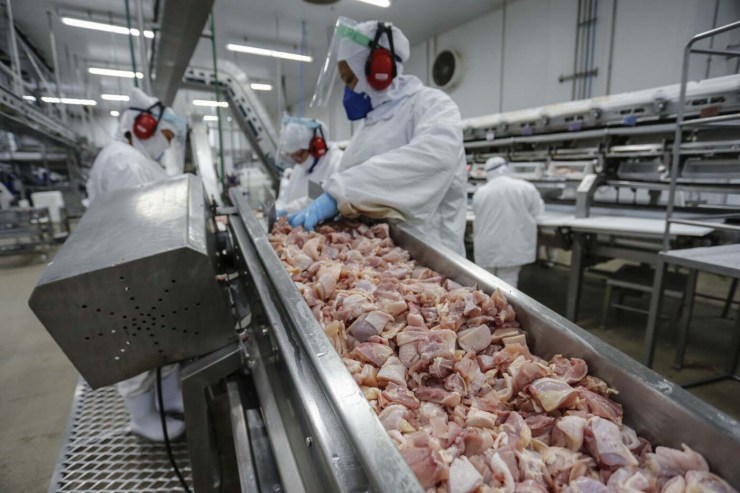
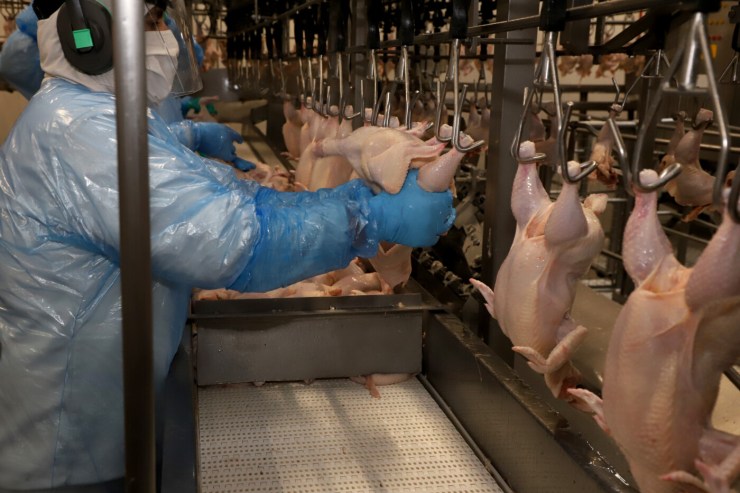
Brazilian poultry farming is also expected to feel the effects of the measure. Last year, chicken meat shipments to the European Union reached 230,000 tons, with revenues of US$762 million.
Although it represents a smaller market than beef in terms of value, Europe is among the most important destinations for specific poultry products with higher added value.
Honey is also on the list of affected products. In 2025, Brazilian sales to the European bloc totaled approximately US$$ 6 million.
According to the Brazilian Association of Animal Protein (ABPA), Brazilian pork will not be impacted by the measure because Brazil is not authorized to export this protein to the European market.
What Europe demands
European requirements related to antimicrobials have been implemented gradually since 2019.

Photo: Disclosure/OPR Archive
The bloc prohibits the use of substances considered important for human health when used for non-therapeutic purposes in animal production, especially as growth promoters or to increase productivity.
Among the products cited by European regulations are virginiamycin, avoparcin, bacitracin, tylosin, spiramycin, and avilamycin.
Some of these requirements began to be incorporated into Brazilian legislation this year. In April, the Ministry of Agriculture prohibited the import, manufacture, marketing, and use of avoparcin and virginiamycin for veterinary use.

Photo: Disclosure
However, other substances covered by European regulations remain permitted in the country, which maintains the regulatory impasse between Brazil and the European Union.
Alternatives for recovering the European market
To be reinstated on the list of authorized countries, Brazil will have to demonstrate that animals destined for the European market do not receive the antimicrobials banned by the bloc.
Experts point to two possible paths. The first would be to expand national restrictions and also prohibit other products banned by European legislation. The second involves the creation of robust segregation and traceability systems, capable of proving that animals exported to Europe have not come into contact with the prohibited substances.
This alternative is considered more complex because it requires detailed monitoring of the properties.

Image created by ChatGPT
Additional certifications, audits, and specific controls throughout the entire production chain.
On the other hand, it would allow for the preservation of different production systems geared towards markets with distinct requirements.
Brazil becomes isolated within Mercosur.
The European decision also creates a delicate situation for Brazil within Mercosur. While the country lost authorization to export the products affected by the measure, Argentina, Paraguay, and Uruguay remain authorized to sell meat and other animal products to the European market.
This difference increases the pressure on the Brazilian government and the productive sector to quickly adapt the control systems required by the European bloc and avoid losing ground to regional competitors in one of the world's most demanding and valuable markets.