EN
EN  PT_BR
PT_BR 
An experiment conducted by Embrapa Rice and Beans (GO) over six years in Santo Antônio de Goiás (GO) showed that the Agroforestry System (AFS) doubled the carbon stored in the soil compared to conventional soybean and corn cultivation, accumulating 2.24 tons per hectare per year. During the same period, the common bean grown between the rows of trees produced more than 1,000 kilograms per hectare.
In the evaluated area, soil organic carbon increased from approximately 14 to over 27 tons per hectare in the 0-20 centimeter layer after replacing the annual corn and soybean rotation system with agroforestry systems (AFS). This result is associated with increased biomass production and a continuous supply of organic matter to the soil, provided by the tree species and the use of green manures in the system.
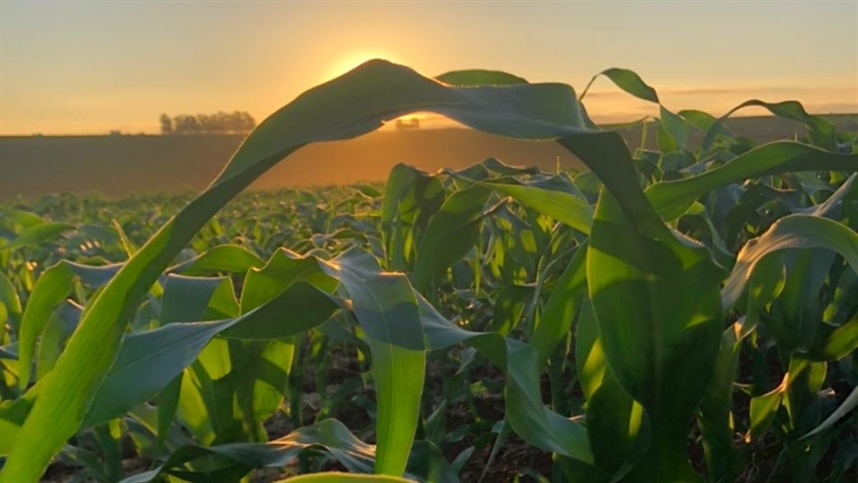
 The experiment, developed at Fazenda Capivara, headquarters of the Unit, in an area of 1 hectare, was conducted as follows: after planting seedlings of native Cerrado trees in rows, such as aroeira, cagaita and baru; green manures, such as crotalaria (photo on the right), were sown at the beginning of the rainy season, between the rows of forest species, after soil preparation.
Next, the crotalaria was mechanically cut and the beans were cultivated using no-till farming. During the off-season, a new planting of crotalaria was carried out, with new soil preparation. This management was repeated for six years, until the growth of the trees prevented agricultural cultivation between the rows.
From the beginning of the production arrangement, agroecological principles were adopted. During cultivation, weed control was done manually, and organic fertilizers, organomineral fertilizers, and biofertilizers were used to replenish nutrients in the soil.
Researcher Agostinho Didonet, the system's creator, highlights the results of the long-term experiment: “The production of common beans in an agroforestry system is perfectly viable, contributing to food security. Although crotalaria does not directly affect grain productivity, the yield of around 1 ton per hectare represents a good result for the summer crop in agroecological systems in the Cerrado, which depend only on rainwater.”
Inspiration for new designs
According to the researcher, the work has inspired the implementation of similar systems. "In partnership with Emater Goiás and the Federal University of Goiás (UFG), the SAF model, composed of grains and tree and fruit species from the Cerrado, has already been replicated and remains structured on rural properties in several municipalities in the interior of the state of Goiás, which demonstrates the effectiveness of the joint work," he adds.
 Embrapa Fisheries and Aquaculture (TO) researcher Márcia Carvalho, who works monitoring the strategic role of production systems in addressing climate change, points out that agroforestry systems, such as the one implemented by Embrapa in Goiás, are capable of improving the biodiversity and microclimate of the production system in the face of temperature increases and drought in the Cerrado. "In addition to guaranteeing economic returns in the short and long term, it also captures carbon from the atmosphere through plants and transfers it to the soil," she emphasizes.
In this sense, she points out that agroforestry systems, when managed under agroecological principles, can acquire multiple functions and be used for the recovery of springs, restoration of riparian forests, providing energy (firewood and charcoal), timber, shelter for animals, birds, insects and pollinators. "Furthermore, it can improve the landscape and local microclimate, and contribute to the preservation of the native biodiversity of the Cerrado, guaranteeing food security," she concludes.