EN
EN  PT_BR
PT_BR 
The volume of rainfall recorded in January was, in most of the country, sufficient to maintain soil moisture and support the good development of first-crop plantings. This assessment is included in... Agricultural Monitoring Bulletin (BMA), released last Thursday (29) by the National Supply Company (Conab).

Photo: Disclosure
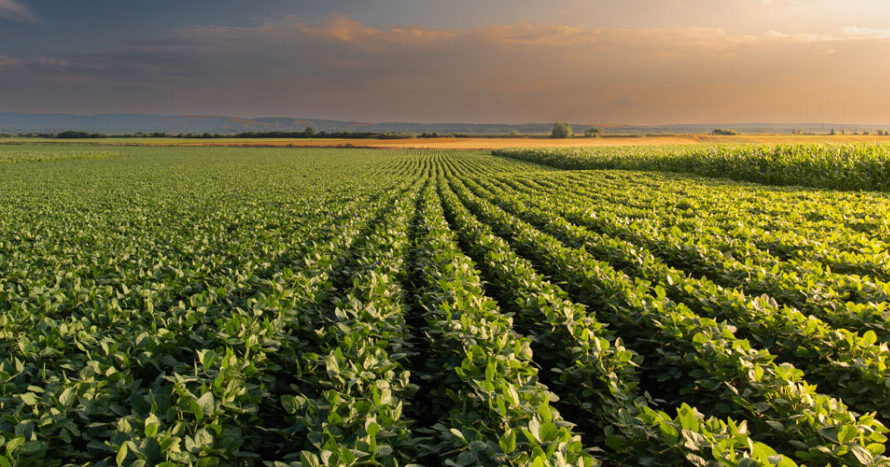
According to the survey, rainfall, mainly influenced by the South Atlantic Convergence Zone (SACZ), contributed to increased water storage in the soil, creating favorable conditions for crop development at different stages of the production cycle.
Analysis using spectral data reinforces the positive scenario. In several monitored areas, vegetation indices were above the historical average, indicating good performance of first-crop cultures, especially in phases considered critical for defining productive potential.
The report also highlights that variations in rainfall patterns and occasional delays in planting influenced crop development in some regions, especially at the beginning of the cycle. In the North and Northeast, the irregular distribution of rainfall in the first days of the month gave way to a more favorable situation throughout January, allowing the resumption of planting and the expansion of cultivated areas.
In the Central-West, Southeast, and South regions, climatic conditions remained largely suitable for the development of

Photo: Shutterstock
crops. In specific areas, however, the excessive rainfall has led to localized restrictions on harvesting operations and the maturation phase of crops.
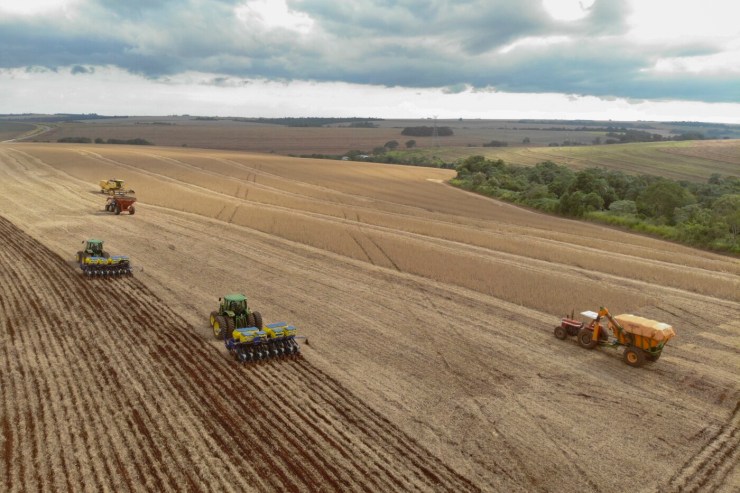
Regarding the second crop, BMA indicates progress in corn planting, keeping pace with the soybean harvest in the main producing regions. Weather conditions continue to directly influence the progress of field operations.
Based on satellite imagery, field information, and agrometeorological analyses, the Agricultural Monitoring Bulletin is produced in partnership by Conab, the National Institute of Meteorology (Inmet), and the Global Agriculture Monitoring Group (Glam). The document serves as the technical basis for the preparation of the monthly crop estimates released by the Company.