EN
EN  PT_BR
PT_BR 
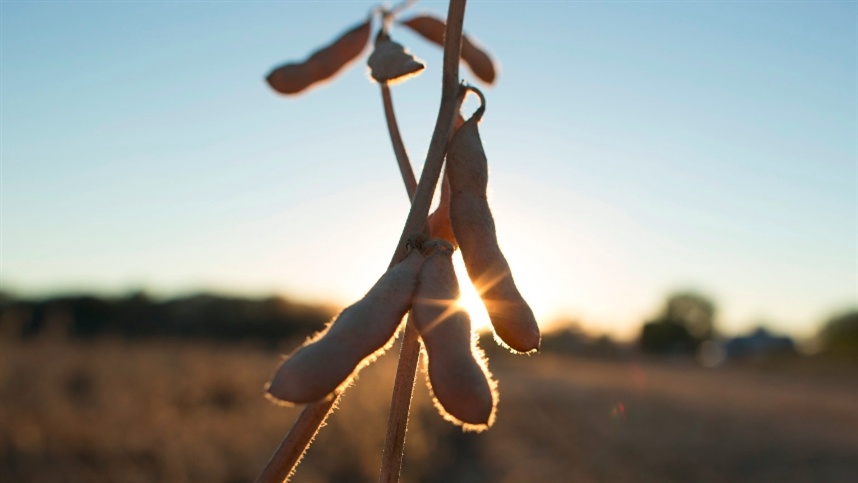
The advance of Asian soybean rust soy The 2025/26 crop season reinforces the need for care during the fallow period and planning for the next season. According to data from the Antiferrugem Consortium, 379 cases of the disease were recorded in the last cycle, almost three times the 124 occurrences recorded in the entire 2024/25 crop season.
The main objective of the fallow period is to interrupt the life cycle of Asian soybean rust, caused by the fungus Phakopsora pachyrhizi, and reduce its survival between crops. During this period, the presence of live soybean plants, including volunteer plants known as "tigueras," is not permitted.
Eliminating these plants reduces the availability of hosts and delays the establishment of the disease at the beginning of the new cycle, also contributing to the sustainability of management. “The more we can delay the onset of the disease, the better we can preserve the effectiveness of fungicides and work more rationally throughout the growing season. Failure to comply with the fallow period can bring forward the first infections, increase the number of fungicide applications, raise production costs, and compromise crop productivity. In addition to agronomic losses, the producer is subject to penalties,” explains Renato de Souza Rodrigues, sales representative for Conceito Agrícola.
In addition to controlling Asian soybean rust, the off-season allows for progress in pest and weed management, machinery maintenance, soil analysis and correction, and organization of operations for the next cycle. Anticipating these activities reduces the concentration of decisions and operations in the period preceding planting.
According to Rodrigues, soil analysis during the off-season gives the producer time to interpret the results and make the necessary corrections before planting. The diagnosis helps in making decisions about liming, gypsum application, and fertilization, and also allows for an advance estimation of fertilizer demand. "Good work at this stage reduces risks and waste, increases operational efficiency, and creates conditions to express the maximum productive potential of the crop," emphasizes Rodrigues.
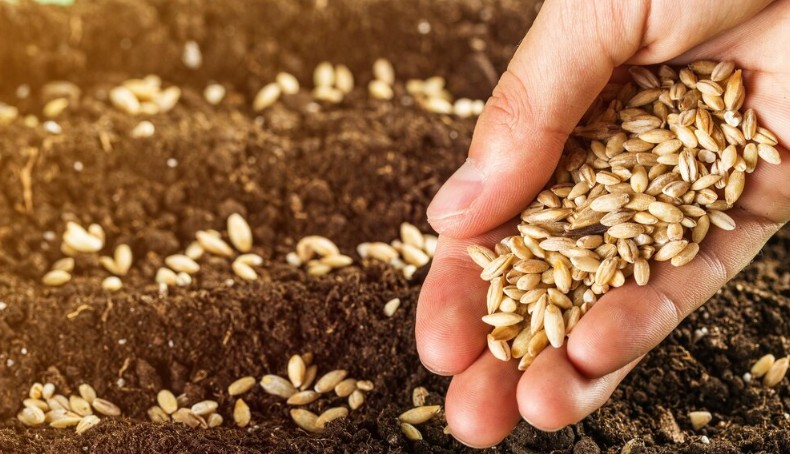
The analysis functions as a diagnosis of the area. In addition to conventional sampling, evaluations in deeper layers allow for the identification of limitations in the soil profile that may restrict root development. With this information, the producer can direct corrections and create conditions to exploit the productive potential of each area.
Among the indicators evaluated are pH, macro and micronutrient levels, organic matter, cation exchange capacity (CEC), and base saturation.
In-depth assessments also help identify limitations that are not only present in the surface layer and can guide soil profile construction strategies.
The interval between cycles also allows for anticipating decisions regarding cultivar selection, seed treatment, fertility, and phytosanitary management strategy. With these definitions established before the start of sowing, the producer can organize inputs, machinery, and operations according to the characteristics of each area. “It is at this moment that we can gather the farm data and transform this information into planning. We believe that a great harvest begins long before planting. Our team is present in the field sharing knowledge, planning, and providing technical assistance so that each hectare expresses its maximum productive and economic potential,” concludes Rodrigues.
The increase in Asian soybean rust cases in the 2025/26 crop season therefore reinforces the importance of using the off-season to reduce inoculum sources, correct soil limitations, and proactively organize strategies for the next cycle.