EN
EN  PT_BR
PT_BR 
The soybean seed sector has begun to raise concerns about the impacts of piracy, legal uncertainty, and economic pressure on the agricultural innovation chain in Brazil. Representatives from state associations believe that the growth of the informal market and the increase in regulatory challenges are jeopardizing investments in technology, genetic research, and the competitiveness of Brazilian soybean farming.
 This concern is shared by leaders from different producing regions, who advocate for greater institutional integration and strengthening of the seed supply chain as a strategy to support the technological development of the sector.
According to the president of the Brazilian Association of Soybean Seed Producers (ABRASS), André Schwening, the sustainability of the sector depends directly on the ability to coordinate the different links in the production chain. “We need to keep our sector alive, standing, and strengthened. With legal security, with good business models, with discussions like the ones we are having. The multiplier is the link between innovation and the farmer,” he stated.
Piracy is growing in the South.
Among the main regional challenges presented by the entities, seed piracy emerged as one of the sector's biggest concerns, especially in the South of the country.

Photo: Disclosure
The president of APASSUL, Verônica Bergtanolli, stated that Rio Grande do Sul already registers an index exceeding 30% of pirated seed use. According to her, educational campaigns and awareness actions have not been sufficient to contain the growth of the problem. “We conduct educational and awareness campaigns. But if we don't have stricter laws and criminalize piracy, it will only grow,” she warned.
The rise in informality is a major concern, especially because it reduces the financial return on investments in genetic research, biotechnology, and the development of new cultivars.
Sector reinforces strategic role of seeds.
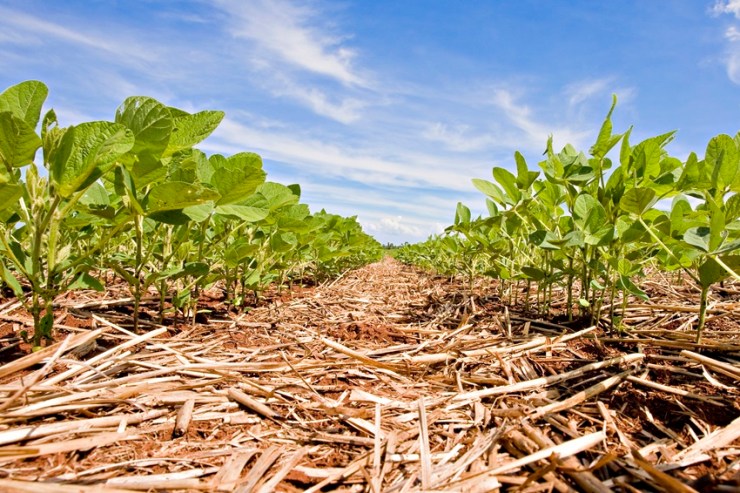
State representatives also highlighted that certified seeds were one of the main factors responsible for the leap in Brazilian soybean productivity in recent decades.

Photo: Geraldo Bubniak/AEN
The president of APPS, Ricardo Cunha, emphasized that the multiplier plays a structural role within the production chain. "The activity goes beyond the commercialization of inputs and functions as a bridge between technological innovation and agricultural production," he praised.
The sector's assessment is that maintaining Brazilian competitiveness depends directly on the ability to bring new technologies to the field at a speed compatible with the agronomic and economic challenges of soybean farming.
Technology targets productivity and management.
In addition to institutional discussions, representatives from companies linked to biotechnology and seed treatment presented perspectives for the development of new solutions focused on productivity and phytosanitary management.
Executives from Bayer, Grupo Don Mario, Biogrow, and Incotec discussed technologies under development for disease control, weed management, and improving the agronomic performance of crops.
The industry expects some of these solutions to reach the market in the coming years, in a scenario where productivity has become a central factor in sustaining the profitability of soybean farming in the face of rising production costs and credit restrictions.
The discussions took place during the 4th edition of the National Meeting of Soybean Seed Producers (ENSSOJA), held in Foz do Iguaçu (PR). “ENSSOJA has become a grand event due to the presence of so many people who contribute to the soybean seed sector and to Brazilian agriculture. The evolution of the chain depends on integrated action between various links,” stated the vice-president of ABRASS, Jorge Soares.