EN
EN  PT_BR
PT_BR 
The end of 2025 points to a cautious scenario in Brazilian agribusiness. The 2025/26 harvest begins marked by a slow planting pace, irregular weather, and technical challenges that directly impact the productive potential of the crops. According to the National Supply Company (Conab), the new harvest should reach 354.8 million tons of grains, cultivated in 84.4 million hectares. The projection compared to the previous year is slightly higher: 0.8% above the record value of 350.2-351.9 million tons harvested.
The weather is once again the main factor of concern. After a positive start to the planting of the 2026 spring and summer crops, which mainly occurs between September and December of the current year, with a good initial start, the arrival of intense heat and irregular rainfall in regions such as central Minas Gerais, eastern Mato Grosso, and western Mato Grosso do Sul has caused delays, the need for replanting, and difficulties in establishing soybeans, the main crop of the period. “Brazil's spending on fertilizers reached US$8.8 billion, representing 5.2% of our total imports, a number that has increased compared to 2024 (4.9%). This exposes a weakness: we are at the mercy of the volatility of international prices and the political decisions of other countries,” says Leonardo Sodré, who works for a company in the sector.
In addition to adverse weather conditions, the sector is facing a reduction in the use of technology. The significant increase in the price of phosphorus in the last two years has led producers to adopt less concentrated fertilizers and reduce their application. Although the impact on productivity was limited in 2025, a slight reduction is expected in 2026 due to this adjustment in nutritional management. The climate remains the main driver of production volume, but the lower technological intensity should generate effects throughout the next year.
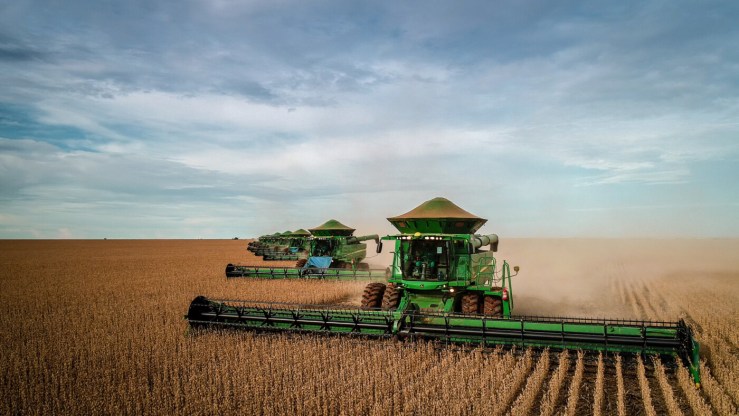
Soybeans remain the main crop in Brazil's harvest. The crop is expected to occupy 49.1 million hectares, with an estimated production between 175.2 and 177.6 million tons. Despite the high volume, the expansion of planted area is occurring at a slower pace than the average of recent years, and the progress of sowing is below that observed in the previous harvest. By mid-November, only 69% of the planned area had been planted.
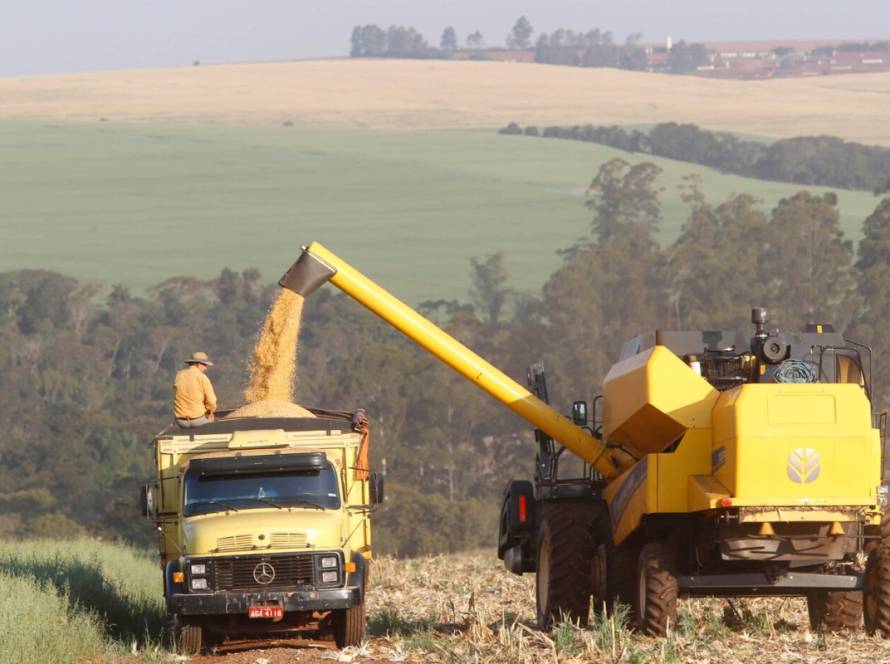
Corn is gaining increasing importance, driven by rising domestic consumption for ethanol production. Each year, three or four new plants focused on this market come online, expanding domestic demand and reducing dependence on imports. The trend points to even greater strengthening of corn in 2026.
In these cases, fertilizers act as a shield against pests. Balanced nutrition with micronutrients such as zinc and boron strengthens the natural resistance of corn, reducing losses by 15% and 25% due to diseases, according to Embrapa data. Brazil consumes 73% of fertilizers in soybean/corn/sugarcane crops. Integrated management (foliar fertilizers and monitoring) avoids replanting and preserves off-season productivity.
Sugarcane, one of the country's largest agricultural products by volume, is expected to reach a milling volume of approximately 660 million tons, with a greater focus on sugar production at the expense of ethanol. Rice production, on the other hand, shows a significant reduction, reflecting its high dependence on two essential factors for crop development: solar radiation and water availability.
Irregular rainfall and low soil moisture have compromised the initial development of crops, affecting seed vigor and seedling establishment. Faced with shorter planting windows and dry soil, experts emphasize that early soil preparation and proper seed treatment are crucial to reducing risks and preserving productivity. “It’s time to unite efforts – government, Brazilian companies, universities, and producers – in favor of a strategy that increases our self-sufficiency. This is not just a competitive advantage: it’s a commitment to food security and the future of the country,” emphasizes Sodré.
Among the recommended strategies are the use of organomineral and biological inputs, applied via seed treatment or fertigation in the initial phases. These solutions contribute to strengthening the root system, stimulate beneficial soil microbiology, and promote greater uniformity in plant growth, increasing tolerance to water stress.
The 2026 harvest will depend directly on the quality of the start of the agricultural cycle. The combination of irregular weather, dry soil, delayed sowing, and reduced use of technology reinforces the need for precise technical interventions from the earliest stages, ensuring vigor, uniformity, and greater productive stability throughout the cycle.
For Douglas Vaz-Tostes, who works for a company in the sector, the strength of the harvest is directly linked to the quality of the inputs used: “The correct choice of inputs, especially fertilizers, defines the efficiency of the entire production system. When the producer invests in the right nutrients, in the right dose and at the right time, he reduces losses, increases profitability and protects the productive potential of the crop. In a scenario of unstable weather, getting these decisions right ceases to be a recommendation and becomes a basic condition for the success of the harvest,” he emphasizes.