EN
EN  PT_BR
PT_BR 
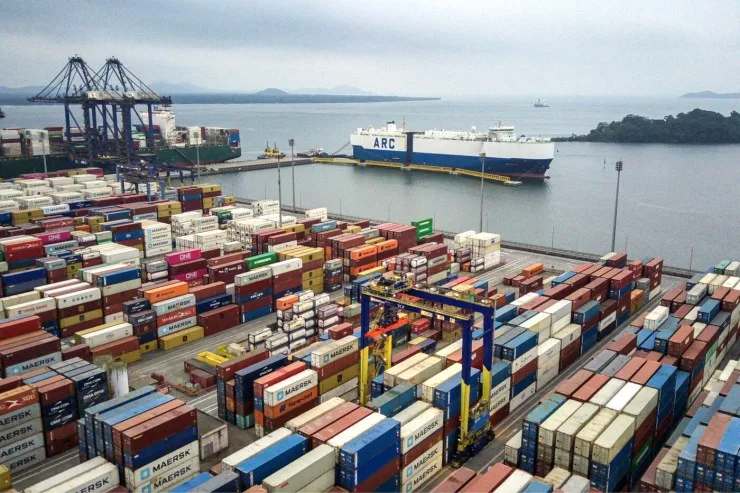
In a year marked by the Trump administration's tariff hikes, Brazilian exports to the United States fell by 6.61% in 2025, totaling US$37.716 billion, compared to US$40.368 billion in 2024. Conversely, imports of US products grew by 11.31% last year, reaching US$45.246 billion, compared to US$40.652 billion the previous year.

With the fall in exports and the rise in imports, Brazil ended 2025 with a deficit of US$ 7.530 billion in the trade balance with the United States. The figures were released on Tuesday (06) by the Ministry of Development, Industry, Trade and Services (Mdic).

Photo: Vosmar Rosa/MPOR
The result reflects the effects of the tariff hike imposed by President Donald Trump's administration. In November, the US president announced the removal of the additional 40% tariff applied to a range of Brazilian products. Even so, according to calculations by the MDIC (Brazilian Ministry of Development, Industry and Foreign Trade), 22% of Brazilian exports to the United States, equivalent to US$8.9 billion, remain subject to the tariffs established in July.
This group includes both products that pay only the 40% surcharge and those that accumulate the extra tariff with the base rate of 10%. Another 15% of exports, equivalent to US$6.2 billion, remain subject only to the 10% tariff.
A total of 27%, approximately US$10.9 billion, is affected by Section 232 tariffs, which apply to imports that the United States considers a threat to national security. Only 36% of Brazilian sales to the US market are free from additional charges.
December
Even after the partial removal of tariffs, Brazilian exports to the United States fell 7.2% in December, totaling US$3.449 billion, compared to US$3.717 billion in the same month of 2024. This was the fifth consecutive drop in sales to the US market since the imposition of the 50% surcharge announced in July by the Trump administration.
Imports of US products, in turn, fell 1.51% year-on-year in December.
Negotiations
 In a press conference, the Vice President and Minister of Development, Industry, Trade and Services, Geraldo Alckmin, stated that President Luiz Inácio Lula da Silva's government maintains its strategy of negotiation and dialogue with Washington. According to him, the talks have already resulted in a reduction in the number of products affected by the tariff increase. "The work of reduction continues," he affirmed.
Alckmin also highlighted that the government is seeking to improve conditions for the 22% export items still affected by tariffs. He emphasized the good relations between Lula and Trump. “Regarding trade issues, President Lula has a good relationship with President Trump and can advance even further. We can have a win-win situation, both in terms of tariffs and non-tariffs, in rare earth elements and data centers. We can get approval for Redata [special regime for data centers], which stimulates investment. Brazil has abundant and renewable energy,” Alckmin added.
China and the European Union
While sales to the United States declined, Brazilian trade with other partners advanced in 2025. Exports to China grew by 61% of the time in the fourth quarter, totaling US$100.021 billion, compared to US$94.372 billion in 2024. Imports of Chinese products rose by 11.5% of the time in the fourth quarter, to US$70.930 billion, resulting in a surplus of US$29.091 billion for Brazil.
Exports to the European Union increased by 3.21% last year, totaling US$49.81 billion. Imports from the bloc grew by 6.41%, to US$50.29 billion, resulting in a deficit of US$480 million. In December alone, a month marked by the postponement of the signing of the Mercosur-European Union agreement, Brazilian exports to the bloc advanced 39% compared to the same month in 2024.