EN
EN  PT_BR
PT_BR 
The January estimate for the national harvest of cereals, legumes, and oilseeds for 2026 reached 342.7 million tons, with a forecast of a new historical record for soybean production in the year. The result is 1.0% lower than that of 2025 (346.1 million tons), a drop of 3.4 million tons. Compared to December 2025, there was an increase of 2.8 million tons (0.8%). The data are from the Systematic Survey of Agricultural Production (LSPA), released last Thursday (12) by IBGE.
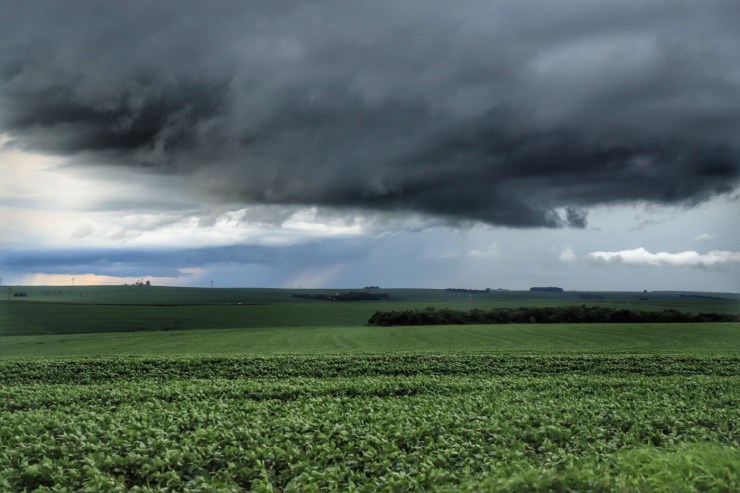
LSPA manager Carlos Barradas highlights the performance of soybeans. “The Brazilian harvest of cereals, legumes, and oilseeds for 2026 is approaching the record harvest of 2025, boosted by soybean production, which is a record in the IBGE's historical series. So far, weather conditions are benefiting the first crop.”

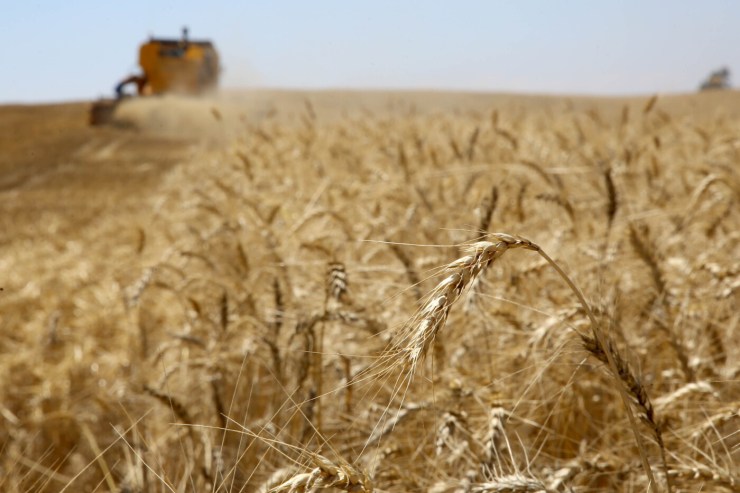
Photo: Giuliano De Luca/O Presente Rural
Rice, corn, and soybeans, the three main products in this group, accounted for 92.9% of the estimated production and represent 87.5% of the area to be harvested. Compared to the previous year, soybean production increased by 3.9% (172.5 million tons), followed by beans, with 0.9%. Decreases were seen in cotton (seed cotton) at -11.0%; paddy rice at -7.9%; corn at -5.6%; sorghum at -13.9%; and wheat at -1.0%.
In the area to be harvested, there were increases of 0.5% in soybeans; 2.2% in corn (increases of 9.3% in first-crop corn and 0.5% in second-crop corn) and 0.9% in wheat, while there were declines of 6.2% in the area to be harvested for upland cotton (seed cotton); 5.9% in paddy rice; 1.4% in beans and 2.9% in sorghum.
Regions
The major region that led in the volume of cereal, legume, and oilseed production was the Central-West with 167.5 million tons (48.9%). This was followed by the South, with 95.3 million tons (27.8%); the Southeast, with 30.2 million tons (8.8%); the Northeast, with 28.2 million tons (8.2%); and the North, with 21.5 million tons (6.3%). The production estimate showed a positive annual variation for the South (10.4%) and Northeast (1.8%) regions, and negative variations for the Central-West (-6.2%), Southeast (-2.9%), and North (-3.7%) regions. Regarding the monthly variation, production growth was observed in the South (0.2%), North (0.5%), and Central-West (1.6%) regions. The Southeast region showed stability (-0.0%), and the Northeast region experienced a decline (-0.4%).
Mato Grosso leads as the largest national grain producer among the federative units, with a share of 30.3%, followed by Paraná (13.9%), Rio Grande do Sul (11.8%), Goiás (10.6%), Mato Grosso do Sul (7.6%) and Minas Gerais (5.4%), which, added together, represented 79.6% of the total.
Soy

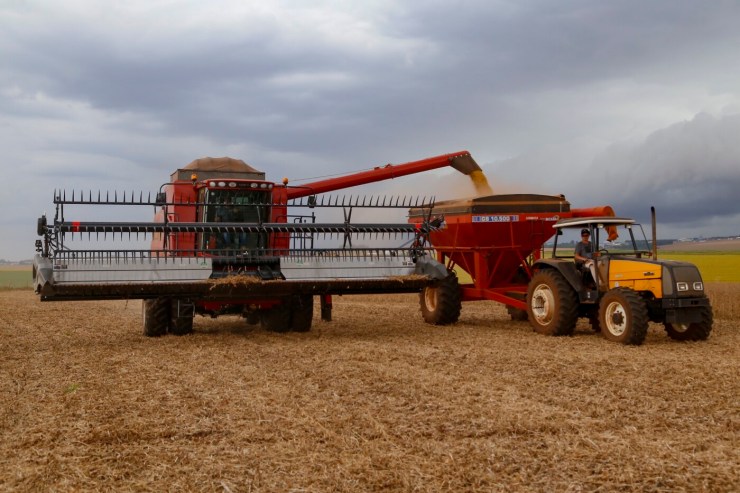
Photo: Jaelson Lucas/AEN
The estimate for national oilseed production reached a new record in the historical series in 2026, totaling 172.5 million tons, an increase of 1.31 TP4T compared to the 3rd forecast and 3.91 TP4T higher compared to the amount obtained in the previous year. It is estimated that Brazilian production will see an increase of 3.41 TP4T in average annual yield, reaching 3,598 kg/ha (60 sacks/ha), contributing to the harvested volume of oilseeds representing more than half of the total cereals, legumes, and oilseeds produced in the country in 2025. In turn, the total cultivated area should reach 48.0 million hectares, representing an increase of 0.51 TP4T in the year (222,600 hectares), continuing at a pace of full expansion, even with commodity prices at levels below those desired by producers. Projections indicate a record harvest, driven by favorable weather conditions in most of the country's producing regions, and by the expansion of the planted area.
Mato Grosso, the largest national producer of the oilseed, estimated a production of 48.5 million tons, an increase of 3.8% compared to the 3rd forecast, but a decline of 3.3% compared to the volume harvested in the previous year. Goiás is expected to total a production of 19.1 million tons, an increase of 2.3% compared to the 3rd forecast, and a decline of 5.8% compared to the volume harvested in 2025, with an increase of 0.5% in the planted area and a decline of 6.3% in the average yield. Mato Grosso do Sul expects a production of 15.0 million tons, an increase of 14.01 TP4T compared to the volume harvested in 2025. Paraná, with a production of 22.2 million tons, should have the second largest harvested volume in the country, with growth of 0.31 TP4T compared to the 3rd forecast, and 3.91 TP4T compared to the volume harvested in 2025. Rio Grande do Sul estimated a production of 21.2 million tons, which represents a growth of 55.41 TP4T compared to the volume harvested in the previous year, with the average yield expected to increase by 57.51 TP4T and the planted area declining by 1.41 TP4T. In 2025, production in Rio Grande do Sul was hampered by the weather due to lack of rain during the crop cycle, making the 2026 harvest a recovery.
About LSPA
Implemented in November 1972, the LSPA provides monthly estimates on the quantity produced, planted area, harvested area, and average yield of the most important agricultural products. The survey allows for monitoring of each crop investigated, from planting intentions to the end of the harvest, and also forecasts the next harvest, based on specific surveys in October, November, and December. Access the data at [website address - please insert the actual website address here]. CiderThe next LSPA release, for February 2026, will be on March 13th.