EN
EN  PT_BR
PT_BR 
The lack of paved roads on strategic stretches of state and federal highways remains one of the main obstacles to the flow of the harvest in Mato Grosso. Producers report that access limitations prolong transportation time, increase operating costs, and reduce harvesting efficiency—factors that, throughout the supply chain, also influence the quality standard of the product delivered to the market.
According to the Mato Grosso Soybean and Corn Producers Association (Aprosoja MT), the reports reinforce that the logistical bottlenecks resulting from the lack of paved roads have ceased to be merely an operational challenge and have become a structural cost factor for Mato Grosso's agribusiness.
“Producers pay FETHAB expecting to see these resources applied to improving logistics and roads, but unfortunately, this is not reaching the end user as it should. We recognize the progress made by the current state government administration; however, in years of tight margins, FETHAB needs to be reconsidered. Producers cannot continue paying a bill without seeing an effective return in the infrastructure that is essential for the flow of production,” says Diego Bertuol, administrative director of Aprosoja MT.
In the northwest of the state, the situation of the MT-183, a corridor that connects productive areas to the storage and marketing network, illustrates the structural impact of the lack of infrastructure. Producer Sami Dubena, from the Aripuanã region, reports that the farm's logistics have had to be organized due to the limitations of the road. "The situation on the MT-183 is extremely serious. It's over 200 kilometers of dirt road that becomes chaotic during the rainy season and extremely dangerous during the dry season, as it kicks up a lot of dust and we can't see anything," he states.
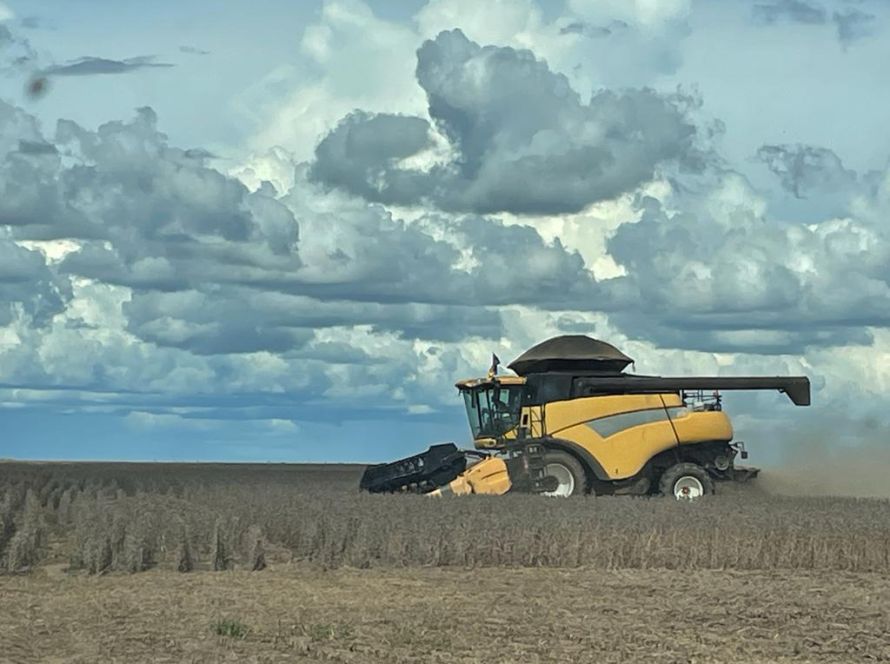
Sami Dubena also emphasizes that the lack of logistical infrastructure directly affects the pace of harvesting, a crucial moment for the crop. “The distance to the warehouse can become two or three times longer in travel time. The truck leaves loaded, and often the combine harvester has to stop waiting for it to return to unload and continue working. This reduces the pace of harvesting precisely during the most sensitive period of the crop,” he reports.
The practical effect is evident in both productivity and product classification. “Without a suitable harvest window, part of the production arrives with higher moisture content or damage, which generates discounts and reduces the final value received.” Producer Izidoro Dubena emphasizes that access limitations directly affect the supply chain flow and grain quality throughout transportation. “When the journey becomes unpredictable, all operational planning is compromised. The product remains in transit longer, altering delivery patterns and causing losses for all links involved,” he states.
According to him, the choice of longer routes by transporters, in search of better traffic conditions, increases logistics costs and reduces regional competitiveness. In the Paranatinga region, the reality is similar. Producer Fernando Petri reports that recurring maintenance failures on the MT-499 highway have caused frequent delays in harvesting and increased transportation costs.
“When it rains for a few days, critical points emerge that prevent the passage of vehicles and disrupt the entire logistics. The producer is unable to transport the production, deadlines accumulate, and losses become apparent at the end of the chain,” he states. He emphasizes that, even in sections close to the city, traffic limitations compromise crop planning and reduce the economic predictability of the activity.
Aprosoja MT believes that predictability in transportation is essential to preserving production quality, reducing losses, and maintaining the state's competitiveness in national and international markets. In regions with high production potential, limited road access continues to restrict the expansion of cultivated areas and increase the cost per ton transported.
For producers, improving logistics infrastructure remains a strategic measure to ensure productive efficiency, economic stability, and greater added value to Mato Grosso's production. In addition to investments in highways, the implementation of public policies aimed at promoting rural storage also presents itself as a complementary measure to mitigate this bottleneck.
By expanding on-farm storage capacity, producers can perform pre-cleaning and drying of grains on-site, enabling a more planned and staggered flow of the harvest. This strategy reduces the concentration of transport in the immediate post-harvest period, when freight demand intensifies, costs rise, and the need for rapid transport significantly strains roads. With greater production retention capacity at the source, there are logistical, economic, and structural gains for the entire supply chain.