EN
EN  PT_BR
PT_BR 
The transition from soybeans to second-crop corn marks one of the most important periods in national agriculture. Known as a turning point, this phase concentrates technical decisions, operational challenges, and direct impacts on the profitability of the production system. "The success of this succession depends on an integrated understanding of the system, combining nutrition, phytosanitary management, technological choices, and operational agility," emphasizes agricultural engineer Marcos Boel Júnior.

Agricultural engineer Marcos Boel Júnior: “The success of this succession depends on an integrated understanding of the system, combining nutrition, phytosanitary management, technological choice, and operational agility” – Photo: Personal archive
Paying attention to the production system as a whole is fundamental, since soybeans and corn have distinct nutritional requirements. After harvesting, soybeans contribute some of the nitrogen available in the soil to the following crop, although in insufficient volume to sustain high corn yields, which demands supplemental fertilization. In return, corn leaves behind good quality straw, rich in potassium, which, as it decomposes, makes nutrients available to soybeans in the following season. This exchange strengthens the entire system.
Another point of attention in this transition is the risk of the so-called "green bridge," characterized by the migration of pests, diseases, and weeds from soybeans to newly emerged corn. "At the turning point, the producer has, simultaneously, soybeans still maturing, dry soybeans, areas being harvested, corn being planted, and corn emerging. In this scenario, pests will seek the easiest food source, especially the migration of stink bugs and the soybean caterpillar complex to the new corn plants," warns Boel Júnior.
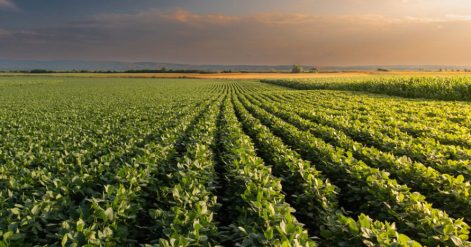
Proper management in soybean cultivation supports the productive potential of corn.
To mitigate these risks, the agronomist emphasizes the importance of well-executed practices even in the soybean stage. He highlights that good pre-harvest desiccation, for example, facilitates mechanization, improves the uniformity of maturation, and allows for planting corn in a cleaner area. "In some cases, insecticide application at this time is also recommended, as it helps reduce the population of stink bugs and caterpillars," he points out.

Photo: Jaelson Lucas
Water scarcity, typical of the second crop season, reinforces the race against time. "What is within our influence is planting as much as possible within the ideal window. In traditional regions, planting by February 25th greatly increases the chances of the corn flowering with good water availability and taking advantage of the last rains," he states, emphasizing that the further planting goes beyond this window, the greater the production risk.
In this context, technologies and innovations that bring flexibility to management become allies of the producer. “Any innovation and good practice that allows for greater efficiency is welcome, because you don't have time to correct mistakes. The right choice of hybrid, good biotechnology that suppresses certain pests, and professional seed treatment bring more peace of mind so the producer can focus on other operations,” emphasizes Boel Júnior.
Beyond the technical aspects, the shift is marked by high operational complexity and a strong economic impact, since second-crop corn has assumed a decisive role in the profitability of farms. In this scenario, the soybean-corn succession is proving to be a widely adopted model in the country for maximizing land use and promoting technical and economic balance in the long term, contributing to the construction of more resilient and sustainable production systems.