EN
EN  PT_BR
PT_BR 
The teams involved in the Harvest Rally have already begun fieldwork to assess the second corn crop. In a contrasting scenario marked by late planting in several regions and irregular rainfall, average productivity is expected to decline, with the 2025/26 harvest falling short of the previous cycle's record.
 The first contrast relates to the planting calendar, which, in some regions, was hampered by excessive rainfall in February and March, lengthening the soybean cycle and limiting the harvest pace, delaying the planting of the second crop. This is the case in Goiás, where 46% of the crops were planted outside the ideal window, in a calendar considered high-risk. The positive highlight is the West and Mid-North of Mato Grosso, with approximately 95% of the crops planted within the ideal window and at low risk.
Another point of attention concerns weather patterns. This year, April was drier, with some regions going up to 30 days without rain. Coincidence or not, the regions that planted within a higher risk window are those that recorded the lowest rainfall volumes.
According to an assessment by Agroconsult, organizer of the Harvest Rally, the 2025/26 harvest has, on average, a slightly lower proportion of consolidated crops with high productive potential than that recorded in the previous season, although there are significant differences between states and even between regions within the same state.
In Goiás and Mato Grosso do Sul, at this moment, only 39% of the crops maintain high assured productive potential, compared to 62% and 53% registered in the previous harvest, respectively. In Minas Gerais, only 25% of the crops have high assured potential, compared to 46% in the last cycle. In Mato Grosso, the scenario remains more favorable, with approximately 80% of the crops still maintaining high productive potential.

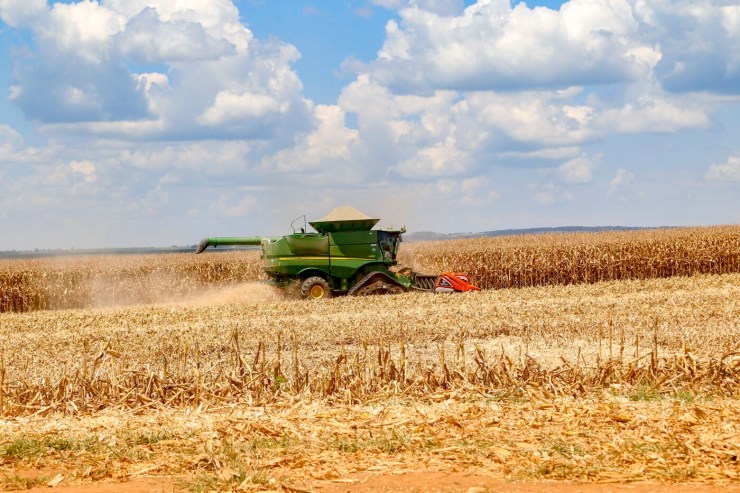
Photo: Aires Mariga
Despite the tighter situation in some regions, there is still room for adjustments, depending on the weather, says André Debastiani, coordinator of the expedition. “The rainfall patterns in May will be crucial in consolidating the potential of the crops, and field assessments are essential to deepen the analysis and adjust our figures until the end of June, when we will conclude the corn stage,” he explains.
Compared to the previous harvest, the average productivity estimated before the Rally shows a decrease, going from 114.4 sacks per hectare to 101.9 sacks. With the exception of São Paulo, all the main producing states are expected to have a decrease in productivity compared to 2024/25. This is due not only to the adverse weather conditions this year, but also because the 2024/25 harvest was one of the best in history.
Goiás is expected to register the largest reduction in productivity. The state has an estimated yield of 90 sacks per hectare, compared to 127 last year. In Mato Grosso do Sul, the projection is 90.5 sacks, compared to 102 in the previous cycle. Paraná is expected to register a productivity of 92.5 sacks per hectare, compared to 104.5 in the last harvest. Mato Grosso, despite also registering a decrease, remains a positive highlight, with an estimated yield of 123 sacks per hectare, compared to 131.9 in 2024/25, a result that will still be validated by the teams in the field.

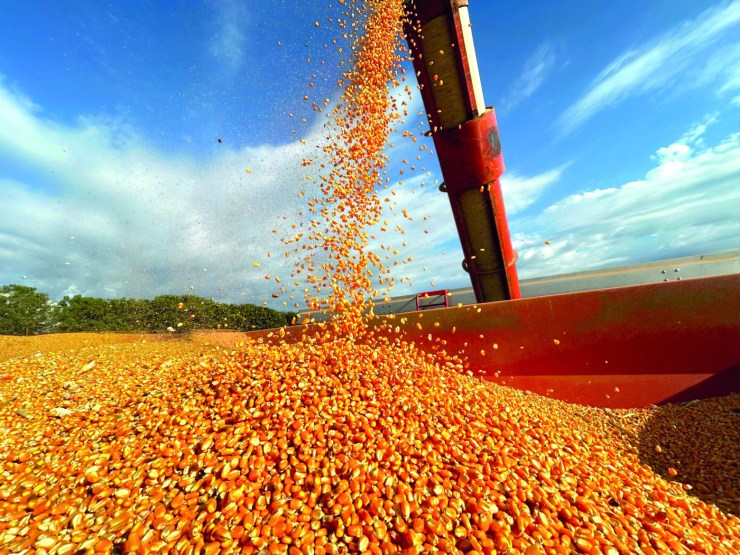
Photo: Eduardo Monteiro
The planted area for 2025/26 also shows distinct trends. While Mato Grosso, Paraná, and Mato Grosso do Sul show growth of around 4%, Goiás and Minas Gerais have a decrease of around 5%. The estimated area for second-crop corn is 18.3 million hectares, 1.5% above the previous crop. "This growth could be even greater if it weren't for the extension of the planting calendar, which led many producers to alter their sowing plans to avoid entering a window of very high risk," highlights Debastiani.
Pre-Rally data from Agroconsult points to a second corn crop of 112.1 million tons, below the record of 123.9 million tons in 2024/25. Meanwhile, total corn production in the country is estimated at 140.5 million tons, compared to 151 million tons in the previous cycle.
Fieldwork
The technical expedition will be in the field until June 23rd to assess the conditions of the second corn crop in five states, observing weather conditions, the planting window, and the investment made in the crops.

Photo: Eduardo Monteiro
Six teams will tour the planted areas: the first two will assess the Mid-North and West of Mato Grosso, departing from Cuiabá and visiting the regions of Nova Mutum, Lucas do Rio Verde, Sorriso, Sinop, Tangará da Serra, Campo Novo do Parecis, Sapezal, Juína and Vilhena, in Rondônia, until May 24th.
The third and fourth teams will conduct surveys in eastern and southeastern Mato Grosso, southwestern Goiás, and northern Mato Grosso do Sul. In Mato Grosso, the itinerary includes the regions of Sinop, Gaúcha do Norte, Canarana, São José do Xingu, Querência, Água Boa, Primavera do Leste, Paranatinga, and Rondonópolis. In Goiás, technicians will assess crops in the regions of Paraúna, Rio Verde, Jataí, and Mineiros. In Mato Grosso do Sul, the work will take place in the regions of Sonora, São Gabriel do Oeste, and Chapadão do Sul, concluding in Campo Grande on June 6th.
The last two teams will be in southern Mato Grosso do Sul and northern and western Paraná between June 7th and 23rd, departing from Campo Grande towards the regions of Maracaju, Dourados, Ponta Porã, and Naviraí. In Paraná, the technicians will evaluate crops in the regions of Guaíra, Marechal Cândido Rondon, Toledo, Cascavel, Ubiratã, Goioerê, Campo Mourão, and Maringá, concluding their work in Londrina.
In its first stage this year, the Rally assessed the conditions of more than 1,700 soybean crops during the development and harvest phases in 14 states. The evaluated crops account for 97% of the soybean production area and 72% of the corn area in the country.