EN
EN  PT_BR
PT_BR 

By Manuela Andreoni and Roberto Samora
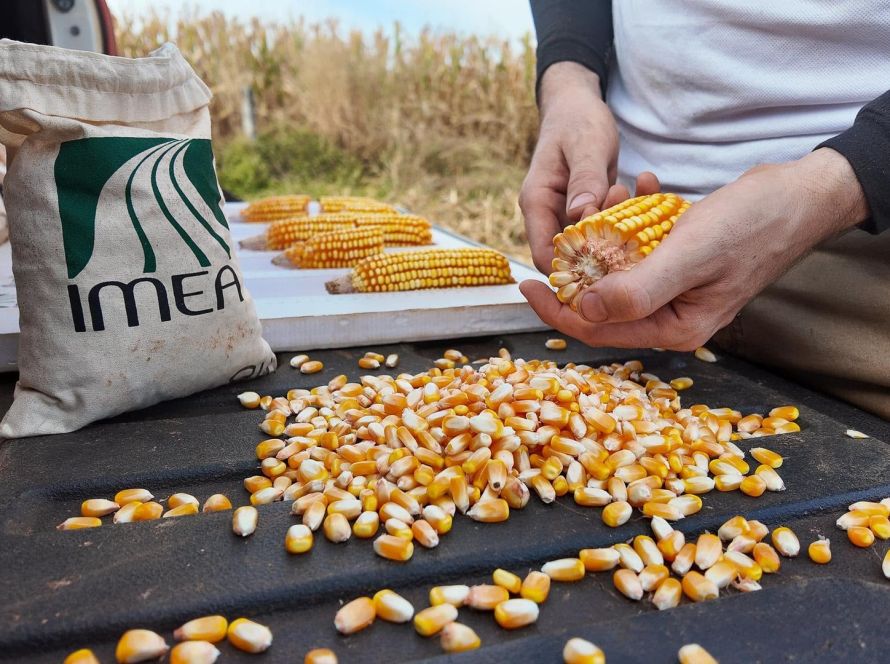
SÃO PAULO, June 9 (Reuters) – The government of Mato Grosso has signed an Environmental Commitment Agreement (TCA) in which it pledges to eliminate, starting in 2034, the use of firewood from native forests in boilers that power agro-industries, such as corn ethanol plants, according to a document seen by Reuters.
The agreement, which also provides for a gradual reduction in the consumption of native firewood by agribusinesses, was signed the day before with the State Public Prosecutor's Office following an inquiry opened at the end of last year to investigate possible illegalities in the use of the plant-based raw material.
The concern is that the expansion of a sector seeking decarbonization — such as the corn ethanol industry, which is experiencing rapid growth in Mato Grosso — could encourage environmentally reprehensible practices, such as deforestation, even though agricultural producers can legally deforest part of their properties in Brazil.
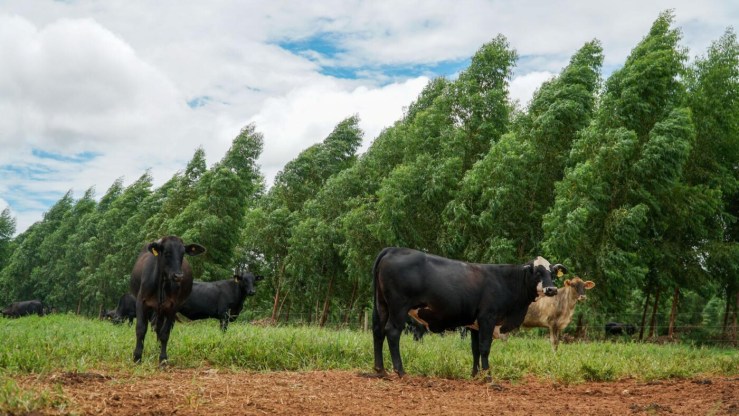
The TCA (Term of Commitment Adjustment) signed by the State Governor, Otaviano Pivetta, points out that in recent years there has been a "significant increase in the demand for forest raw materials in the State," which requires the adoption of structural measures to expand the "sustainable supply" of biomass, such as eucalyptus planting and the use of agro-industrial waste.
Data from IBGE (Brazilian Institute of Geography and Statistics) indicates that the expansion of agro-industries in Mato Grosso, notably corn ethanol plants, more than doubled the consumption of forest raw materials from 2021 to 2024, to 7.4 million cubic meters, while the area planted with eucalyptus (renewable biomass) fell by 3.5% in the same period.
According to the TCA, the increased demand for forest raw materials for energy production, without a structuring policy, could make the expansion of sectors such as corn ethanol unfeasible.
Mato Grosso had about ten corn ethanol plants last year, and there are plans for more than ten in the coming years, according to industry figures.
The Mato Grosso Reforestation Association (Arefloresta) pointed out, in a statement released last week, that, given the strong growth of the corn ethanol industry, the state is facing a "blackout" of biomass from planted forests.
According to Arefloresta, there is already a shortage of raw materials to generate energy for corn ethanol production, and planning is necessary because eucalyptus harvesting takes six to seven years.
The signed commitment agreement indicates that the government must approve within 30 days a decree regulating a plan with targets for expanding planted forest area to 700,000 hectares or more by 2040, versus approximately 200,000 hectares of eucalyptus in 2024.
The plan also foresees the expansion of the area of sustainable forest management to 6.5 million hectares or more by 2040, while also establishing a reduction in the use of native firewood from deforested areas by large consumers over the coming years.
The consumption of raw materials originating from the suppression of native vegetation should be limited to a maximum of 50% by the end of 2030; up to 40% by 2031; a maximum of 30% by 2032; and 10% by 2033. From 2034 onwards, the target should be zero.
The government of Mato Grosso must notify the companies within 90 days of signing the TCA (Term of Commitment Adjustment) so that they can take the necessary measures.
In the years 2027, 2028, and 2029, although there is no pre-defined maximum for the consumption of raw materials originating from the suppression of native vegetation, the government should require companies to prove the legality of the origin of the firewood, as well as the implementation of a plan proportional to their annual consumption.
The obligation to plant forests to meet the demand for energy generation may fall on the entrepreneur himself, through planting on third-party land, or by acquiring forest replacement credits backed by plantations.
(By Roberto Samora and Manuela Andreoni. Edited by Pedro Fonseca)