EN
EN  PT_BR
PT_BR 
The assessment was presented on Wednesday (24) by the deputy secretary of Semadesc, Alex Marcel Melotto, during the 333 Experience, in Florianópolis (SC), one of the largest events in national pig farming. Also participating in the event are the executive secretaries of Sustainable Development, Rogério Beretta and of Qualification and Work, Esaú Aguiar.
The meeting brings together agribusiness leaders, producers, cooperatives, agro-industries, and representatives of the public sector to discuss the challenges and opportunities of the Brazilian production chain. Representing the Government of Mato Grosso do Sul, Melotto participated in the panel "How to capitalize on our competitive advantages and mitigate long-term risks," which debated strategies to increase competitiveness, sustainability, logistics, and attract investment to agriculture.
During his presentation, the deputy secretary highlighted that the growth of pig farming in Mato Grosso do Sul is the result of a collective effort that began more than a decade ago, based on long-term planning and strong integration between government, producers, and industry.
“Much of what we are experiencing today was built about 12 years ago, when the State began planning its future, especially in the area of infrastructure. I often say that progress travels on asphalt. The investments made at that time created the conditions for the productive sector to grow safely,” he stated.
Melotto also emphasized that one of Mato Grosso do Sul's main strengths is its institutional environment, which fosters dialogue and the joint development of solutions. “We have an environment where government, producers, industry, and sanitary defense agencies work in alignment. Our role is to create conditions so that those who invest in the state can produce, generate jobs, and grow. The rural producer is the first link in this chain and deserves all our respect and support,” he highlighted.
Another aspect highlighted by the deputy secretary was the strong organization of the producers. According to him, the actions of the South Mato Grosso Swine Producers Association (Asumas) strengthen the sector's representation and facilitate the development of public policies aligned with the needs of the production chain.
“When we meet with the association, we have the assurance that we are engaging in dialogue with the entire supply chain. This makes the process more efficient and strengthens decision-making,” he noted.
Climate challenges and preparing for the future.
When discussing the challenges for the coming years, Melotto highlighted the impacts of climate change on agricultural production and the need for adaptation of production chains.
"The biggest challenge is maintaining productivity and quality standards in the face of the climate changes we are observing. We need to build solutions that guarantee the sector's competitiveness and security for producers," he stated.
As an example, he cited the strong variation in corn productivity in the state in recent years, demonstrating the direct influence of climatic phenomena on agricultural production and, consequently, on animal protein chains.
According to the deputy secretary, the government, representative entities, and the productive sector are already discussing alternatives to increase the resilience of the activity in the face of extreme weather events.
Pig farming is expanding.
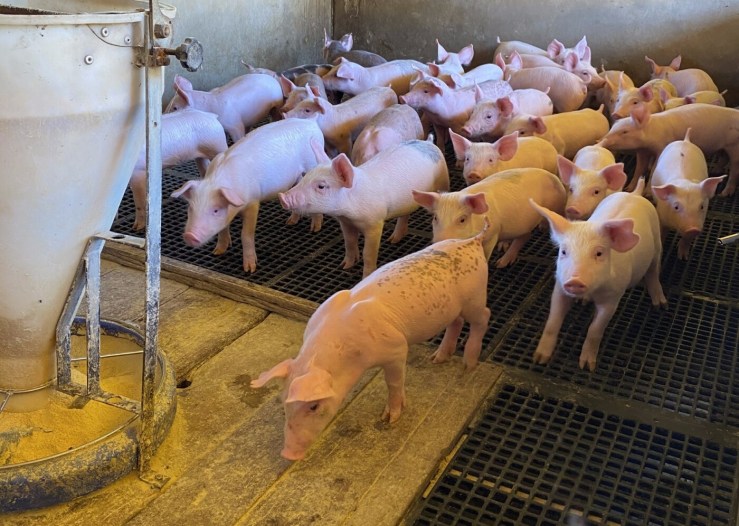
The numbers confirm the positive moment experienced by the production chain in Mato Grosso do Sul. Currently, the state has a herd of 3.75 million head, occupying the eighth position among the largest pork producers in the country and the sixth position among Brazilian exporters in the segment.
Over the past seven years, the sector has received R$1.7 billion in approved financing through the Constitutional Financing Fund for the Midwest (FCO), strengthening investments in expansion, modernization, and increased production capacity.
Key indicators for the sector include:
* Herd of 3.75 million pigs;
* 8th largest pork producer in Brazil;
* 6th largest national exporter;
* R$ 1.7 billion in financing approved by the FCO between 2019 and 2025;
* 272 establishments registered and audited in the Leitão Vida Program;
* 239 properties already adapted to the new evaluation protocol;
* 111,570 matrices registered.
Between January and June 8, 2026 alone, the Leitão Vida Program recorded:
* 4,546,100 animals incentivized;
* 1,638,680 pigs slaughtered;
* R$ 45.2 million in incentives granted to producers.
Sustainability and innovation strengthen the supply chain.
The modernization of the Leitão Vida Program, implemented in 2025, consolidated a new stage for the activity in the State. The initiative adopted the Leitão Vida in Compliance Protocol (PLVC), developed by the Swine Sector Chamber with the participation of producers, representative entities and public bodies.
The new model establishes evaluation criteria based on six pillars: social sustainability, economic sustainability, environmental sustainability, biosecurity, animal welfare, and production.
The methodology reinforces Mato Grosso do Sul's commitment to sustainable production and broadens the recognition of good practices adopted by producers. In addition to direct incentives, the State Government, through Semadesc, maintains ongoing support for the sector through forums, workshops, technical missions, leadership meetings, and participation in national and international business events.
With a strong presence in the hubs of São Gabriel do Oeste and Dourados, where important integrated agro-industries are concentrated, pig farming in Mato Grosso do Sul continues to advance based on innovation, sustainability, sanitary safety, and strategic planning, consolidating itself as one of the activities that most contribute to the generation of employment, income, and regional development.
“I invite everyone to get to know Mato Grosso do Sul. We have an organized supply chain, a favorable environment for investment, and a government committed to sustainable development. Our doors are open to anyone who wants to grow with us,” concluded Alex Melotto.