EN
EN  PT_BR
PT_BR 

The harvest of bean This requires extra attention in crops with uneven ripening, a situation where plants and pods reach the ideal point at different times. The decision on when to start harvesting needs to balance the risk of natural shattering, the presence of green grains, and potential damage during threshing, while preserving productivity, quality, and commercial value.
Uneven ripening can occur in different regions and planting seasons, from January to December, in both manual and mechanized harvesting systems. In this scenario, the producer needs to assess the crop from different points before deciding when to start harvesting.
Among the causes are irregular sowing, differences in soil fertility and moisture, localized occurrence of pests and diseases, periods of drought followed by rain, and mixing of cultivars or seed lots with different cycles. Trampling, waterlogging, and compaction in certain areas of the plot can also contribute to delayed development.
The result is a crop consisting simultaneously of plants with completely dry pods, plants at the ideal harvest point, and others still with green pods.
To determine the optimal time for harvesting, the producer needs to consider this set of conditions and find the point that preserves the majority of the production without compromising the quality of the batch.
In practice, one of the main signs of maturity is the appearance of the plants and pods. The harvest point is approaching when approximately 80% to 90% of the pods have a straw color, ranging from yellowish to brown, without shine and without a firm green consistency to the touch.
At this stage, almost all the leaves are fallen or dry, while the plant displays a color ranging from yellowish to brown. The presence of flowers and tender pods at the tips of the branches should also be minimal or nonexistent.
The condition of the grains inside the pods is another indicator. The grains should be firm, have the characteristic color of the cultivar, and not have a milky or translucent appearance.
It is also expected that they will detach easily from the inner wall of the pod when it is opened manually, without the presence of mucilage or excess internal moisture.
The moisture content of the grains also influences the decision. For manual harvesting, the generally recommended range is between 18% and 22%, allowing the plants to be removed and left in windrows to dry before threshing.
In direct mechanized harvesting, the moisture content is usually slightly lower, in order to reduce clogging problems and damage to the threshing system, without allowing excessive drying to cause intense threshing on the platform.
Since precise moisture measurement is not always available in the field, visual assessment and simple tests with pods and grains can aid in the decision. In uneven areas, however, this observation should be made at different points in the crop.
The timing of the harvest also directly affects the results. When harvesting occurs too early, with many plants still green, the presence of green or immature grains increases, as does the risk of problems after drying.
Early harvesting can also lead to greater unevenness of moisture in the batch, making drying and storage more difficult. Furthermore, it can increase the occurrence of shriveled, broken, and stained grains.
When the producer delays too long, the risk becomes the loss of already mature grains. Dry pods can undergo natural threshing, especially when subjected to wetting and drying cycles caused by rain and sun.
Prolonged storage in the field can also weaken the grain's outer layer, increasing the occurrence of cracks and breakages during manual or mechanized threshing.
According to the technical content presented, the delay can also favor blemishes, burnt grains, and deterioration caused by field and storage fungi. In areas intended for seed production, there may also be a reduction in vigor and viability.
Therefore, in a crop with uneven maturation, the decision tends to prioritize reducing losses due to natural shattering and the excessive retention of mature plants in the field.
This means accepting a controlled percentage of grains that are not yet fully ripe, provided that their presence does not significantly compromise the batch's classification.
Before starting the uprooting process, one alternative is to divide the plot into strips or more homogeneous internal areas, considering differences in soil, management history, and plant development.
In each strip, points can be randomly selected to observe between 10 and 20 plants. The evaluation should consider the proportion of dry pods, pods beginning to dry, and pods that are still green or tender.
It is also important to identify areas with delayed development, which may eventually need to be managed at a different time than the rest of the crop.
Based on this assessment, the areas can be classified according to the predominant stage. The most mature areas show the majority of plants with 80% to 90% of dry pods.
Intermediate areas have a greater mix of dry and green pods, while delayed areas show a predominance of green pods, flowers, or plants still in full vegetative development.
When it is possible to work in strips, uprooting can begin in the most advanced areas. One of the criteria is that at least 80% of the plants show pods with a straw color, accompanied by leaf drop in most of the plants.
Another warning sign is the beginning of the spontaneous opening of older pods. When this process appears, the risk of natural threshing increases and may justify starting the operation in mature areas.
Rain forecasts should also be factored into the decision. If there is a possibility of precipitation during the harvest phase, delays could increase losses and make it more difficult to remove the plants at the appropriate time.
Under these conditions, it may be necessary to start uprooting as soon as most of the plants in the more advanced areas visually reach the harvest point, even if some are still a little greener.
The strategy aims to prevent mature beans from remaining in the field and being subjected to new cycles of rain and drying, which can favor the re-wetting of the grains and the occurrence of fungi and spots on the seed coat.
In truly uneven areas, a small percentage of green pods may be tolerated. The decision depends on whether these pods represent only a limited fraction of the production and whether removing the late-maturing plants would outweigh the risk of keeping the mature plants in the field.
In manual harvesting, slightly earlier uprooting can be combined with drying in windrows. The plants are removed before the pods open spontaneously and remain in the field for a few days before threshing.
This procedure can reduce natural threshing and allow for a more uniform loss of residual moisture. During rainy periods, however, the windrows need to be managed to prevent waterlogging, disease, and rotting.
In this system, the plants should show clear signs of maturation, such as firmer pods, a color transitioning to straw, and predominantly dry or drooping leaves.
In manual harvesting with subsequent threshing, it is also necessary to consider the physiological maturity of the grains, the ability to uniformly dry them in windrows, and the availability of labor.
Planning the area allows you to start with the most mature portions and gradually move towards the less mature regions, reducing the risk of losing plants that have already reached the harvest point.
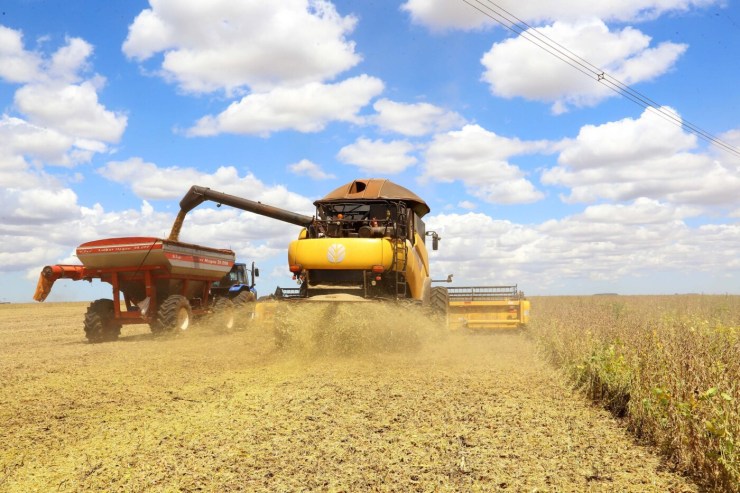
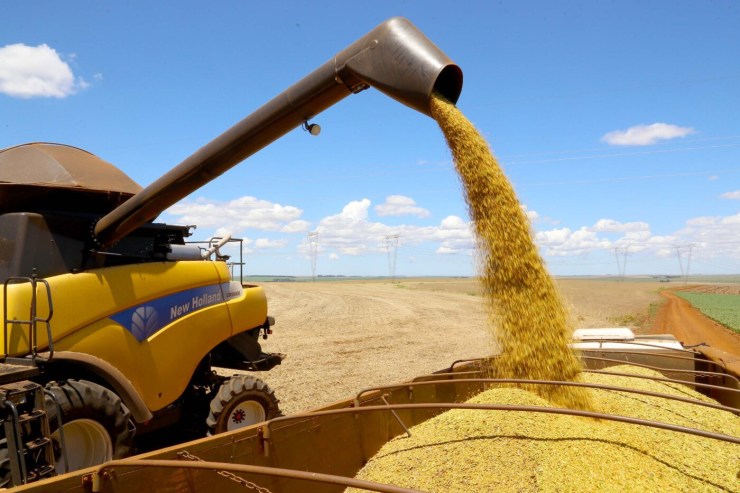
In mechanized harvesting, unevenness can be even more critical because the machine operates with settings that need to adapt to the conditions of the area during operation.
In this case, harvesting should be avoided when there are still a large number of green plants, a condition that can hinder threshing and increase breakage and damage to the grains.
In situations of pronounced unevenness, manual or mechanical removal of more homogeneous strips beforehand may be considered, leaving the clearly lagging areas for a later time.
The problem of uneven ripening can also be reduced in subsequent crops with adjustments in management. Sowing needs to aim for the appropriate speed, uniform depth, and good seed distribution. Uniform soil correction and fertilization help reduce fertility differences within the plot. Irrigation and drainage management can also prevent waterlogging or prolonged periods of water shortage in certain parts of the area.
Controlling pests and diseases at the right time helps prevent premature plant death in patches. Choosing cultivars suited to the environment also reduces the risk of mixing plants with very different growth cycles.
During harvesting, team organization helps prevent excessive trampling of already uprooted plants, reducing losses and damage to the grains. It is also necessary to avoid storing uprooted plants in compact, damp piles for many days, a situation that can promote heating and fungal growth.
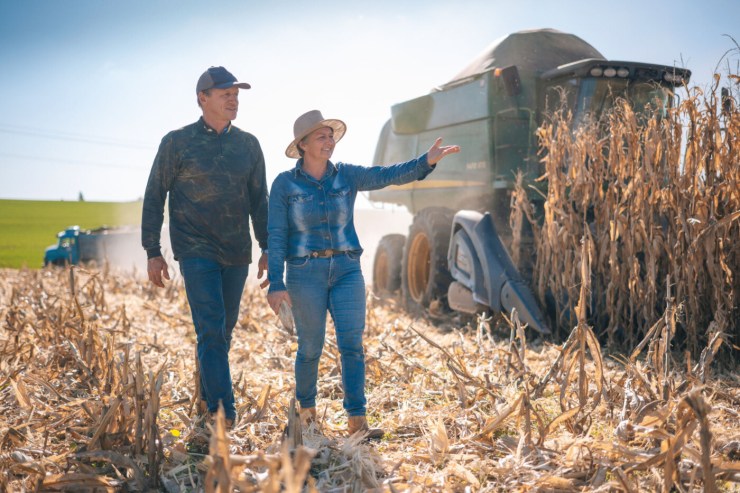
When using machinery, operators must follow safety regulations and use the indicated personal protective equipment. Recording the dates of uprooting and threshing, as well as the weather conditions observed during harvesting, can help in planning future crops.
Therefore, determining when to start harvesting beans in uneven areas depends on a joint assessment of maturity, moisture, rainfall forecast, and risk of losses. The main point is to avoid both the premature removal of a large number of green plants and the excessive retention of mature plants in the field.
In uneven areas, strip-by-strip assessment allows identification of where harvesting can begin first. When most of the pods are straw-colored and the leaves have already fallen, the risk of delayed losses becomes more significant.
The final decision should take into account the conditions observed in the field and, whenever possible, be carried out with the guidance of an agricultural engineer who is familiar with the local context and the demands of the buyer's market.