EN
EN  PT_BR
PT_BR 
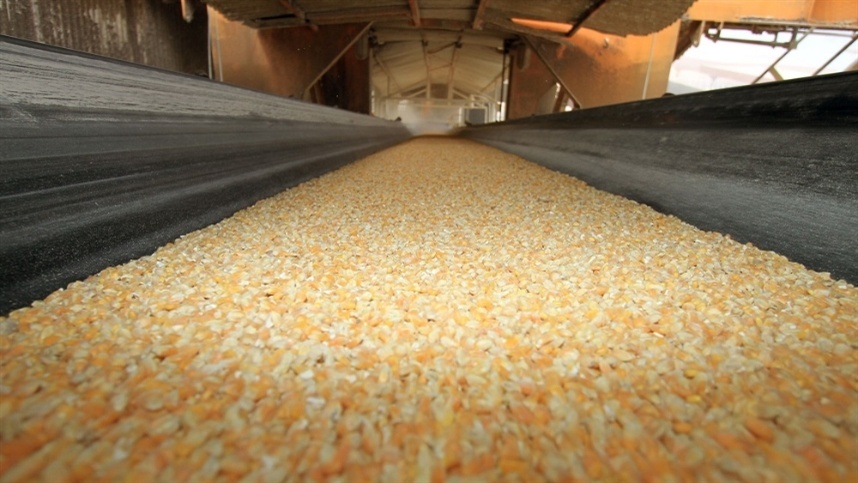
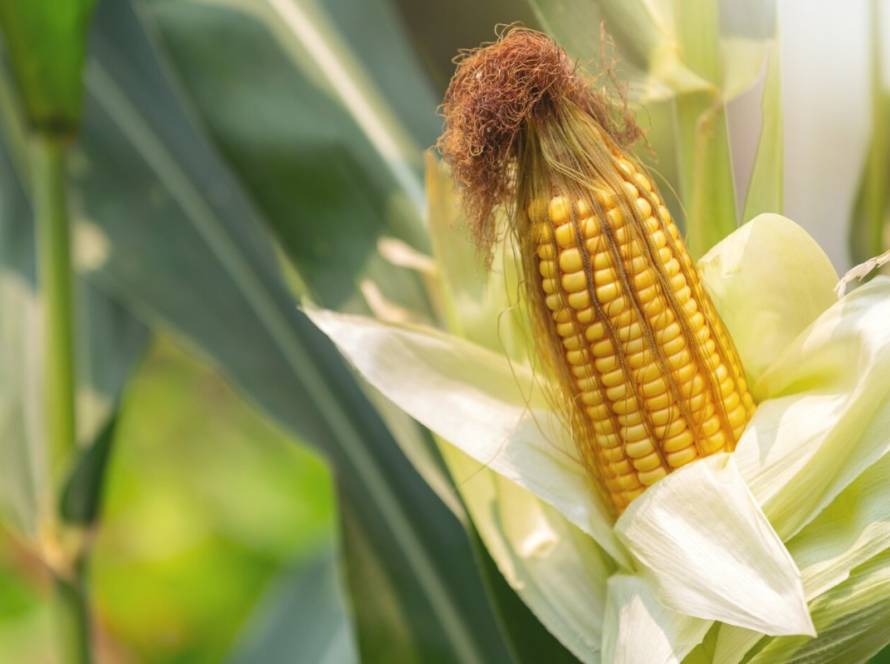
Planting density can be crucial for productivity. corn Under rainfed conditions, especially during periods of drought. According to data released by INTA San Luis, increasing the density from 5 to 8.5 plants per square meter raised the average productivity of eight hybrids evaluated in Villa Mercedes, Argentina, by 27%.
The study was conducted by the Agricultural Production group of the INTA San Luis Agricultural Experimental Station and evaluated eight commercial hybrids in two planting schemes: 8.5 and 5 plants per square meter. According to data released by INTA San Luis, the average productivity reached 7,408 kg/ha at the higher density, compared to 5,825 kg/ha at the lower density. The difference exceeded 1,500 kg/ha between the two systems evaluated.
Maximiliano Riglos, a researcher at INTA San Luis, explained: “The effect was very clear: when the density was increased, the increase in the number of grains more than compensated for the decrease in weight, resulting in a productivity of 8.5 plants per square meter.”
According to data released by INTA San Luis, the increase in productivity was mainly related to the number of grains. This component grew, on average, by 63% with the highest density, while the individual weight of the grains fell by 19%. “There is a typical trade-off in the crop: more plants generate more competition; during flowering, the time when the number of grains is defined, the conditions were extraordinary, which favored this component of production without an exaggerated reduction in grain weight,” indicated Riglos.
The results show that a higher plant count does not necessarily reduce productivity when conditions are favorable during grain set.
The response to density also varied among the genetic materials evaluated. According to data released by INTA San Luis, two of the eight hybrids exceeded 9,000 kg/ha at the highest density. The LT 722 VT3 PRO achieved this result mainly due to the greater weight of the grains. The LT 723 TRE, on the other hand, showed higher grain production per unit area.
Another group, consisting of NK 835 VIP 3 and ARG 7718 VT3 PRO, also showed high performance, with productivities close to or exceeding 8,000 kg/ha.
Weather conditions also played an important role in crop performance. The growing season began with water restrictions, but there was a recovery with more than 200 mm of accumulated rainfall between February and March.
According to data released by INTA San Luis, this period coincided with flowering and the beginning of grain filling, important phases for determining productivity. Higher density plantings also showed greater efficiency in capturing radiation, intercepting approximately 88% of photosynthetically active radiation during grain filling.
Despite the gains observed in the experiment, the strategy requires attention to the water balance. Riglos highlighted that increasing density raises the demand for water and can accelerate the consumption of available moisture in the upper layers of the soil. “It is by no means a solution. In rainy years, starting from a saturated soil profile, high density may be an option to consider, but in drought conditions this approach can be counterproductive,” warned Riglos. Thus, the crop's response depends on water availability conditions and the production environment.
According to data released by INTA San Luis, the experiment was conducted on a plot with five years of alfalfa cultivation history, a condition that contributed to improving soil structure.
Therefore, the results should be considered as local information to support adjustments to management decisions in systems subject to climate variability. "The goal is to generate local data that help adjust management decisions," the expert concluded.