EN
EN  PT_BR
PT_BR 
We have entered the decade of extremes. Record heat waves, prolonged droughts, floods, and large-scale wildfires are no longer exceptions but have become part of the new global landscape. The impact goes far beyond the environmental: extreme weather has become a macroeconomic risk, capable of redefining the cost of money, the value of assets, commodity prices, and even the fiscal capacity of states.
The economic consequences are already measurable. In 2023, natural disasters generated US$280 billion in economic losses, according to Swiss Re. Of these, only US$108 billion were insured, revealing a worrying gap in financial protection. In 2024, the insured value rose to US$137 billion, and projections indicate US$145 billion annually until 2025, with average growth of 5 to 7 per year.

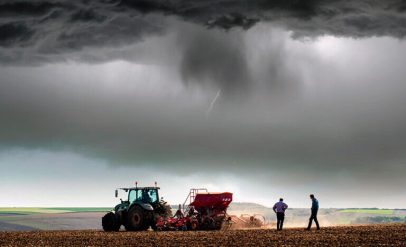
Photo: Antonio Carlos Mafalda
But the most alarming figure comes from the World Bank: more than US$300 billion per year in uninsured losses. These are resources drained from public budgets, corporate margins, and household income, putting pressure on liquidity and increasing the fiscal vulnerability of countries and companies.
And the effects of climate change don't end when the floods recede or the fires die down. They extend into inflationary shocks, loss of agricultural productivity, disruptions in supply chains, and increased country risk. The World Bank estimates that extreme events reduce the GDP of emerging countries by up to 21% per 100g per year, while the UN (UNDRR) warns that, when ecological and social losses are included, the impact is even greater.
Risk perception has also shifted at the top of the financial system. Central banks and regulators have begun to treat climate risk as a systemic risk. The Bank for International Settlements (BIS) and the Financial Stability Board (FSB) are already warning of critical gaps in prudential data and metrics. The European Central Bank (ECB) included the topic in its Financial Stability Review, highlighting vulnerabilities in carbon-intensive sectors and the risks of greenwashing and asset mispricing.
Severe convective events – such as hail, gales, and storms – have become the main source of claims in several regions, including South America. The increased frequency and intensity have raised premiums, expanded deductibles, and, in some cases, reduced the availability of coverage, driving the search for parametric insurance and financial resilience mechanisms.
Ignoring climate risk is, today, the most expensive investment an economy can make. Studies by the World Resources Institute show that every US$$1 invested in adaptation and resilience generates more than US$$10 in benefits over a decade, a higher ROI than many traditional sectors. Yet, less than 5% of global climate finance flows are allocated to adaptation. The result is predictable: the countries and companies most exposed are also the least prepared.

In this context, sustainable finance is consolidating itself as the link between economic stability and environmental protection. The European Union's Taxonomy has brought objective standards to define what is "green," reducing ambiguities and strengthening investor confidence. In Brazil, the Brazilian Sustainable Taxonomy follows the same logic, creating a technical framework that connects the country to the new global economy, focusing on just transition, sustainable agriculture, and resilient infrastructure.
The progress is also visible in the capital markets. The volume of GSS+ (Green, Social, Sustainability and Sustainability-linked) bonds exceeded US$6.9 trillion in cumulative issuances by 2024, with US$1.05 trillion issued in the last year alone, a growth of 31% compared to 2023. These resources have financed clean energy, regenerative agriculture, green infrastructure and nature-based solutions, paving the way for a more resilient and competitive economy.
To shield economies from the climate, it is essential to:
- Integrate physical and transition risks into credit, investment, and insurance analysis.
- Expand sovereign and subnational issuance of green and sustainability bonds for urban adaptation and resilience projects.
- Scaling blended finance, combining public, philanthropic, and private capital for efficient irrigation, blue-green infrastructure, and coastal protection.
- Improving climate data and metrics by measuring avoided losses and resilience indicators, reducing uncertainties and the cost of capital.

Sustainable finance is no longer a niche market. Today, it is the foundation of the new global economy. Capital is available; the challenge is to allocate it intelligently, directing resources to where they generate the greatest impact and long-term return: resilience, adaptation, and sustainable development.
In a world shaped by climate change, every dollar invested in prevention avoids multiple future losses. Prosperity, going forward, will be measured not only by growth, but by the ability to resist and adapt.