EN
EN  PT_BR
PT_BR 
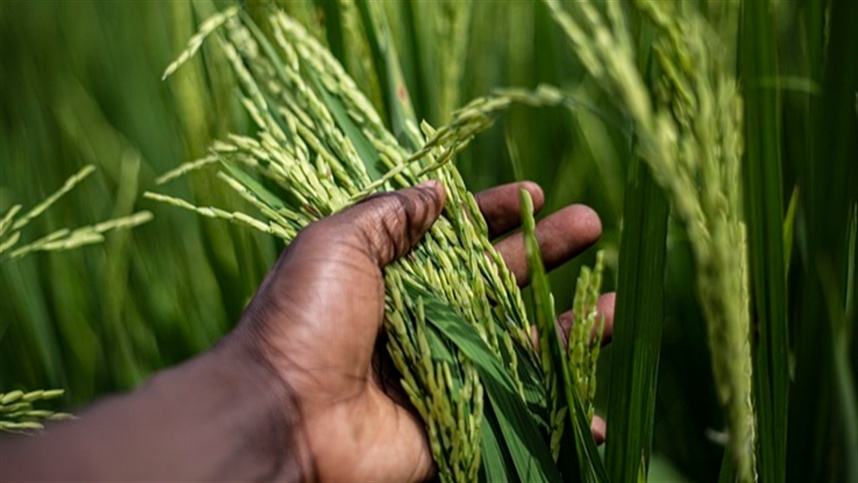
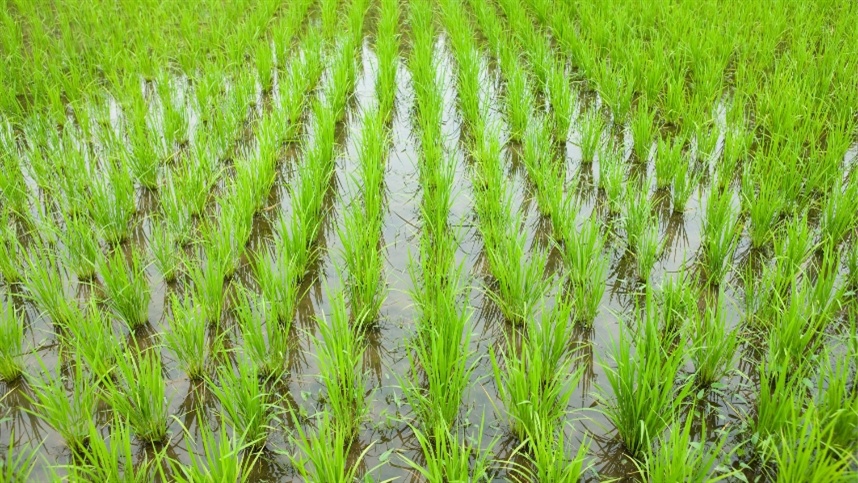
Planting rice Irrigated farming between September and December requires planning to reduce climate risks and enhance the crop's productive potential. The sowing date influences the stand, tillering, exposure to frost and cold during flowering, as well as the use of water and inputs throughout the growing season.
Planting too early can increase the plants' exposure to cold in the early stages and to late frosts. Conversely, delaying planting can lead to the reproductive stages occurring during warmer periods, with less available radiation and a higher risk of rain during harvest.
Therefore, the choice of date should not consider only one specific day. Planning needs to work with sowing ranges, taking into account the maturity group of the cultivar, the climatic history of the region, irrigation management, and the operational capacity of the property.
Planting encompasses everything from defining the date and minimum soil and climate conditions to the uniform distribution of seeds, with the aim of forming an adequate stand and ensuring plant establishment.
Between September and December, each period presents different conditions for the development of irrigated rice.
At the beginning of the window, in September, lower temperatures can harm germination and emergence, reducing stand and initial vigor. There is also a greater possibility of exposure to late frosts in atypical years, especially in more susceptible areas.
On the other hand, when conditions are right, early planting allows plants to emerge sooner and make better use of the available radiation in the spring. With proper management, this can promote the formation of tillers.
Flowering also tends to occur in months with milder weather in plantings carried out at the beginning of the window, which can favor grain filling under normal conditions.
In October, the planting window usually offers greater stability for most irrigated rice cultivars in the main producing regions. This period combines a lower risk of severe cold during emergence with a greater likelihood of suitable temperatures for rapid germination.
Flowering occurs between spring and early summer, depending on the cultivar's cycle, and there may be a favorable combination of temperature and radiation.
Planting in November and early December virtually eliminates the risk of frost and intense cold during emergence. On the other hand, it may shift flowering to the warmer summer months.
High temperatures can accelerate the crop cycle and, in some cases, reduce the effective grain-filling period. The delay also increases the possibility that the harvest will coincide with periods of excessive rainfall.
In this situation, difficulties may arise for machinery access, quality losses, and a higher risk of problems such as panicle germination and lodging. Water management also requires attention, as part of the cycle may coincide with higher water demand and evapotranspiration.
Temperature is one of the main factors to consider when defining the planting window. Rice is sensitive to cold at different stages, and temperatures below the ideal during germination, emergence, and tillering can reduce the plant stand and the number of productive tillers.
During the reproductive phase, especially during panicle differentiation and flowering, cold spells can cause spikelet sterility and significantly reduce yield.
Therefore, the producer needs to monitor the soil temperature in the planting layer. In very early plantings, especially in September, the soil may still be cold in certain areas, delaying emergence and favoring gaps in the plant stand.
The history of frosts should also be factored into the planning. Although severe frosts generally occur earlier in the year, late episodes can affect crops planted very early in atypical years.
Furthermore, the planting date needs to be related to the expected flowering time. The goal is to avoid the most sensitive stages coinciding with periods of higher probability of heat stress.
The maturity group of the cultivar also directly influences the choice of planting window. Cultivars are classified according to the number of days between planting and harvesting, but this cycle can vary depending on the sowing season and temperature and photoperiod conditions.
Early-maturing cultivars have a shorter cycle. When planted early, they can position flowering during periods of relatively milder temperatures. If planted too late, however, they may concentrate flowering and grain filling in the warmer months.
Medium-cycle cultivars typically fit into intermediate planting windows, mainly in October, balancing the risk of cold during emergence with potentially favorable conditions during the reproductive phase.
Late-maturing cultivars require more attention to ensure planting is not delayed too much. Because they have a longer cycle, harvesting can occur during periods with a higher risk of rainfall and lower availability of beneficial radiation.
Therefore, longer-cycle cultivars tend to be positioned at the beginning of the planting window, in September and early October. The combination of cultivar and date should aim to place flowering under favorable temperature and radiation conditions.
The operational capacity of the property also needs to be part of the decision. In large areas, concentrating all planting in a few days may be unfeasible, making it necessary to divide the crop into blocks and work with different dates within the window considered safe.
Staggered planting allows for the distribution of climate risk and ensures that planting is compatible with the capacity for soil preparation, sowing, irrigation, and the management of pests, diseases, and weeds.
The availability of water in irrigation systems is another point of attention. In some situations, bringing forward sowing may coincide with a period when reservoirs have not yet reached the ideal level.
In this case, staggered planting helps to organize the deployment of areas without compromising the availability of water for the first plots.
Planting schedules also affect harvesting. By spreading planting across different dates, producers can stagger potential harvest dates and avoid peak demand for machinery, transportation, and drying.
The extremes of the window, however, require additional care. In September, when the soil is still cold, slow and uneven germination, stand failures, and, in more severe situations, the need for replanting may occur.
Weakened seedlings may also be more susceptible to early pests and diseases. In lowland areas and locations subject to thermal inversions, the risk of damage caused by below-average temperatures is greater.
Water management also deserves attention, because the presence of cold water can exacerbate the effects of low temperatures on young plants.
At the other extreme, planting in late November and December can lead to flowering and grain filling occurring during warmer periods. In situations of drought, this can increase the risk of heat and water stress if irrigation is not properly adjusted.
Very high temperatures can also accelerate metabolism and ripening, reducing the time available for grain filling and limiting the potential for mass production.
Furthermore, the delay increases the risk of heavy and continuous rainfall during harvest, harming machine performance and grain quality.
The decision regarding the best planting window should begin with the local climate history. The producer can consult historical temperature series, frost occurrences, cold periods, and rainfall patterns at the end of the cycle to identify the safest ranges for emergence and flowering.
Next, it is necessary to define the maturity groups that will be used and consider the estimated cycles of the cultivars at different planting times.
Distributing cultivars across different blocks of the property can also help mitigate risks. In general, longer-cycle varieties can be prioritized at the beginning of the planting window, while early-maturing cultivars can occupy intermediate and, in some cases, later periods.
Before sowing, monitoring soil conditions and short-term weather forecasts allows for adjustments to be made. The soil temperature at the planting depth should be checked, as well as the possibility of sudden temperature drops.
During this window, the plan can be adjusted according to the progress of soil preparation, irrigation, and observed weather conditions.
Therefore, choosing the planting date for irrigated rice should be treated as a management strategy, not an isolated decision. The goal is to position each cultivar so that the most sensitive phases occur under the most favorable conditions.
The analysis should also consider the size of the area, the capacity of machinery and teams, the availability of water, the irrigation system, the type of soil, the altitude, the topography, and the risk profile of the property.
Specific planting dates, in exact days or weeks, should follow regional recommendations and be monitored by an agricultural engineer. The guidelines presented are general and serve to assist the producer in planning the planting window.
During planting, operations such as seed treatment, application of inputs in the furrow, soil preparation, and water management must follow label and package insert recommendations and current legislation. The use of personal protective equipment is mandatory in activities involving chemical products.
The final definition of dates, cultivars, and other management practices should consider the specific conditions of each property and technical monitoring. This planning increases the possibility of distributing climatic and operational risks throughout the growing season. This content is for informational purposes only and does not replace the evaluation of an agricultural engineer under real field conditions.