EN
EN  PT_BR
PT_BR 

Activities in the second corn crop fields continue to advance across Brazil. According to Conab's crop monitoring data, as of last Saturday (28), 64.9% of the safrinha areas had already been sown.
The index rose from 46.7% recorded last week, falling behind the 69.5% of the same period in 2025, but above the 57.2% average of the last five years.
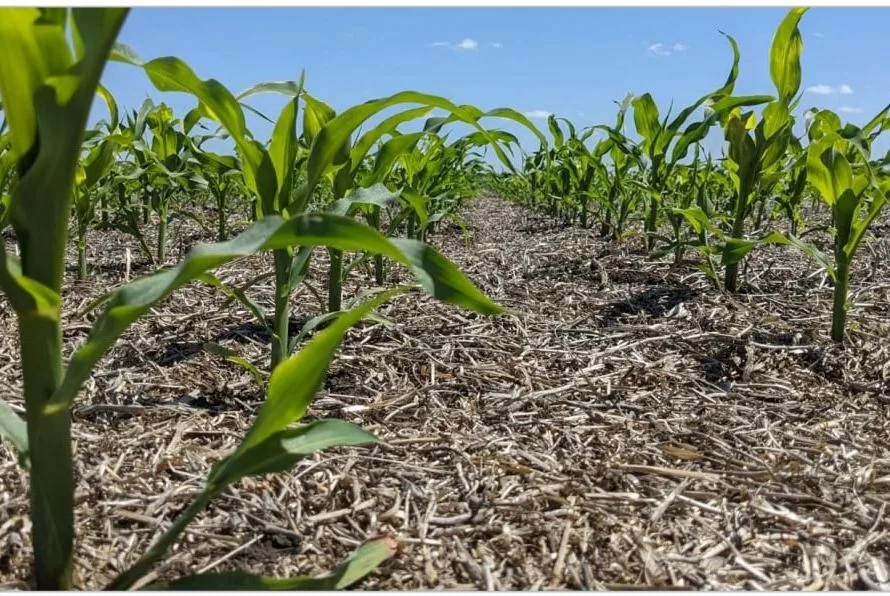
So far, Mato Grosso has sown 85.6% of the area, Tocantins 70%, Goiás 62%, Maranhão 57%, Mato Grosso do Sul and Paraná 45%, Minas Gerais 31% and Piauí 28%. Approximately 30% of the area is still in the emergence phase and 70% has already advanced to vegetative development.
At the same time, harvesting of the summer crop continues to advance, rising from 20.5% last week to 24.9%. This figure is lower than last year's 25.3%, but above the 23% average of the last 5 years.
So far, Rio Grande do Sul has harvested 75% of the area, Paraná 42%, Santa Catarina 28%, São Paulo 7%, Bahia 6% and Minas Gerais 1%. The other states have not yet started harvesting. Meanwhile, 23.4% of the areas are already maturing, 31.9% are in grain filling, 8.2% are flowering, 11.5% are in vegetative development and 0.1% are still emerging.
Conab technicians highlight that planting has progressed, with areas sown benefiting from frequent rains in Mato Grosso and Mato Grosso do Sul. In Paraná, however, sowing is approaching half of the estimated area, with reduced rainfall causing localized halts to operations.
MATO GROSSO
The Imea (Mato Grosso Institute of Agricultural Economics) released a report providing updates on the corn crop in the state. The survey highlights that the planting of the 2025/26 corn crop reached 81.93% of the estimated area in Mato Grosso, with a weekly increase of 15.6 percentage points.
Despite the progress, the pace remains 3.02 percentage points below that observed in the 2024/25 harvest, reflecting the excessive rainfall recorded in the state throughout the period. "The rainfall mainly impacted the Southeast and Northeast regions, which are lagging behind in the annual comparison by 18.74 percentage points and 4.87 percentage points, respectively, due to difficulties in accessing machinery and limitations on field operations," the publication highlights.
“Despite the delay in these regions, most of the state's area was planted within the ideal window, maintaining a positive outlook for productivity. For next week, NOAA projects accumulated rainfall between 75 and 85 mm in most of the state, a scenario that may favor the initial development of already sown crops, but also requires producers to pay attention to the planning of remaining areas,” conclude the Imea analysts.
PARANÁ
The Department of Rural Economy (Deral) of the Paraná State Secretariat of Agriculture and Supply also released its weekly report detailing weather and cultivation conditions for the state's main crops.
Planting of the second crop in the state has progressed, reaching 621 TP4T of the total estimated area. To date, 831 TP4T of the area has already progressed to vegetative development and 171 TP4T is still germinating, with 981 TP4T of the crops classified as being in good condition and 21 TP4T in average condition.
At the same time, the summer crop harvest accounts for 54% of area, with the remaining crops divided between 77% in maturation and 23% in fruiting.
"The harvest is in its advanced or final stages in most of the state, with high yields recorded and, in several regions, the consolidation of a crop considered excellent or even a record. Despite occasional episodes of drought and intense heat, weather conditions had a limited impact on the final crop performance. In some locations, part of the production was destined for silage," the department highlights.
“Corn planting is practically complete in some regions, with significant progress in recent weeks, driven by the accelerated soybean harvest and the rains recorded previously. In part of the state, agricultural zoning has already ended, concentrating the final work within the recommended window. An increase in area is observed compared to initial estimates, especially where there was a migration of bean acreage. The newly planted crops show good germination and vegetative development, although some regions still depend on more regular rainfall to ensure better establishment. There are records of reduced leafhopper pressure in certain areas, while phytosanitary monitoring and weed control are being maintained,” add the Deral technicians.