EN
EN  PT_BR
PT_BR 
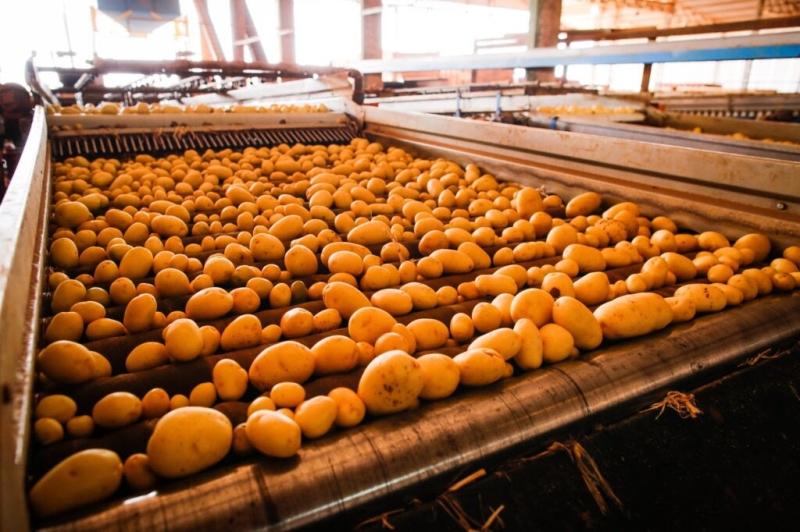
Potatoes occupy a strategic position in Goiás' agribusiness. Present in three planting windows throughout the year, the crop supplies the domestic and international markets, integrates the industrial processing chain, and stands out for its versatility in consumption, both in home cooking and in the food service sector. Data compiled by the State Secretariat of Agriculture, Livestock and Supply (Seapa) indicate consistent advances in state production and prospects for economic recovery by 2026.
In Goiás, cultivation is concentrated in the third crop, or winter crop, with planting between April and July and harvesting from July to October. This schedule is favored by milder climatic conditions and lower rainfall, factors that reduce the pressure of fungal diseases and improve the quality of the tubers. According to Secretary Ademar Leal, head of SEAPA (State Secretariat of Agriculture, Livestock and Supply), the modernization of the sector has increased the adoption of mechanization, irrigation, higher-performing cultivars, and productive planning practices. "This movement has reduced the variability typical of seasonal production and sustained productivity gains, even in scenarios of stability or reduction in planted area," he stated.
In the historical series from 2020 to 2025, Goiás grew above the national average in both production and harvested area of potatoes in the third crop. Both indicators advanced in the same proportion, 31.91 TP4T in production and 29.81 TP4T in harvested area, with an average yield of 41.9 tons per hectare. In the same period, Brazil registered growth of 4.21 TP4T in area and 12.11 TP4T in production. For the state's total crop in 2026, the expectation is for growth of 3.11 TP4T compared to the previous season, with an estimated 264,200 tons harvested. This result will represent the third best performance in the historical series, surpassed only by the years 2010 and 2011.
Economic scenario
Data from the Municipal Agricultural Production (PAM), released by the Brazilian Institute of Geography and Statistics (IBGE), indicate that in 2024, Cristalina led state production with 137,200 tons, equivalent to 51.31 TP4T of the total volume harvested in the state, in addition to concentrating the largest harvested area, of 3,000 hectares. Água Fria de Goiás presented the highest average productivity, of 46.7 tons per hectare. Campo Alegre de Goiás registered the greatest advance in the period, with growth of 115.81 TP4T compared to 2023. The municipalities of Padre Bernardo and Sítio d'Abadia also began to register production of the crop in 2024, signaling the expansion of potatoes in the Goiás territory.
As for the Gross Production Value (VBP) of potatoes in Goiás, according to the Ministry of Agriculture and Livestock (Mapa), it is projected at R$ 771.4 million for 2026, which represents a recovery compared to 2025, when there was a decline to R$ 538.9 million, influenced by lower prices. In 2024, the state recorded the highest result in the series, with R$ 1.3 billion.
Competitiveness
In the foreign market, sweet potatoes were the highlight of exports. In 2024, Goiás registered US$264,900 in shipments, with 211.4 tons destined for the Netherlands. In 2025, prepared and preserved products achieved the best performance of the series, with 7.5 tons and US$54,800, with the United States as the main destination, followed by Canada and the United Kingdom.
“The surveys conducted by the Secretariat and presented in the monthly bulletin have supported producers in their decision-making. The data indicate a reorganization of the sector, with a recovery in the value of production and advances in international integration. At the same time, the scenario reinforces the importance of increasing value aggregation and reducing dependence on imported processed products, strengthening the competitiveness of the supply chain in the state,” assessed Secretary Ademar Leal.