EN
EN  PT_BR
PT_BR 
Governor Eduardo Riedel fulfilled a work agenda this Thursday (16) at Expogrande, in Campo Grande, attending to the so-called itinerant office installed at the Laucídio Coelho Exhibition Park. Promoted by Acrissul, the 86th edition of Expogrande brings together activities such as auctions, technical lectures, courses and workshops, leisure, entertainment, gastronomy, musical shows and exhibition of products from various agribusiness chains, in addition to the industrial and service sectors.
Throughout the afternoon, the governor participated in a series of sector-specific meetings at the Semadesc booth, focusing on strengthening strategic production chains and attracting investments.
The first meeting was with Asumas (South Mato Grosso Association of Pig Farmers), with agendas that included a review of the Leitão Vida program, the progress of the Asumas Sustainability Program, as well as topics such as professional training, infrastructure, logistics, production, attracting investments, and environmental and regulatory issues.
Pig farming in Mato Grosso do Sul consolidated itself throughout 2025 as one of the most dynamic chains in the state's agribusiness, with more than 300 farms in operation, 121,000 breeding sows and more than 3.6 million pigs slaughtered, in addition to generating approximately 32,000 direct jobs. The state exported more than 20,000 tons of pork in the accumulated total of 2025, with a growth of 111% compared to the previous year.
Next, a meeting was held with Avimasul (Poultry Association of Mato Grosso do Sul), with discussions on the performance of the Frango Vida program, the organization of the sector and priorities for development, as well as the delivery of the official invitation to the 5th Avimasul Forum.
In 2025, Mato Grosso do Sul recorded the movement of 177.1 million chickens for slaughter, with slight growth compared to the previous year and significant expansion compared to 2017.
Subsequently, Riedel and leaders of the fish farming sector met to discuss topics that included the Multipurpose Research Center for Native Fish project, as well as the technical cooperation agreement between Embrapa Aquaculture, UEMS, and Semadesc.
Another important topic discussed was the training and equipping of professionals from Iagro and Agraer. The ICMS tax incentive for electricity in fish farming was also addressed. The Peixe Vida program was also discussed.
Currently, the state produced approximately 53,000 tons of fish in 2025, with policies focused on tax equity and incentives for the activity. Even so, the sector faced challenges such as low investment in genetic research, high energy and feed costs, and the entry of illegal products from other states.
Data from the program indicated that Mato Grosso do Sul has 3,324 hectares of fish farming, with more than 10,000 ponds and 2,456 net cages, concentrated in municipalities such as Terenos, Mundo Novo, Paranaíba, and Aparecida do Taboado. The incentive model included ICMS exemption on internal operations and a reduction in the tax burden on interstate operations.
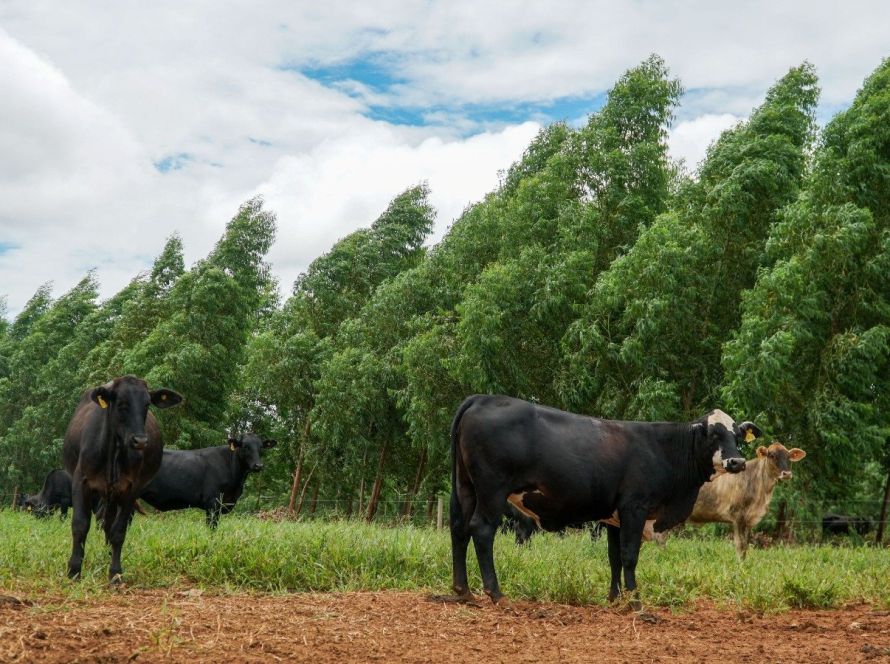
The agenda continued with a meeting about the Early Weaning Steer Program, with a presentation of the results and impacts on beef cattle farming in the State.
Concluding the meetings, the governor met with representatives from Reflore MS (South Mato Grosso Association of Producers and Consumers of Planted Forests), who brought up topics such as updating the MS Agrodata system, data from the forestry sector, new uses of forests, and infrastructure issues, with emphasis on the MS-320 highway.
Following the working meetings, the governor highlighted the importance of direct contact with the different segments of the productive sector as a tool to guide public policies and closely monitor the demands and challenges of each supply chain.
“It is always very important to be close to and talk to the different sectors of the production chains. This direct contact allows us to perceive the evolution of each segment, understand their demands in relation to public policies, and identify specific challenges. It is through this dialogue that we can better guide actions and know what needs to be done to strengthen the productive sector,” he assessed.
In addition to state government technicians, the meetings were attended by the Secretary of Government and Strategic Management, Rodrigo Perez Ramos, the Secretary of Semadesc (Secretariat of Environment, Development, Science, Technology and Innovation of Mato Grosso do Sul), Artur Falcette, Senator Tereza Cristina, and other parliamentarians and leaders of entities in the rural production sector.
The governor's participation in Expogrande reinforced the state government's strategy of maintaining direct dialogue with the productive sectors, monitoring the specific demands of each chain, and coordinating public policies aimed at economic development, job creation, and strengthening the competitiveness of agribusiness in Mato Grosso do Sul.
“We were able to meet with various productive sectors, such as milk, grains, planted forests, fish farming, pig farming, and beef cattle. It's impressive how each of these chains involves a very large movement of demands and needs. We also had an important discussion about the state's competitiveness, in light of a series of changes in the Brazilian tax system, and about how the state has supported these chains, especially with industrialization, which has changed the economic profile of Mato Grosso do Sul.”