EN
EN  PT_BR
PT_BR 
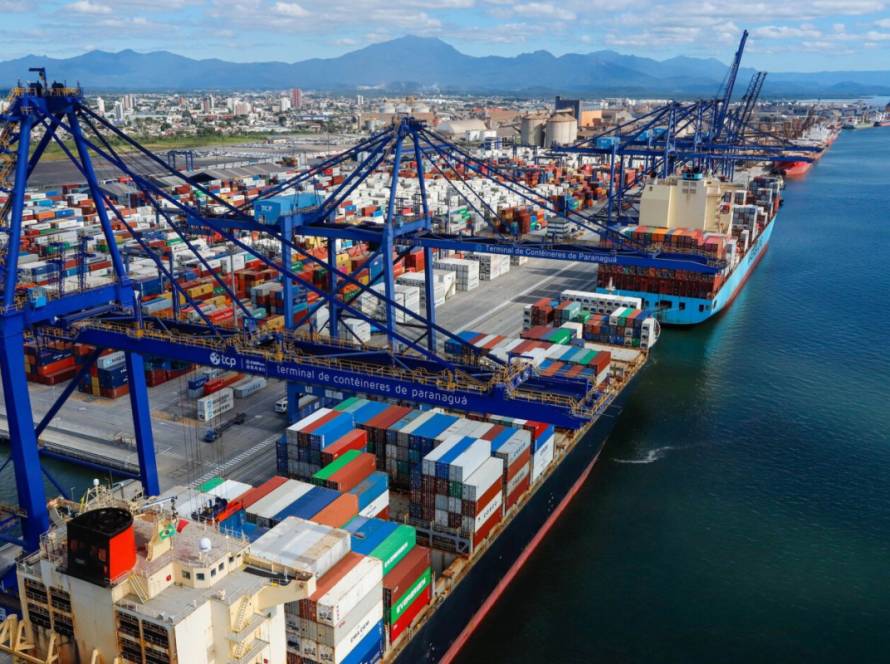
Brazilian exports to Arab countries grew by 3.11% of their value (T4% of their value) to US$1.33 billion in April compared to the same month in 2025, according to data from the Ministry of Development, Industry, Trade and Services (MDIC) compiled by the Arab-Brazilian Chamber of Commerce. Imports, on the other hand, fell by 10.1% of their value (T4% of their value), to US$731.1 million in the same comparison.

Photo: Press release/MPor
Year-to-date, sales to the region show an increase of 2.91% (1% of the time) and total US$6.41 billion. Imports are also up, by 9.31% (1% of the time), totaling US$3.22 billion. The trade balance is in surplus for Brazil at US$3.19 billion, a decrease of 2.81% (1% of the time). The trade flow grows by 5% (1% of the time) year-on-year compared to 2025, reaching US$9.64 billion.
The Vice President of International Relations and Secretary-General of the Arab-Brazilian Chamber of Commerce, Mohamad Orra Mourad, told ANBA that, despite the conflict affecting the Gulf countries, major trading partners of Brazil, alternative export and import routes are gaining ground. The conflict between the United States and Israel with Iran began on February 28. Its effects in the region included retaliatory attacks by Iran against Arab Gulf countries and the closure of the Strait of Hormuz.
Arab countries of the Gulf

Photo: Jonathan Campos/AEN
“Although we don't have high expectations about the real outcome of the conflict or how long it will last, alternative routes are gaining ground in Brazil's trade with Arab countries. A major example is that Brazilian exports to GCC member countries, despite showing a 24% drop in April, [register] a smaller decline than in March. Meanwhile, Brazilian exports to all Arab countries saw a 3% increase in April compared to an 8% drop in March,” he assessed. The GCC is the acronym for Gulf Cooperation Council, formed by Saudi Arabia, the United Arab Emirates, Qatar, Bahrain, Kuwait, and Oman.
"In the year to date, our exports show growth compared to last year, even with the naval blockade imposed in the Strait of Hormuz, which accounts for a significant percentage of both our protein exports to the Gulf region and our fertilizer imports from the same region," Mourad stated.

Photo: Freepik/Disclosure
He also noted that there has been an increase in imports year-to-date, both from Gulf countries and Arab countries in general. "Once again, this demonstrates the resilience and adaptability of..." key players "The region's role is to keep the flow of foreign trade closer to normal," he said.
Arab countries remain, as a group, the third main destination for Brazilian exports, behind China and the United States, and are the seventh largest supplier to Brazil in a list led by China and followed by the United States, South Korea, Germany, Argentina, and Russia. Among the Arab countries, the main destinations for Brazilian exports are the United Arab Emirates, Egypt, Saudi Arabia, Algeria, Iraq, and Oman. The main Arab suppliers to Brazil this year are Saudi Arabia, Morocco, Egypt, the United Arab Emirates, and Algeria.
The main products exported by Brazil to Arab countries up to April were sugar, chicken meat, corn, iron ore, and soybeans. Refined petroleum, crude oil, phosphate, mixed, and nitrogen fertilizers were the main products that Brazil purchased from Arab countries between January and April.