EN
EN  PT_BR
PT_BR 
Brazilian agribusiness exports reached US$16 billion in May 2026, an 8.21% increase compared to the same month last year, according to data released by the Secretariat of Foreign Trade (Secex). Among the main drivers of this performance was the soybean complex, which maintained a strong share of Brazilian exports and registered increases in both volume and revenue generated by foreign sales.
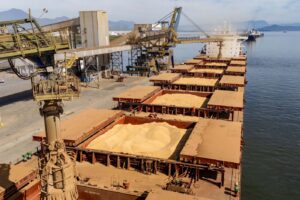
Photo: Claudio Neves/Ports of Paraná
Soybean shipments totaled 14.8 million tons in the month, an increase of 5.11 TP4T compared to May 2025. Despite the year-on-year increase, the volume was 121 TP4T below that recorded in April, reflecting the natural reduction in the pace of outflow after the months of highest export intensity for the harvest.
Even with the slowdown in shipments compared to the previous month, revenue from soybean exports reached US$6.3 billion. This result was supported by the recovery in international prices. The average export value reached US$425.3 per ton, an increase of 9% compared to May 2025.
Derivatives gain traction.
In addition to the grain itself, soy derivatives also showed strong performance in the international market.
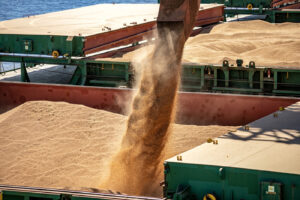
Photo: Claudio Neves/Ports of Paraná
Soybean meal exports totaled 2.5 million tons in May, a volume 12% higher than that recorded in the same period last year. The product also benefited from price increases, with an average price of US$ 375 per ton, a 7.6% increase year-on-year.
The simultaneous increase in volume and price reinforces external demand for the derivative, which is mainly used in animal feed and considered one of the main components of the global protein chain.
In the case of soybean oil, the growth was even more intense. Shipments reached 202,000 tons, an increase of 34% compared to May 2025. The average export price reached US$1,198 per ton, an increase of 15% over the same period last year.
The result maintains the upward trend observed in recent months for soybean oil, a product that has found support in demand from both the food industry and the biofuel segment in various markets.
Prices support revenue.
The figures for May show that the appreciation of agricultural commodities continues to play an important role in generating revenue for the Brazilian export sector.
In the case of soybeans, the 9% increase in the average price partially offset the reduced pace of shipments observed compared to April. For soybean derivatives, the scenario was more favorable, with simultaneous growth in export volumes and average prices.
The performance of the soybean complex reinforces its relevance to the Brazilian agribusiness trade balance, especially during a period of intense crop movement and consistent demand for products linked to the global food and animal protein chain.