EN
EN  PT_BR
PT_BR 
The Government of Paraná, through the Paraná Rural Development Institute (IDR-Paraná), launched new cassava and corn cultivars this Thursday (12) during the Show Rural Coopavel, in Cascavel. The new varieties were developed to face sanitary challenges in the field, increase productivity and expand the profitability of the producer, focusing on industrialization and strengthening the agro-industrial chains of the State.
The Secretary of Agriculture and Supply, Márcio Nunes, highlighted the state's tradition of presenting innovations at the event. “It's rare to find a Rural Show that doesn't feature the launch of a new cassava variety or corn cultivar. Paraná, through our IDR (Institute for Rural Development), does very strong work in research. Once again, we are launching interesting products at this fair, which is a great showcase of opportunities and trends from Paraná to all of Brazil,” he emphasized.
The CEO of IDR-Paraná, Natalino Avance de Souza, highlighted that the launches reinforce the strategic role of public research in maintaining the competitiveness of Paraná's agriculture. “Our commitment is to deliver concrete solutions to producers that increase productivity and provide greater security in the face of the challenges of the field. These materials are the result of applied research and are here to strengthen income and the agro-industry of Paraná,” he stated.
In cassava cultivation, IDR-Paraná presented three new materials aimed at the industry: IPR Clara, IPR Quartzo, and IPR Topázio. These varieties were developed for the production of flour, starch, and other byproducts, with a high starch content (between 550 and 600 grams) and superior performance compared to materials already available on the market.
Renan Thiago Lunas, technical assistant at IDR-Paraná in Paranavaí, explains that the new cultivars underwent comparative testing before their release. “All the materials released are tested against the best varieties already in the field. Before being released, they already demonstrate superior potential. They are excellent quality materials and another option for producers to improve productivity,” he stated.
Beyond industrial quality, the key difference lies in increased productivity. According to Lunas, the expectation is for an average increase of 30% in productivity, which could represent up to 30 tons more per hectare. "These varieties also exhibit different levels of tolerance to pests and diseases, which helps producers diversify their crops and reduce risks," he emphasized.
Each cultivar has specific characteristics. IPR Clara has lighter-colored roots and a medium shrub-like size, making it suitable for sandy soils. IPR Quartzo has a more robust structure and is better adapted to clay soils. IPR Topázio has a lower, more upright habit, also recommended for sandy areas. Due to their high hydrocyanic acid content, they are intended exclusively for industrial use and not for fresh consumption.
Corn
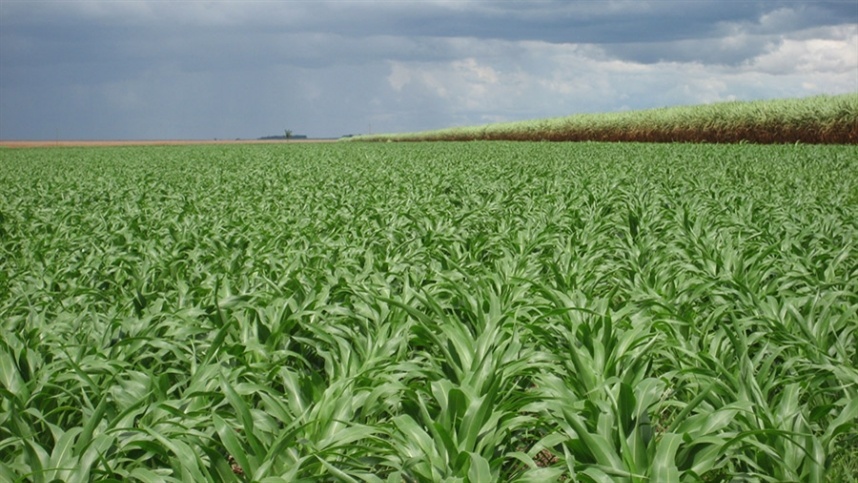
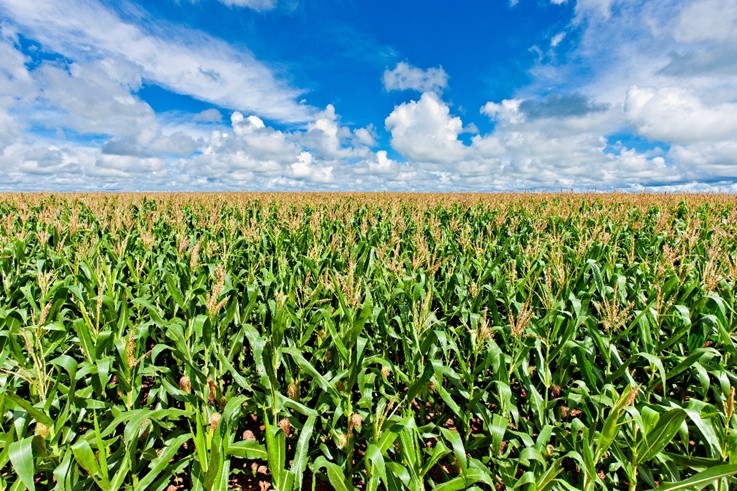
In the corn sector, the highlight was the launch of white corn, the simple hybrid IPR W225, developed to combat the corn stunt complex, a disease associated with leafhopper attacks. The new variety will gradually replace IPR 127, which had been on the market for over a decade but proved susceptible to the problem.
The coordinator of the Santa Helena Research Station of IDR-Paraná, Dionathan William Lujan, explains that the new cultivar combines disease tolerance with a higher yield potential. “The IPR W225 was developed to overcome the challenges of the corn stunt complex. It exhibits tolerance to the problem and superior yield potential compared to IPR 127, which will be discontinued as soon as we have sufficient volume for commercialization,” he detailed.
White corn is another distinguishing feature. Designed for industrial processing, this corn is suitable for producing flour, starch, cornmeal, and hominy. “It’s a high-yield material for industry and can bring very good profitability. While yellow corn is sold for around 50 to 55 reais per sack, white corn for industrial processing can reach 120 or 130 reais per 60-kilo sack. It adds more value to production,” Lujan highlighted.
The researcher explains that the development of the cultivar is part of an ongoing genetic improvement effort. “This cultivar was already under development even before the problem worsened. With the advancement of the stunting complex, the focus shifted to finding solutions. Today, in addition to chemical and biological control, genetics is one of the main tools for tackling the disease,” he pointed out.
The seeds of IPR W225 are already being multiplied by accredited partners of IDR-Paraná and should be available for the next harvest, starting in September.
Homage
During the launch of the cultivars, the Secretary of Agriculture and Supply, Márcio Nunes, paid tribute to the researcher from IDR-Paraná. Vânia Cirino for the International Day of Women and Girls in Science, celebrated last Wednesday (11). A national exponent in the field of agronomy, Vânia holds chair 68 of the Brazilian Academy of Agronomic Science (ABCA), which brings together Brazilian scientists with outstanding performance in this field of scientific knowledge.
At IDR-Paraná, the researcher is technically responsible for the development of more than 38 bean cultivars, which have contributed to increasing production and income on small rural properties, strengthening the food security of the population, and making Paraná the national leader in bean production, with more than 450,000 hectares per harvest, equivalent to 750,000 tons of the product.