EN
EN  PT_BR
PT_BR 
Business-oriented agricultural credit registered strong performance between July 2025 and March 2026, with a growth of 10% in the total volume of contracted resources, reaching R$ 404 billion. The previous harvest totaled R$ 368 billion in the same period. The data are part of the Rural Credit Bulletin for the 2025/2026 Crop Plan, prepared by the Department of Agricultural Sector Financing Policy (DEFIN), of the Secretariat of Agricultural Policy, based on data from SICOR/Central Bank.

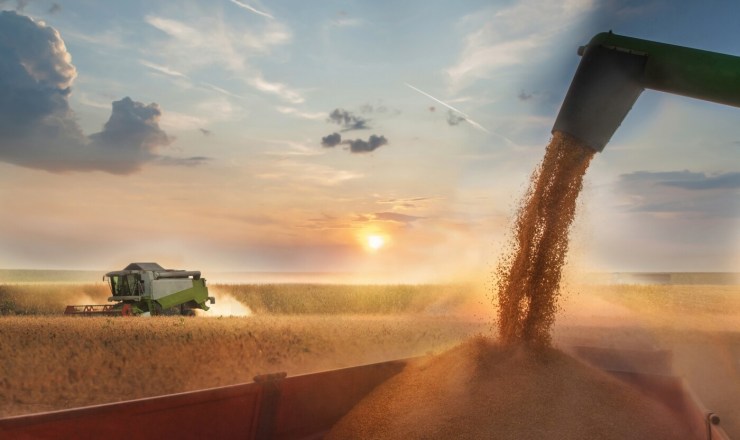
Photo: Marcelo Casal Jr/Agência Brasil
As for the resources actually granted, those operations whose values were released into the rural producer's account, they totaled R$ 387 billion, an increase of 5% compared to the previous harvest.
The highlight is the issuance of Rural Product Certificates (CPRs) by producers in favor of financial institutions, which increased by 38% during the period, reaching R$ 183.1 billion. As the CPR is mainly aimed at financing the harvest, when this instrument is added to conventional operating credit, the volume of resources made available for this purpose reaches R$ 303.1 billion, 13% above that recorded in the 2024/2025 harvest. "The growth of 10% in contracts and 5% in concessions demonstrates the solidity of Brazilian agricultural financing, even in a scenario of greater selectivity on the part of producers and the financial system," emphasizes the Secretariat of Agricultural Policy of the Ministry of Agriculture, Livestock and Supply (MAPA).

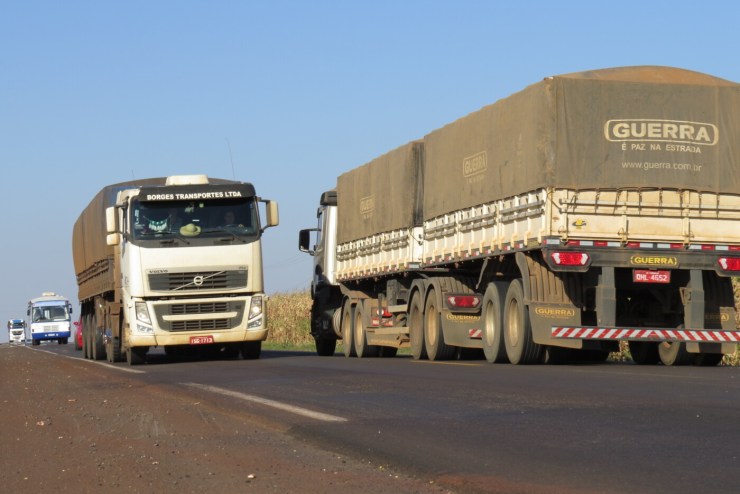
Photo: Shutterstock
Performance by purpose
Analysis by type reveals distinct behaviors among the credit lines. Industrialization registered the highest proportional growth: an increase of 74% in contracts (R$ 28.1 billion) and 64% in concessions (R$ 26.4 billion), reflecting greater demand for financing for agro-industrial processing.
On the other hand, traditional lines of credit for operating expenses and investment showed a contraction. Operating expenses fell by 111% in new contracts (R$120.0 billion) and by 15% in concessions (R$114.3 billion). Investment credit decreased by 16% in new contracts (R$45.5 billion) and by 3% in concessions (R$37.6 billion). Commercialization also registered declines: -1% in new contracts (R$27.2 billion) and -1% in concessions (R$25.5 billion).
The report indicates that the decline in investment reflects the sector's caution in the face of current interest rates, in a context of expectations of a Selic rate drop of around 2 percentage points by the end of 2026.
Among the main programs, Prodecoop was the only one to register growth (+20%), with R$900 million granted. The others showed a decrease, however in

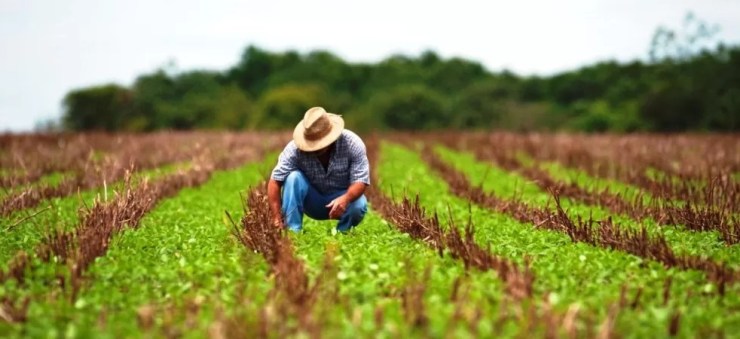
Photo: Gilson Abreu
lower percentages than those observed last month.
The total number of contracts signed during the period decreased by 24%, from 534,351 to 408,353 transactions. By segment, Pronamp registered 156,485 contracts, while other producers totaled 127,615 contracts. Transactions linked to CPR totaled 125,310 contracts.
In terms of regional breakdown, the South region maintains its lead in the number of transactions, while the Southeast leads in terms of value.
Sources of resources
Controlled sources of rural credit totaled R$106.5 billion in disbursements, a decrease of R$71. Among the main sources, Mandatory Resources grew by R$19, totaling R$42.8 billion. Controlled Agribusiness Credit Notes (LCAs) showed significant growth of R$3.56, reaching R$26.9 billion. Controlled Rural Savings totaled R$7.5 billion in disbursed resources, and Constitutional Funds totaled R$14.5 billion.

Photo: Shutterstock
Uncontrolled sources reached R$ 97.3 billion. LCA, with R$ 47.8 billion, and Free Rural Savings, with R$ 44.4 billion and growth of 39%, are the highlights. BNDES Free decreased by 11%, totaling R$ 4.4 billion.
Implementation of the Harvest Plan
By March 2026, of the total R$ 113.4 billion in equalizable resources programmed for the 2025/2026 Harvest Plan, R$ 43.4 billion had been granted, representing 38% of the execution, with a balance of 62% still to be contracted.
For operating expenses, R$ 24.7 billion of the R$ 63.0 billion programmed was granted (39% executed). For investment, R$ 18.4 billion was granted out of the R$ 49.5 billion planned (37% executed). For marketing, R$ 307 million of the R$ 845 million programmed was applied (36% executed).
Banco do Brasil leads the execution, with R$ 7.1 billion in operating expenses (34% of the programmed amount) and R$ 7.0 billion in investment (39%). The Brazilian Financial Cooperative System (Sicoob) executed 59% of its programmed operating expense volume (R$ 5.6 billion), and the Cresol System completed 100% of the targets foreseen in this modality. In the investment segment, Sicoob executed 69% of the programmed amount.
There is also R$ 21.7 billion in credit already contracted but not yet granted, of which R$ 10.8 billion refers to financing not linked to any program.

Photo: Disclosure/OPR Archive
Specifically, R$ 2.2 billion to Pronamp, R$ 0.9 billion to PCA, and R$ 0.6 billion each to Funcafé and Moderfrota.
Perspectives
“The Rural Credit Bulletin from July 2025 to March 2026 reveals an agricultural sector that maintains its growth trajectory in the overall volume of resources, with emphasis on the expansion of CPRs (Rural Product Certificates) and industrialization. At the same time, the contraction in conventional investment and operating lines signals greater selectivity on the part of producers, associated with the high interest rate environment,” explained the SPA (Secretariat of Agriculture, Livestock and Supply).
The data also points to significant growth potential until the end of the Plano Safra (agricultural plan), with 62% of the equalizable resources still available for contracting in the coming months.