EN
EN  PT_BR
PT_BR 

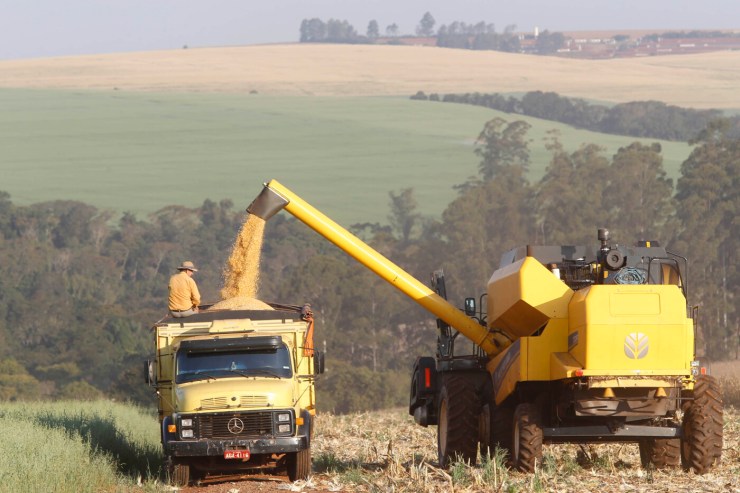
The difference in productivity between irrigated and rainfed crops reached 116 sacks of corn per hectare on a rural property in Guaíra, in western Paraná, during the 2023 drought. At Fazenda Bom Jesus, water supplied by pivots allowed for a harvest of approximately 149 sacks per hectare, while the non-irrigated areas produced only 33 sacks in the same reference area.
The figures were presented by farmer Paulo Adriano Ambiel, who manages production on the property. The comparison was made within the same plot, under similar growing conditions, using the same seeds and inputs. The main difference between the areas was access to irrigation, which resulted in approximately 4.5 times greater productivity.
The experience reinforced the family's decision to expand investments in irrigation systems, which began in 2020. At the time, the system had three pivots and covered 144 hectares. With the installation of new equipment, coverage increased to approximately 318 hectares, distributed among five pivots.
Currently, the irrigated area represents approximately 32.6% of the 975 hectares cultivated by the operation. The growth of the structure occurred on a property whose agricultural activity in Guaíra began in 1973.
Water availability and climate fluctuations were the factors considered for the installation of the equipment. The water supply is obtained through intake from the Paraná River.
"What motivated the installation of center pivot irrigation systems was the increasingly prevalent climate instability, as well as the availability of water," reports Ambiel.
Although the most significant difference occurred in 2023, the results presented by the producer show that the productive advantage was not limited to that drought period.
In a more recent assessment, two corn cultivars grown under irrigation recorded yields of 404 and 409 sacks per alqueire. Converted to hectares, these volumes correspond to approximately 167 and 169 sacks, respectively.
In the non-irrigated part of the same plot, the average was 320 sacks per alqueire, equivalent to about 132 sacks per hectare. In this case, productivity in the areas served by the pivots was between 26% and 28% above that observed in rainfed areas.
The farmer points out that the comparison was made using the same varieties and management practices, which allows one to observe the difference recorded between the two production systems.
"After we implemented irrigation, the corn produces more every year than the rainfed corn. The same is true for soybeans," he says.
In addition to the equipment responsible for water distribution, the property uses technological resources to monitor crop conditions and assist in irrigation-related decisions.
The five center pivot irrigation systems installed are from Valley. The farm also uses the Valley Scheduling platform, integrated with a local weather station, which provides information to guide crop water management.
The structure also has technical support from Unimaq, the reseller responsible for servicing and supporting the equipment. According to the producer, this assistance contributes to the continuity of operations and to the resolution of any problems that may arise.
The accumulated experience led the family to evaluate a new phase of expansion. Currently, there are projects for the installation of ten more pivots, which are in different stages of environmental documentation. Two of them have already received approval at this stage, according to information provided by the farmer.
The planned expansion follows the results obtained in the areas that have started receiving irrigation. For Ambiel, understanding the technology's performance is important so that other producers can analyze its use.