EN
EN  PT_BR
PT_BR 
The recommended period for planting second-crop (safrinha) or rainfed wheat in the Cerrado region of Central Brazil runs from March to mid-May, and producers should pay attention to weather conditions, proper soil and crop management, as well as the choice of cultivar to ensure a successful harvest in the 2026 crop season.
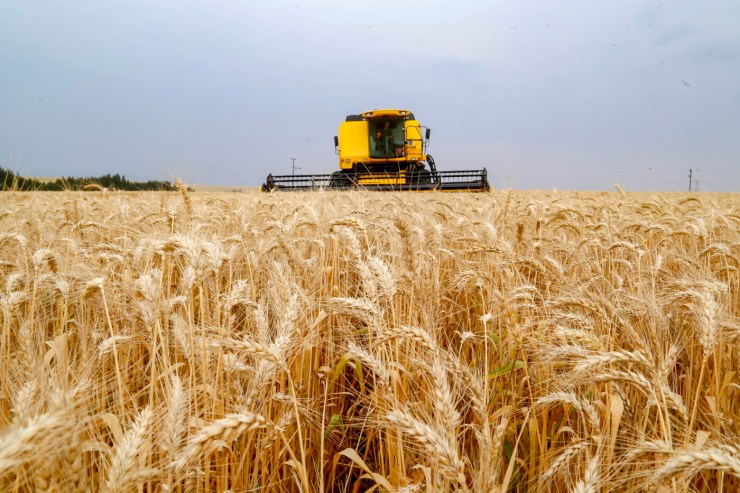
In the region, second-crop wheat can be planted immediately after the soybean harvest and without irrigation, taking advantage of the water at the end of the rainy season. Requiring low investment, the crop has proven advantageous to the production system due to both agronomic benefits – such as crop diversification, breaking the cycle of pests and diseases, and covering areas that would otherwise remain fallow – and the profitability it can provide, depending on the market.

Photo: Fábio Carvalho
Despite the current scenario of reduced acreage nationwide for the next harvest (Conab, Feb 2026In the Cerrado region, producers are optimistic about the crop due not only to the agronomic benefits but also to the good grain yields obtained last year. The trend is for the planted area to remain the same, or even increase slightly in the region. In 2025, approximately 290,000 hectares of wheat were cultivated in the states of Minas Gerais, Bahia, Goiás, Mato Grosso, and the Federal District, with more than 801,000 hectares of this area planted with rainfed wheat. In Goiás, the planted area is estimated to be around 80,000 to 90,000 hectares this year.
Wheat has been widely cultivated in Central Brazil using no-till farming systems, especially in succession to soybeans and in rotation with corn and sorghum, ensuring crop diversification and reducing risks. By promoting crop rotation, wheat also allows for the rotation of active ingredients in products such as herbicides used to control glyphosate-resistant weeds in transgenic soybean crops, as well as volunteer soybean and corn plants (germinated after harvest), contributing to the sanitary break that should begin in the winter months.
Planting wheat after soybeans offers another advantage to soybean farmers, allowing the use of later-cycle soybean cultivars, which generally have higher yield potential than early and very early varieties, cycles that are more compatible with second-crop corn. "And after harvesting, the wheat leaves an excellent layer of straw, favoring direct planting of the following summer crop," adds researcher Jorge Chagas, from Embrapa Trigo (RS).
Due to its earlier sowing season compared to other wheat-growing regions of Brazil, wheat produced in the Cerrado region of Central Brazil is the first to be harvested in the country's crop season, potentially fetching more attractive prices in the market.
“Here in the region, the second wheat crop is harvested during the dry season, between June and July. This has ensured a high-quality grain product, free from the mycotoxins that usually affect crops in the South of the country in years when there is heavy rainfall during the harvest,” observes Júlio Albrecht, a researcher at Embrapa Cerrados (DF). He adds that yields from Cerrado crops have varied from 35 to 85 sc/ha in years with average rainfall, and the revenue from sales has encouraged producers to expand the cultivated area in the region.
The steps to a good harvest.
Dryland wheat is recommended for cultivation in regions with altitudes of 800 meters or higher. It is essential that the producer knows the average altitude of their region before planning the planting of the crop, as well as the windows with the lowest climatic risk for the crops.

Photo: Disclosure/OPR Archive
The regulations containing information on the agricultural zoning for climate risk for wheat are available on the Ministry of Agriculture and Livestock's website; access them by clicking [here]. hereand in the Zarc Plantio Certo app, from Embrapa, also available for Android and iOS, access it by clicking here.
Next, soil analysis should be performed. Albrecht and Chagas emphasize that Cerrado soil should be corrected for acidity using limestone, and aluminum at depth should be neutralized with the application of agricultural gypsum. "The soil should also be free of compacted layers so that plant roots can penetrate deeper and better utilize water and nutrients," says Albrecht, adding that this condition minimizes the effects of dry periods, such as droughts.
Problems with lack of rain can also be mitigated by adopting the No-Till System, with direct sowing of wheat without incorporation into the summer crop residue. Among other benefits, the residue protects the soil from high temperatures, as it reduces water loss through evapotranspiration and allows greater infiltration of rainwater.
Sowing should take place from the beginning of March until the end of the month, depending on rainfall in the region. Researchers recommend that where the rains stop earlier, the second wheat crop should be planted now at the beginning of March. Staggering the sowing, that is, sowing the areas at different times within the recommended period, can be a good strategy.
“The producer can also choose to sow cultivars with different cycles. In this way, the crop will have plots with plants at different stages of development. If there is a lack of rain, the risk of the entire planting being affected at a single critical moment, such as the flowering of the plants, for example, is much lower,” explains Jorge Chagas, emphasizing the importance of following the specific management recommendations for each cultivar, such as the ideal sowing density.
The choice of cultivar is another strategic factor for second-crop wheat. At the beginning of the planting window, it is recommended to use cultivars that are more tolerant to diseases, especially leaf spots and blast, a fungal disease that develops in humid environments and can cause significant losses in years with heavy rainfall in April and May in the Cerrado region of Central Brazil.
On the other hand, in the case of later sowings (after March 15th), the producer should use cultivars that are more drought-tolerant. This is because low rainfall and above-average temperatures can also cause losses, mainly due to the dry spells that commonly occur during this period.
Embrapa has cultivars adapted to the region.

Photos: Gilson Abreu/AEN
For the cultivation of second-crop wheat in Central Brazil, Embrapa offers two cultivar options adapted to rainfed systems in tropical environments: the recently released BRS Savana and the BRS 404.
The BRS Savana cultivar was developed for cultivation in rainfed systems in tropical environments. It is short in stature and has an early cycle, allowing for harvesting 100 days after planting, which means less dependence on water. Sowing is recommended during the first half of March to take advantage of the last rains in Central Brazil. It exhibits moderate resistance to blast disease, ensuring less environmental impact from fungicide use, thanks to the translocation of the 2NS/2AS gene, which considerably reduces the severity of the disease.
Classified as bread wheat and tested and validated by mills in the region, the cultivar has a yield potential of 80 sc/ha, and is suitable for rainfed cultivation in Minas Gerais, Goiás, the Federal District, and parts of the states of São Paulo, Mato Grosso, Mato Grosso do Sul, and Bahia.
The new cultivar will be presented by Embrapa Cerrados and Embrapa Trigo at AgroBrasília 2026, which will be held from May 18 to 23 at the Ivaldo Cenci Technological Park, in PAD-DF, Federal District.
Developed for low rainfall conditions, BRS 404 makes good use of soil moisture and the remaining rainfall at the end of the rainy season (March, April and May) in Central Brazil.
This cultivar stands out for its greater tolerance to water deficit, heat, and aluminum in the soil, in addition to producing a high quantity of straw and guaranteeing excellent technological grain quality. It has an early cycle (105 to 118 days), with the period between sowing and heading being 57 to 67 days, depending on the location and altitude of cultivation. It has moderate susceptibility to blast and yellow spot, and sowing is recommended at the end of the planting window, after March 20th in the region.

“In the Central Plateau, the productivity of BRS 404 can reach 60 sc/ha, provided that rainfall is well distributed during the off-season. In some regions with higher rainfall, such as southern Minas Gerais, producers have obtained yields of up to 80 sc/ha with this cultivar,” says Júlio Albrecht.
BRS 404 is classified as bread wheat, and even in years with less rainfall, the hectoliter weight (HLW) of grains has been greater than 80 kg/hl, ensuring good acceptance by mills in Central Brazil. The gluten strength (W), a measure of the work (energy) of dough deformation and which indicates the breadmaking strength of the flour, varies from 250 to 400 x 10⁻⁴ J – well above the minimum W required by mills (220 x 10⁻⁴ J). Another outstanding industrial characteristic is its high stability (dough mixing time): above 15 minutes, which favors breadmaking.