EN
EN  PT_BR
PT_BR 
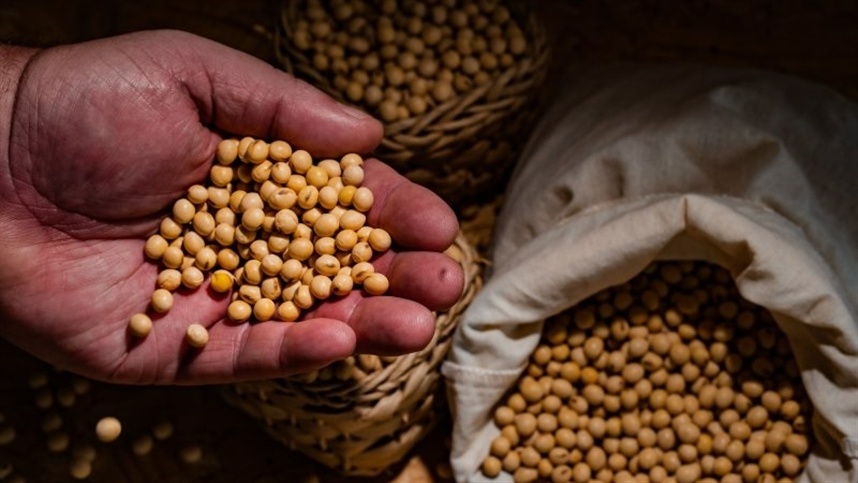
THE soy The Brazilian market registered a significant price increase in September, driven by Chinese demand, rising international prices, and strong exports. In Sorriso, Mato Grosso, the average price reached R$ 142 per sack, an increase of 9.6% compared to August. Despite the price recovery, the market is monitoring the progress of Brazilian planting and weather conditions for the 2026/27 crop.
According to an analysis by Itaú BBA's Agro Consulting firm, the price increase also occurred on the Chicago Board of Trade, where the average price of the first maturity reached US$$ 13.04 per bushel in September, an increase of 8.7% compared to the previous month. This movement was mainly driven by Chinese purchases and expectations surrounding US supply.
China has increased its purchases of soybeans from the United States in the weeks leading up to new trade negotiations between the two countries. By the end of September, purchase commitments for the 2026/27 US crop had reached approximately 13 million tons, equivalent to about half of the 25 million ton commitment indicated for the season.
In Brazil, the performance of exports also contributed to supporting prices. Shipments totaled approximately 7.4 million tons in September. Between January and September, external sales reached about 100 million tons, a growth of 6.61% compared to the same period of the previous year, with Chinese demand being a highlight.
While demand remained strong, the U.S. harvest was delayed. As of October 5, producers had harvested 25% of the cultivated area, below the historical average of 33%. Crop conditions also showed slight deterioration, with 57% rated as good or excellent, compared to 58% the previous week.
In its October update, the United States Department of Agriculture (USDA) raised its estimate of U.S. corn production to 124.1 million tons for the 2026/27 crop year. The yield projection increased from 52.8 to 53.1 bushels per acre. Even with the increased export forecast to 46.1 million tons, the country's ending stocks were estimated at 8.6 million tons.
For Brazil, the USDA maintained its production forecast at 186 million tons, with exports projected at 118 million tons. Globally, ending stocks were estimated at 124.3 million tons, reinforcing the outlook for high supply during the season.
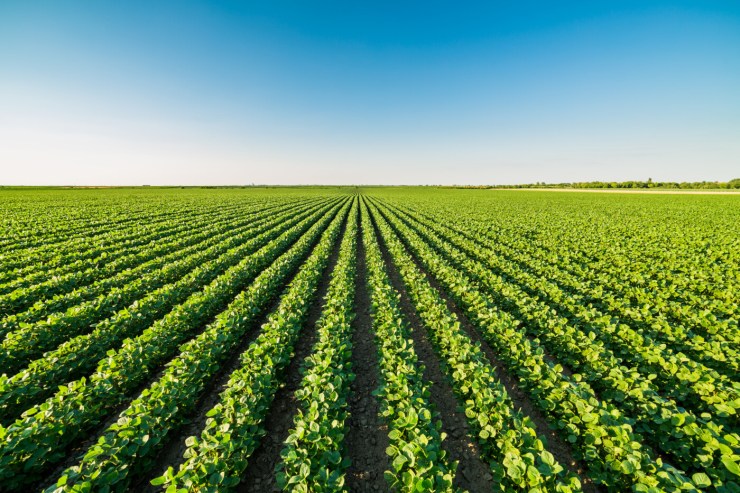
Brazilian planting gained momentum with the return of the rains. By October 9th, sowing had reached 15.61 TP4T of the planned area, surpassing the 11.11 TP4T recorded in the same period of 2025. In Mato Grosso, according to the Mato Grosso Institute of Agricultural Economics (Imea), work progressed from 10.21 TP4T to 33.31 TP4T of the area in one week.
Despite the recovery in the pace of crop planting, the uneven distribution of rainfall remains a cause for concern. According to Itaú BBA, Brazilian weather conditions could influence future market movements, especially due to their impact on crop development. soy and regarding the implementation schedule of corn and of cotton second crop.