EN
EN  PT_BR
PT_BR 
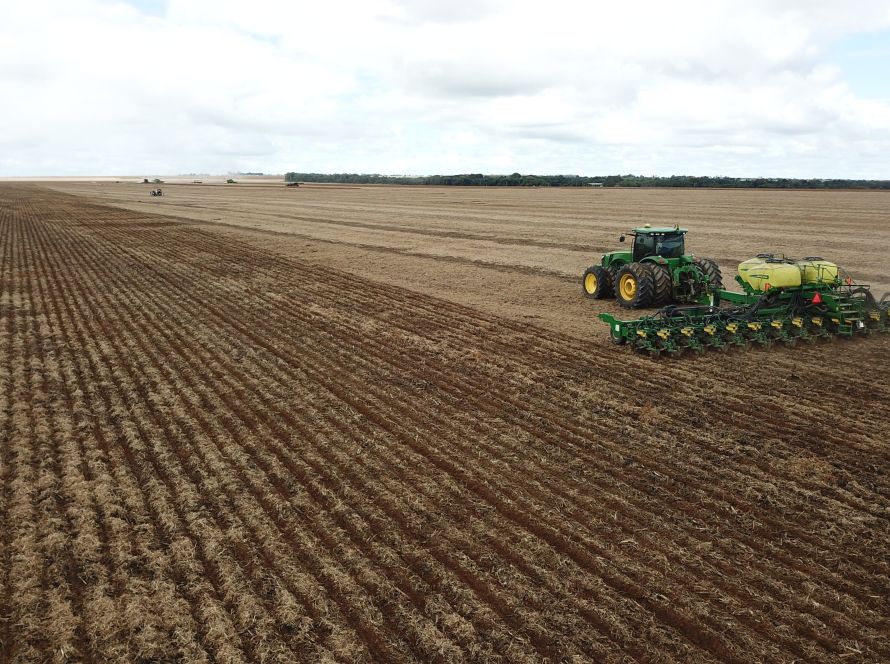
Soybean planting for the 2025/26 crop in Brazil is progressing at an accelerated pace. As of October 9th, AgRural recorded 14% of the estimated area already sown, propelling the current cycle to the status of one of the fastest in the historical series. This progress surpasses the 8% of the same period last year, reinforcing positive expectations for the sector.
Mato Grosso stands out for its performance, registering 21.22% of planted area, according to Imea data, an increase of 6.19 percentage points compared to the previous week. This pace is well above the 8.81% observed at the same time in the previous cycle, and also surpasses the historical average of the last five years for this stage.
Paraná, in turn, stands out as the state with the fastest planting rate in the country, benefiting from favorable weather since the beginning of the harvest, which also contributed to driving the national progress.
Summer corn showing strong growth.
Another crop that is progressing rapidly is summer corn. In the Central-South region, planting already covers 451 TP4T of the estimated area, compared to 401 TP4T the previous week. This progress indicates that a good portion of producers are balancing the simultaneous cultivation of soybeans and corn, taking advantage of favorable weather windows to ensure a continuous pace in the field.
With this promising and accelerated planting scenario, attention to agronomic management from the beginning of the cycle becomes crucial. An early nutritional failure can compromise the entire reproductive chain from flowering to grain filling.
To meet this challenge, efficient technologies are gaining prominence. It is from this perspective that products like those in the Tudor Line from Hydroplan-EB become relevant: with formulations that utilize advanced absorption mechanisms, they guarantee a balanced delivery of essential micronutrients such as boron and copper, at critical times of plant demand.
“The initial phase is strategic for healthy growth; the formation of strong roots and the prevention of microbial deficiencies depend on precise nutrition,” says João Quirino, technical coordinator at Hydroplan-EB. By incorporating modern technologies, the expectation is to reduce losses due to nutritional stress and optimize the productive potential of soybeans and corn.
Challenges and opportunities
Despite promising figures, not all regions are experiencing uniform progress. In some areas of the Midwest and North, irregular rainfall is still delaying the start of planting. In the South and Southeast, excessive rainfall in certain areas has been an obstacle to the complete execution of planting.
The balance between speed and precision in sowing thus becomes more than a productivity goal; it is a sustainability imperative. And in this competitive and demanding context, those who invest in the right nutritional technology from the initial stages tend to come out ahead.