EN
EN  PT_BR
PT_BR 
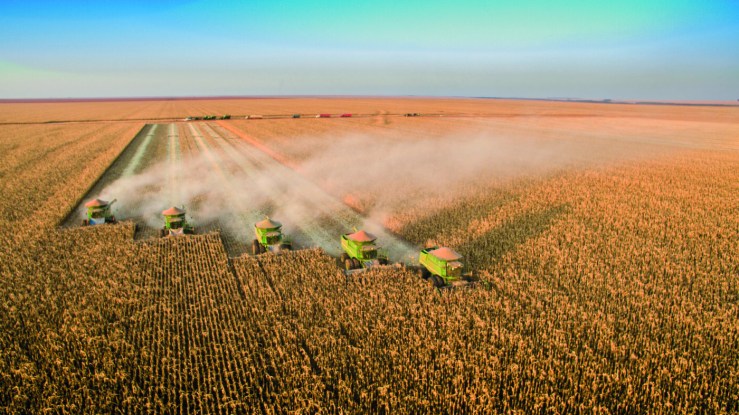
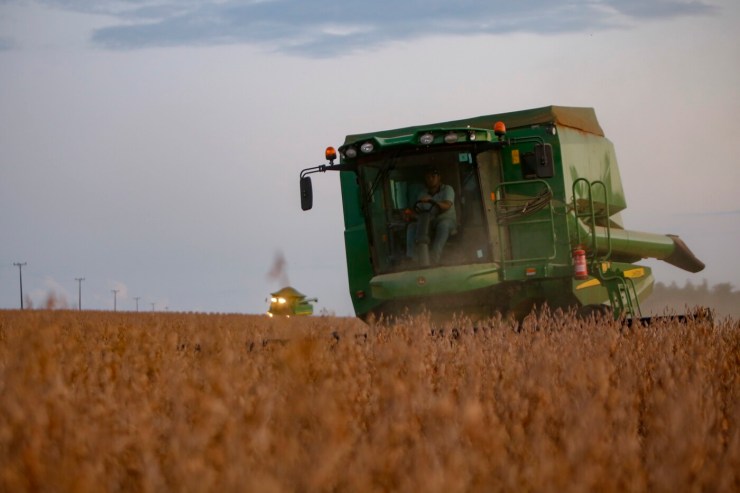
The winter harvest in Rio Grande do Sul was the topic of a meeting of the Council of the Federation of Agricultural Cooperatives of the State of Rio Grande do Sul (FecoAgro/RS). The main focus was on the state's wheat harvest, which is estimated to be around 50% completed. According to the organization's president, Paulo Pires, it is still very difficult to quantify the exact percentage of the harvest, as the technical departments of the cooperatives have different progress figures.
The manager explains that there is clear evidence that producers who used more technology obtained better productivity, although still below expectations. “Many expected to harvest 70 or 80 sacks per hectare, but this result was compromised. The low use of technology was the major factor in this harvest. The producer worked, let's say, in self-defense. He considers it important to maintain the crop, believes it is an easy crop to manage in Rio Grande do Sul, and therefore opted to cultivate it with low technology, which, in every sense, is not ideal,” he observes.

Photo: Gilson Abreu
Pires also points out that there is more lower-quality product in the harvest, lower production volume, and less straw, considering several negative factors in this year's crop. “But it's the reality: a legitimate defense by the producer. We estimate that the wheat harvest in the state will exceed 3.7 million tons. Unfortunately, the price is very bad, and the producer is disappointed with the income and the result of this harvest. It is likely that we will have a reduction in area next year, which is a shame,” he reinforces, adding that it is an important crop for Rio Grande do Sul and an excellent winter option for farms. “In addition to conserving and preserving the soil because of the straw, wheat brings income,” he adds.
The president of FecoAgro/RS emphasizes that, in this context, the producer looks at the economic result, and in this respect, he is right. “The financial performance of the crop has been very poor. Just to give you an idea: a producer who harvested 50 sacks per hectare, or 3,000 kilos according to our technical area, had a negative result of 11 sacks of wheat if he sells this production at R$ 56.00 per sack. You can see the seriousness of the situation. The calculation varies according to the volume harvested, but that is the trend,” he stresses.
Canola, according to Pires, on the other hand, presents a different scenario. Although with a much smaller and less significant area, there is growing interest from producers in expanding its cultivation. “We have limitations, such as seed imports and the fact that it is not yet a mastered crop, but it is likely that there will be a significant increase in area, which is positive, including for wheat. Crop rotation improves weed and disease control, in addition to benefiting the production system as a whole,” he emphasizes.
The leader concludes that, in any case, the lack of income from winter crops is a significant issue. “Hopefully, these prices, which are beyond our control, will improve. The profitability of the agricultural sector in Rio Grande do Sul is very low. Besides the high risk, practically all crops are being grown without insurance and without Proagro [a Brazilian agricultural insurance program]. The profitability outlook for producers is very poor, and there is no indication of public policies that could change this scenario,” concludes the president of FecoAgro/RS.