EN
EN  PT_BR
PT_BR 
Continuing the agenda in the municipalities affected by the rains, the governor of Santa Catarina, Jorginho Mello, was in Rio das Antas last Tuesday (25), where he assessed the damage. Together with teams from the State Secretariat of Agriculture and Livestock (Sape) and Epagri, the governor had access to the survey of damage in the affected rural areas, especially in grain, fruit, vegetable, tobacco and pasture crops.
To assess these impacts, Epagri has begun surveying the losses on the affected properties. Producers who have registered losses in their production structures can access emergency programs, which are part of the public policies implemented by the State Secretariat of Agriculture and Livestock (Sape).

Secretary of Agriculture and Livestock, Carlos Chiodini, accompanies the governor in Ibirama – Photo: Secom/Divulgação
“I am closely monitoring the damage, and we will work more effectively to meet the most urgent needs of those affected. I reiterate the State Government's support for producers through our Guaranteed Harvest and Emergency Agricultural Support Programs,” stated Governor Jorginho Mello.
The Secretary of State for Agriculture and Livestock, Carlos Chiodini, who accompanied Governor Jorginho Mello, stated: “We are in dialogue with local authorities, our technicians, and producers. The Government of Santa Catarina is on the side of the farmer, offering direct support through emergency programs and agreements—including the Hail Protection System. Our commitment is to ensure that public policies quickly reach those who need them most; for this, our teams from Sape and Epagri are mobilized.”
The assessment being carried out by Epagri includes not only direct damage to crops, infrastructure, and machinery, but also indirect losses, such as the incidence of plant diseases and soil loss, which can compromise future productivity. According to the president of Epagri, Dirceu Leite, the mobilization of teams immediately after the storms ensures quick surveys and reliable data. “We have consolidated experience in similar situations and we know that this information is essential to guide government actions and ensure that support reaches rural families quickly. Our commitment is to act with precision and stand alongside farmers in the recovery process,” he says.
According to Civil Defense, the phenomena recorded in recent days included hail, heavy rain, and wind gusts. The most affected municipalities are located in the West, Mid-West, Northern Plateau, Southern Plateau, Itajaí Valley, and Northern Coast regions. Check out what has been reported so far by Epagri.
Regions and cultures affected

In the Alto Vale region, the municipalities of Agrolândia, Alfredo Wagner, Atalanta, Imbuia, Ituporanga, Leoberto Leal, Petrolândia, and Vidal Ramos were hit by hail and winds, mainly affecting onion and tobacco crops – Photo: Marllon Legnaghi/ GOVSC
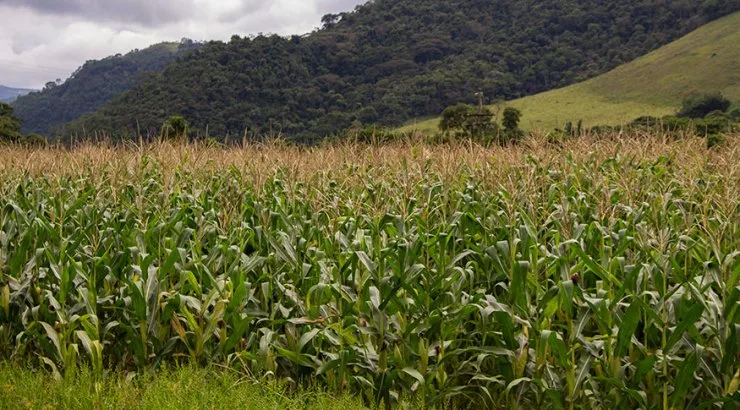
In the west, weather events affected the municipalities of União do Oeste, Ponte Serrada, São Domingos, Galvão, Ipuaçu, Vargeão, and Passos Maia, causing damage mainly to corn and soybean crops.
In the Midwest, the main affected municipalities were Fraiburgo, Rio das Antas, Curitibanos, Ponte Alta do Norte, Frei Rogério, Capinzal, and Campos Novos. The greatest losses occurred in dairy cattle pastures, rural buildings, and corn, soybean, and stone fruit crops.
In the Northern Plateau region, the municipalities most impacted were Canoinhas, Três Barras, and São Bento do Sul, with losses in tobacco crops, strawberry cultivation shelters, and corn.
In the Southern Plateau region, Otacílio Costa, Ponte Alta, and Bom Retiro registered impacts on watermelon, garlic, onion, pumpkin, and tobacco crops. Meanwhile, in São Joaquim, Urupema, and Urubici, hail affected apple orchards, damaging leaves and exposed fruit in areas without hail protection. As the crop is in the initial fruit growth phase, producers can mitigate losses through phytosanitary treatments and thinning of affected fruit.
In the Alto Vale region, the municipalities of Agrolândia, Alfredo Wagner, Atalanta, Imbuia, Ituporanga, Leoberto Leal, Petrolândia, and Vidal Ramos were hit by hail and winds, mainly affecting onion and tobacco crops. Also in the Vale region, the municipalities of Apiúna, Ibirama, Lontras, and part of Rio do Sul faced a strong hailstorm associated with intense winds. In these locations, in addition to losses in tobacco crops—the most affected—there was significant damage to the production of vegetables and fruits. In Luiz Alves, the damage is concentrated in vegetable production areas and on roads, bridges, and culverts providing access to properties.
In the North Coast region, the rains caused damage to fishing ranches, houses, and boats in Balneário Barra do Sul. In Navegantes, the rain impacted pastures.
How is the survey conducted?
The survey is being conducted on-site by rural extension agents from Epagri, who are visiting the affected properties to record the extent of the damage. This work is being carried out in partnership with Civil Defense, Cidasc, the Municipal Departments of Agriculture, and the Municipal Councils for Rural Development (CMDR). The information collected will be compiled into technical reports that support the State Government in formulating emergency and recovery public policies.
In addition to identifying losses, Epagri plays a fundamental role in getting resources to rural families. Extension agents develop farm recovery plans and prepare credit projects that allow farmers access to state and federal programs. After project approval, Epagri remains involved in the execution, providing technical assistance to ensure that reconstruction efforts are efficient and sustainable.
Help with reconstruction

Onion plantation in Bom Retiro – Photo: Press release
The Government of Santa Catarina, through Sape, supports farmers affected by extreme weather events through emergency programs. The Reconstrói SC program finances up to R$20,000 per family to recover structures and equipment, with a discount of 50% for on-time payments. The Pronampe Agro SC Emergencial program grants up to R$100,000 per family, with subsidized interest rates of up to 3% per year and a term of eight years.
The Emergency Project to Recover Apples in Santa Catarina supports apple producers with up to R$100,000 for seedling replacement and reconstruction of protective structures, offering a discount of up to 30% for on-time payments. The Orchard Protection program finances up to R$150,000 per family to install hail protection nets, with a term of up to eight years and an interest subsidy of up to 3% per year.
The Anti-Hail System is aimed at implementing and operating a hail control system with automatic ground generators, in partnership with municipalities.
To boost production in Santa Catarina and guarantee income for small producers who suffer from adverse weather conditions, farmers can also count on the Guaranteed Harvest SC program. This program offers a state subsidy of up to R$1,500 related to the Proagro Mais membership fee.